
Sharp Window AC Air Purifier India 2026: Ryohu Guide
Sharp window AC air purifier India 2026: Ryohu — a clear buying and usage guide for Indian homes comparing window AC cooling, Sharp air purification, costs, filters and maintenance.
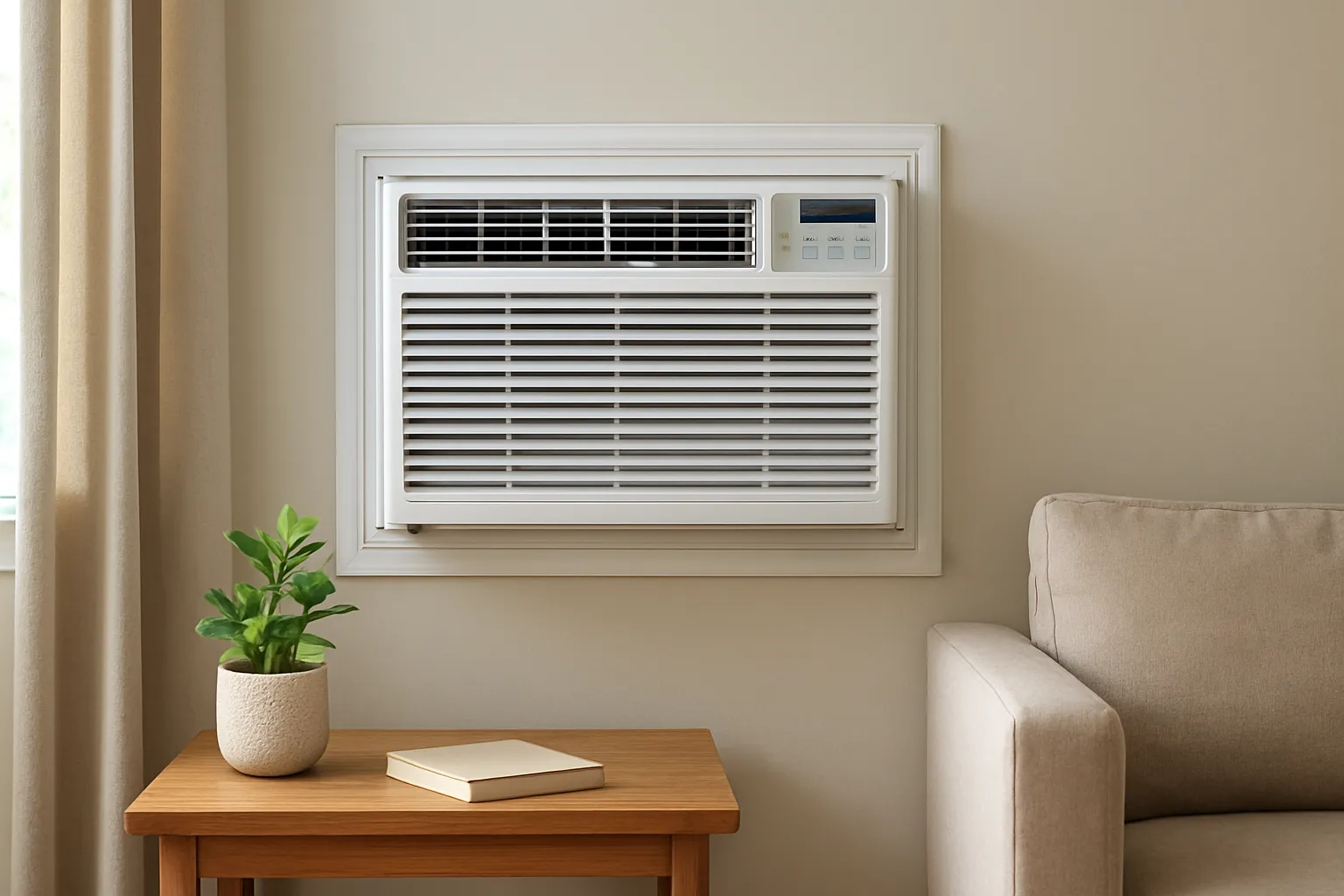
Sharp Window AC Air Purifier India 2026: Ryohu Guide
TL;DR: If you are searching for a Sharp window AC air purifier India Ryohu guide, first separate the two jobs: cooling and air cleaning. In India, most window ACs cool the room but do not replace a proper air purifier for PM2.5, smoke, dust or allergy-season pollution. A Sharp air purifier with Plasmacluster/HEPA-style filtration can work well alongside a window AC, but choose it by room size, filter cost and CADR-style airflow, not by brand name alone. For a typical bedroom, a 1.0–1.5 ton window AC plus a correctly sized air purifier is often more practical than expecting one machine to do everything.
Last updated: July 2026
Key takeaways
- “Window AC with air purifier” can mean two different things: an AC with a basic dust/PM filter, or a separate Sharp room air purifier used with a window AC. Do not treat them as equal.
- For Indian cities with PM2.5, construction dust, traffic smoke or winter smog, a true air purifier needs a sealed room, proper filter media and enough airflow for the room volume.
- A 1 ton window AC suits many small bedrooms around 90–120 sq ft; 1.5 ton is common for 130–180 sq ft rooms, depending on sun exposure, top-floor heat and occupancy.
- Running an AC and purifier together is usually affordable if the AC is sized correctly; the AC dominates the bill, while most room purifiers consume far less power.
- Sharp air purifiers are known in India for Plasmacluster ion technology in many models, but filter availability and replacement price matter more for long-term ownership.
- Avoid using AC “fan mode” or a thin mesh filter as your main pollution solution. It may catch visible dust, but it is not the same as a dedicated PM2.5 purifier.
- Check window frame strength, drainage slope, stabilizer need, BEE star label and service access before buying a window AC for an Indian apartment or independent house.
Table of contents
- What “Sharp window AC air purifier Ryohu” likely means in India
- Can a window AC purify air like a Sharp air purifier?
- Room sizing: matching window AC tonnage and purifier capacity
- Running cost math for Indian homes
- Features to check before buying
- Installation tips for window AC plus purifier setups
- Filter maintenance, service and replacement costs
- Who should buy this combination, and who should not?
- Practical next steps
- Conclusion
What “Sharp window AC air purifier Ryohu” likely means in India
The phrase “Sharp window AC air purifier India Ryohu” is not a standard product category in the Indian AC market. Sharp is widely associated with air purifiers in India, especially models using Plasmacluster ion technology along with filter systems. Window ACs, on the other hand, are usually sold by capacity, BEE star rating and compressor type. Ryohu may be a model name, seller listing name, imported reference, or a term used in a comparison context. Because product naming can vary by marketplace, the safe buying approach is to verify the exact model number on the brand website, invoice and energy label before paying.
For Indian homes, the practical question is simple: should you buy a window AC, a Sharp air purifier, or both? The answer depends on your room and air quality problem. A window AC reduces temperature and humidity comfort to some extent. It recirculates indoor air through a basic filter, but that filter is usually designed to protect the coil from dust, not to clean city pollution at purifier level. A dedicated Sharp purifier is built to move room air through filtration media and, in many models, add Plasmacluster ion operation. It will not cool the room.
So, when comparing “window AC plus air purifier” options, think of them as a pair: the AC handles heat load, and the purifier handles particles and odour-related filtration within its design limits. This is especially relevant in Delhi NCR, Gurugram, Noida, Ghaziabad, Lucknow, Patna, Mumbai near traffic corridors, Bengaluru construction zones, Pune dust-heavy areas, Kolkata humid seasons and many tier-2 cities where dust enters from roads and open plots.
Can a window AC purify air like a Sharp air purifier?
A normal window AC cannot purify air like a dedicated air purifier. It can trap larger dust particles on its front mesh filter, and some models may advertise PM filters, anti-bacterial coating or activated carbon layers. These can be useful for basic cleanliness, but they are not automatically equal to a dedicated room purifier with high airflow and replaceable filter packs.
The difference comes down to airflow path and filter design. A purifier is meant to pull room air through dense filtration while maintaining sufficient air changes. A window AC is designed mainly for heat exchange. If its filter becomes too dense, airflow drops, cooling suffers and the evaporator coil may ice up or lose efficiency. That is why most AC filters are washable, loose mesh or light add-on filters.
For PM2.5-heavy days, a purifier should ideally run in a mostly closed room. Keep doors and windows shut, reduce gaps, and avoid frequent door opening. The AC can run at 24–26°C while the purifier runs on auto or medium fan. This combination is useful because a sealed room helps both machines: the AC cools faster and the purifier gets repeated chances to clean the same air.
However, do not make medical claims from any purifier. Air purifiers may reduce particle load indoors when sized and maintained properly, but they do not guarantee protection from respiratory illness, asthma attacks or pollution exposure. If someone in the home has a diagnosed condition, follow professional medical guidance and use the purifier as a comfort and indoor air quality support tool, not as treatment.
Room sizing: matching window AC tonnage and purifier capacity
Wrong sizing is the most common reason Indian buyers feel disappointed. A window AC that is too small runs continuously and struggles in May–June heat. A unit that is too large may cool quickly but short-cycle, leaving humidity and uneven comfort. For a purifier, undersizing means the device may run loudly without cleaning the room effectively.
Use this table as a starting point, then adjust for top floor, direct west sun, large glass windows, kitchen heat and occupancy.
| Room type in India | Approx room size | Window AC capacity to consider | Purifier sizing approach | Notes |
|---|---|---|---|---|
| Small study or compact bedroom | 80–100 sq ft | 0.8–1.0 ton | Small room purifier rated near this area | Good sealing matters more than extra features |
| Standard bedroom | 100–140 sq ft | 1.0 ton, or 1.2 ton if very hot | Purifier rated above actual room size | Common setup for flats and rentals |
| Larger bedroom | 140–180 sq ft | 1.5 ton | Medium purifier with higher airflow | Choose lower noise for night use |
| Top-floor sun-facing room | 120–160 sq ft | 1.5 ton often safer | Medium purifier | Heat load can be much higher in Indian summers |
| Living room | 180–250 sq ft | Window AC may be less suitable; split AC often better | Larger purifier or multiple units | Window AC noise and airflow direction may be limiting |
For purifier capacity, do not look only at “coverage area” printed in large font. Brands may quote coverage at different fan speeds or ceiling heights. If a purifier claims a large area but has a small filter and low airflow, performance may be modest in real Indian dust. For a bedroom, it is often better to buy one size higher than the minimum, then run it at lower speed for less noise.
Window AC tonnage also depends on construction. A 120 sq ft room in a shaded old building in Pune may be fine with 1 ton. The same size room on the top floor in Jaipur or a west-facing Delhi apartment may need 1.5 ton. If you are unsure, ask the installer to inspect heat sources before finalising.
Running cost math for Indian homes
In most AC-plus-purifier setups, electricity cost is dominated by the AC. The purifier usually consumes a fraction of the AC’s power, especially on low or auto mode. Still, monthly cost matters, so estimate before buying.
Assume an Indian household electricity tariff of ₹7–₹10 per unit, depending on state, slab and fixed charges. One unit means 1 kWh. Actual tariffs vary, so use your bill for accuracy.
Example 1: 1.5 ton window AC in a bedroom
- Approx running input during compressor operation: 1.3–1.8 kW for many non-inverter window ACs, depending on star rating and conditions
- Daily use: 8 hours
- Effective average over the night: assume 1.2 kW after cycling, for a rough estimate
- Monthly energy: 1.2 × 8 × 30 = 288 units
- At ₹8 per unit: 288 × 8 = ₹2,304 per month
This is only an estimate. A 5-star inverter window AC, where available, may use less in steady conditions. A badly sized or poorly installed unit can use more. Dirty filters, direct afternoon sun and frequent door opening increase consumption.
Example 2: Sharp-style room air purifier in the same room
- Approx power: 25–60 W depending on fan speed and model
- Daily use: 10 hours
- Monthly energy at 40 W average: 0.04 × 10 × 30 = 12 units
- At ₹8 per unit: 12 × 8 = ₹96 per month
This shows why the AC purchase decision needs more attention from a bill perspective. A higher BEE star window AC can cost more upfront but may pay back if you run it for long hours across hot months. If you use AC only for 2–3 hours occasionally, the cheapest reliable star-rated option may be financially acceptable. If you run it every night for five months, compare BEE stars seriously.
Also remember non-electric costs: installation frame, woodwork or metal support, stabilizer if needed, annual service, gas leakage repair risk, purifier filter replacement and possible extended warranty. A low online price can become expensive if accessories and filter packs are ignored.
Features to check before buying
Do not buy only because a listing combines words like Sharp, window AC, air purifier or Ryohu. Check the specification sheet and model number carefully. For a window AC, these are the practical features that matter in India:
| Feature | What to check | Why it matters |
|---|---|---|
| BEE star rating | Current BEE label year, ISEER or rated annual units | Helps compare electricity use fairly |
| Capacity | 1.0 ton, 1.5 ton, 2.0 ton as per room heat load | Prevents poor cooling and wasted power |
| Compressor type | Fixed-speed or inverter window AC | Inverter may be better for long daily use |
| Refrigerant | R32 or other current refrigerant | Affects efficiency and service handling |
| Noise level | Indoor noise in dB if listed | Window ACs can be louder than split ACs |
| Filter type | Washable dust filter, PM filter, carbon filter if any | Know what it can and cannot clean |
| Warranty | Comprehensive, compressor, PCB if inverter | PCB repairs can be costly |
| Service network | Local brand service in your PIN code | Faster support in peak summer |
For a Sharp air purifier or similar purifier, check the following:
- Filter type and replacement interval under Indian dust conditions
- Approx filter cost and availability on official channels
- Room coverage and airflow rating, not just marketing area
- Noise level at sleep mode and medium speed
- Whether Plasmacluster or ion mode can be switched on/off, if that matters to you
- Availability of pre-filter cleaning access
- Indicator for filter cleaning or replacement
If you are considering a seller bundle, ask whether the AC and purifier are separate products with separate invoices and warranties. A bundle discount is useful only if both products are genuine, serviceable and suitable for your room.
Installation tips for window AC plus purifier setups
Window AC installation looks simple, but small mistakes can reduce cooling and cause water leakage. The unit must sit securely in a window or wall opening with a slight outward slope so condensate drains outside. The frame should handle vibration and weight. Gaps around the AC should be sealed to prevent hot air, dust, mosquitoes and noise from entering.
In rented homes, confirm landlord permission before cutting frames or making wall changes. Many Indian rental windows are not designed for heavy AC units without reinforcement. If the window is too weak, a split AC or portable AC may be safer, though each has its own cost and performance trade-offs.
Electrical safety is important. A window AC should have a suitable socket, proper earthing and MCB protection. Do not run a 1.5 ton AC on an overloaded extension board. If your locality has voltage fluctuations, ask the brand installer whether a stabilizer is recommended for that specific model. Some modern ACs mention stabilizer-free operation within a voltage range, but that does not protect against every real-world power condition.
For the purifier, placement is simple but important. Keep it inside the same closed room, ideally away from curtains blocking intake and outlet. Do not place it directly under AC water drip, near a cooking area unless designed for it, or behind furniture. If your window AC throws air strongly in one direction, place the purifier where room air can circulate freely instead of being trapped in a corner.
Filter maintenance, service and replacement costs
Maintenance decides whether the setup stays useful after the first season. Window AC front filters should be cleaned regularly during dusty months. In cities with road dust or construction nearby, fortnightly cleaning may be better than monthly. A clogged filter reduces airflow, increases electricity use and can make cooling uneven.
Professional AC service before peak summer is sensible. A technician can clean the coil, check drainage, inspect electrical connections and verify cooling performance. Avoid unnecessary gas top-ups unless there is confirmed leakage or low pressure diagnosed properly. Refrigerant does not get “used up” like petrol; if gas is low, there is usually a leak that should be found and repaired.
For a Sharp air purifier, pre-filter cleaning is usually user-manageable, but main filters need replacement as per actual usage. Indian homes with incense smoke, pets, open windows, traffic dust or renovation nearby may load filters faster. Treat claimed filter life as an estimate, not a guarantee. If replacement filters are expensive or unavailable, the purifier becomes a fan with old media over time.
Approximate ownership cost categories to budget for:
| Cost item | Typical frequency | Approx India cost range | Buyer note |
|---|---|---|---|
| Window AC installation extras | One-time | ₹1,000–₹4,000+ | Frame, sealing, wiring can vary widely |
| AC wet service | 1–2 times/year | ₹600–₹1,500 per visit | Higher in some metros and peak season |
| Stabilizer, if needed | One-time | ₹1,500–₹4,000 | Check model voltage range first |
| Purifier replacement filter | 6–24 months depending on use | ₹2,000–₹7,000+ | Verify exact model filter price |
| Electricity | Monthly in season | Highly variable | AC hours and tariff decide bill |
Prices are approximate for 2026 and change by city, brand, seller and season. Always verify before purchase.
Who should buy this combination, and who should not?
A window AC plus Sharp air purifier setup makes sense for a closed bedroom where you need both cooling and better dust/pollution control. It is especially practical for families who sleep with AC for long hours and live near traffic, construction, open drains, industrial areas, dusty roads or high winter AQI zones. It also suits renters if the window already supports AC installation and the purifier can move with them later.
It may not be the best option for a large open living-dining space. Window AC airflow can be directional and noisy, and one purifier may not cover an open-plan area effectively. In such cases, a split AC plus larger purifier, or multiple purifiers placed strategically, may work better.
It is also not ideal if your room cannot be sealed. If windows have large gaps, doors are constantly open, or an exhaust fan pulls outdoor air continuously, purification performance drops. Similarly, if your main issue is kitchen smoke entering the bedroom, source control and ventilation planning matter along with purification.
Budget buyers should avoid paying a big premium for an AC that advertises “air purification” without clear filter details. If the price difference is large, it may be smarter to buy a reliable BEE-rated window AC and a separate purifier with known filter availability.
Practical next steps
- Measure your room length, width and ceiling height. Note top-floor location, west-facing walls, large windows and number of occupants.
- Decide whether you need a window AC because of budget, window opening or rental restrictions, or whether a split AC would be more comfortable.
- Shortlist window ACs by tonnage, current BEE star label, warranty and local service. Do not rely only on online discount tags.
- If air quality is a concern, shortlist Sharp or comparable air purifiers by filter type, airflow, noise and replacement filter cost.
- Estimate monthly running cost using your electricity tariff. Use kWh, hours per day and realistic summer usage.
- Confirm installation scope in writing: frame, sealing, drainage slope, wiring, stabilizer recommendation and warranty registration.
- After installation, run the AC at 24–26°C, keep the room sealed, clean AC filters regularly and run the purifier long enough to circulate the room air.
Conclusion
The best answer to the Sharp window AC air purifier India Ryohu search is not one magic product. For most Indian homes, cooling and purification should be chosen as two separate performance requirements. Buy the window AC for correct tonnage, BEE efficiency, installation quality and service support. Buy the air purifier for room coverage, filter quality, noise and replacement availability. When both are sized properly and used in a sealed room, you get better comfort, cleaner indoor air and more predictable electricity bills.
About the author
AC Kharcha Team — research-focused AC guides for India. We study air conditioners, electricity costs, installation issues and real home cooling needs so Indian buyers can make practical, cost-aware decisions.
Frequently asked questions
Is there a Sharp window AC with a built-in air purifier in India?
Sharp is better known in India for air purifiers than for mainstream window ACs. Some ACs from different brands advertise PM or dust filters, but these are usually not equal to a dedicated room air purifier. Always verify the exact model number, filter type and warranty before buying.
Can I use a Sharp air purifier and window AC at the same time?
Yes. In fact, they often work well together in a closed room. The window AC cools the room while the purifier recirculates and filters indoor air. Keep doors and windows shut for better cooling and purification performance.
What tonnage window AC is best for a 120 sq ft bedroom in India?
Many 120 sq ft bedrooms can use a 1 ton window AC, but a 1.5 ton model may be better for top-floor rooms, west-facing walls, poor insulation or very hot cities. Ask the installer to inspect heat load before finalising.
Does an AC filter remove PM2.5 pollution?
A basic AC mesh filter mainly catches larger dust and protects the coil. Some ACs include additional PM filters, but a dedicated air purifier with suitable filtration and airflow is usually more effective for PM2.5 in a sealed room.
How much electricity does an air purifier add to the bill?
Most room air purifiers consume far less power than an AC. A purifier averaging around 40 W for 10 hours a day uses about 12 units per month, which is roughly ₹84–₹120 at ₹7–₹10 per unit. Actual use depends on model and fan speed.
How often should I replace Sharp air purifier filters in India?
Replacement depends on model, usage hours and dust levels. In polluted or dusty Indian cities, filters may load faster than brochure estimates. Check the filter indicator, airflow drop, odour and official replacement guidance for your exact model.
Is a window AC better than a split AC for purifier use?
Purifier performance depends more on room sealing and purifier capacity than AC type. A split AC is usually quieter and more flexible, while a window AC can be cheaper and easier where a suitable window opening exists.
Last updated: 04 Sep, 2026 · Verified by editorial team
About the author
AC Kharcha Editorial Team
AC research & buying guides · India · We research air conditioners, electricity costs, and home cooling practices across Indian climates, then publish practical guides so households can buy and run ACs more confidently.
View all articles →Share this guide
Was this article helpful?
Related posts
 New AC models in India (2026)
Optimist 1.4 Ton 5-Star AC 2026: Can an Indian Startup Beat 1.5T Brands?
Optimist’s 1.4 ton 5-star AC 2026 is a bold first launch: ₹39,990, claimed ISEER 6.05, and a size that could suit Indian bedrooms.
 New AC models in India (2026)
Oakter Studio AC 5000 2026: 0.5 Ton AC for Small Rooms
A practical 2026 guide to Oakter Studio AC 5000-style 0.5 ton cooling for small Indian rooms, including room fit, electricity cost, installation checks and alternatives.
 New AC models in India (2026)
AKAI Nilgiree AC 2026: 55°C Cooling Claim?
AKAI Nilgiree AC 2026: 55°C cooling claim explained with India-focused buying advice, bill estimates, installation checks and practical usage tips.