
Optimist 1.4 Ton 5-Star AC 2026: Can an Indian Startup Beat 1.5T Brands?
Optimist’s 1.4 ton 5-star AC 2026 is a bold first launch: ₹39,990, claimed ISEER 6.05, and a size that could suit Indian bedrooms.
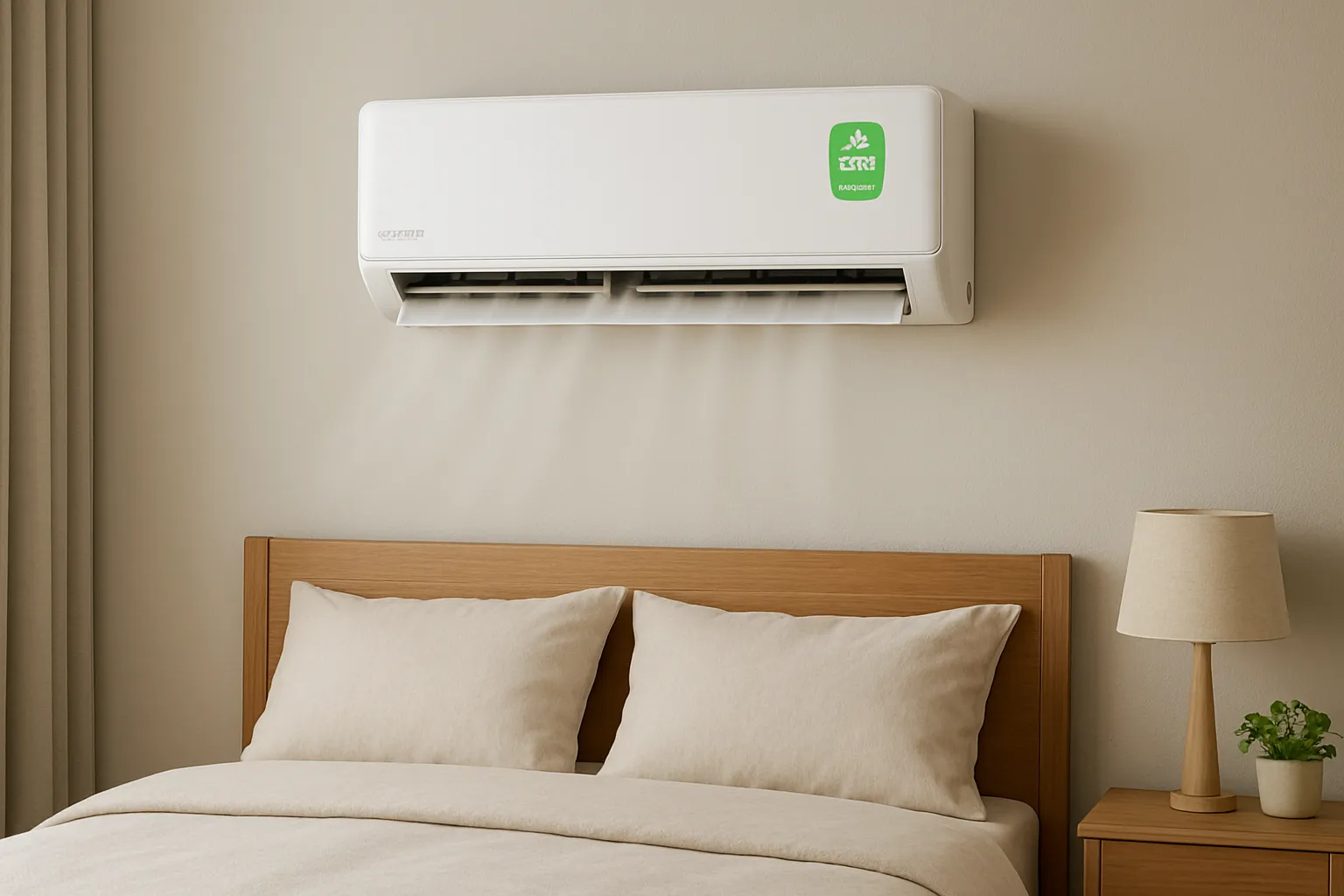
Optimist 1.4 Ton 5-Star AC 2026: Can an Indian Startup Beat 1.5T Brands?
TL;DR: The Optimist 1.4 ton 5-star AC 2026 is a serious bedroom option if you want a high-efficiency, launch-price inverter AC and your room is roughly 120–170 sq ft. If your room runs hot, faces west, sits on the top floor, or you want the safest after-sales bet, a mainstream 1.5 ton 5-star AC is still the steadier choice.
Last updated: July 2026
Key takeaways
- Optimist’s first AC is a 1.4 ton inverter split AC aimed at efficiency-conscious Indian buyers.
- The headline efficiency claim is ISEER 6.05, which is strong on paper for 2026.
- The introductory price is ₹39,990, making it look aggressive next to many 1.5 ton 5-star models.
- For a bedroom-sized room, 1.4 ton can be enough if the room is not heat-soaked.
- A 1.5 ton AC still gives you more cooling headroom in peak Indian summer.
- The biggest buying question is not only capacity; it is also service reach, spare parts, and warranty clarity.
- In 2026, compare the current BEE label and not just the star badge in the product title.
Table of contents
- Why this launch stands out
- Is 1.4 ton enough for your room?
- Why the 2026 BEE label matters
- Optimist vs 1.5 ton brands: what really changes
- What the bill math can and cannot tell you
- What to check before you buy
- Who should buy Optimist, and who should skip it
- Installation and service: where ownership can go right or wrong
- Comparison table
- Conclusion
- About the author
Why this launch stands out
Optimist is not entering the AC market with a safe, forgettable product. It is trying to make a point with a first launch that combines a slightly unusual capacity—1.4 ton—with a bold efficiency claim and a launch price that undercuts many premium 1.5 ton models.
That matters because most Indian buyers still think in round numbers. One ton for small rooms. 1.5 ton for standard bedrooms and many living rooms. Two ton for larger spaces or high heat load. A 1.4 ton AC sits in the middle. It is not tiny, and it is not oversized either.
The brand also leans on modern features such as app control, energy tracking, and diagnostics. Are those essential for cooling? No. But if the software works well and support is dependable, they can make ownership easier.
Here is the real question: can a startup win on value alone if it gets the size, efficiency, and support equation right? In real homes, that is often enough to earn a shortlist spot.
Is 1.4 ton enough for your room?
A 1.4 ton AC is not the standard shorthand most buyers expect, so the number can feel unfamiliar. The better question is simple: does it match your room load?
For many Indian bedrooms, especially rooms in the 120–170 sq ft range, a 1.4 ton inverter AC can be enough. That assumes normal ceiling height, properly closing doors and windows, and no constant heat sources inside the room. If the room is not exposed to harsh afternoon sun, the fit becomes even better.
It is often a sensible match for:
- master bedrooms in apartments,
- guest rooms,
- bedrooms used mainly at night,
- moderately insulated rooms,
- buyers who care more about efficiency than oversizing.
It becomes a riskier bet for:
- top-floor homes,
- west-facing rooms,
- bedrooms with large windows,
- cities with intense peak summer heat,
- rooms that double as workspaces with several people or devices.
If your room is close to the upper edge of that size band, the Optimist 1.4 ton 5-star AC 2026 may still cool well, but a 1.5 ton AC gives more breathing room. That extra margin matters when the temperature climbs fast or the room keeps absorbing heat from the roof. Why buy too little cooling and then run the machine harder all summer?
Why the 2026 BEE label matters
A product title alone is not enough in 2026. Two ACs can both say “5-star” and still behave differently once you look at the actual BEE label details.
That is why you should check the label closely before buying. Focus on:
- the star rating validity period,
- annual energy consumption,
- cooling capacity in watts,
- model year or manufacturing year,
- whether the label belongs to the current cycle.
This is especially important for a first-launch model like Optimist. The claimed ISEER 6.05 is eye-catching, but the official label is what lets you compare it properly with current models from brands such as LG, Samsung, Voltas, or Blue Star.
A strong BEE label does not just suggest lower power use. It also tells you where the product sits in the current market. That helps you decide whether the AC is genuinely competitive or merely well packaged.
Optimist vs 1.5 ton brands: what really changes
The right comparison is not startup versus established brand. It is efficiency-first newcomer versus safer ecosystem.
Where Optimist may win
- Lower launch price: ₹39,990 is aggressive for an inverter split AC in this class.
- Efficiency pitch: the claimed ISEER 6.05 is strong on paper.
- Useful middle-ground sizing: 1.4 ton can suit many bedrooms.
- Modern feature set: app integration and diagnostics can appeal to tech-minded buyers.
Where mainstream 1.5 ton brands may win
- Service network confidence: larger brands usually have wider installation and support coverage.
- Spare parts comfort: mature ecosystems are easier to trust over time.
- Resale and familiarity: many buyers prefer a well-known badge.
- More cooling headroom: 1.5 ton is better for hotter rooms and peak summer spikes.
What that means for you
If you live in a metro apartment, your room is moderate in size, and you are willing to verify warranty details carefully, Optimist can deserve a serious look.
If you are buying for a family home where service certainty matters more than novelty, a mainstream 1.5 ton AC is still the safer default.
Would you rather save a little up front, or reduce the chance of regret later? That is the trade-off here.
What the bill math can and cannot tell you
AC buyers often fixate on one number: the star rating. That is understandable, but your electricity bill depends on more than the badge on the box.
Usage hours, room heat load, thermostat setting, humidity, and your local tariff all matter. Two homes can buy the same AC and get very different bills.
A simple way to think about monthly use is:
Monthly units used = average load in kW × hours used per day × 30
Then multiply by your electricity tariff per unit.
For example, if you run the AC for 8 hours a night, and the inverter spends much of that time modulating after the room cools, the actual bill will depend heavily on room fit. A shaded bedroom with a proper seal will behave very differently from a top-floor room with heat coming through the roof.
A high-ISEER AC should generally use less electricity than a less efficient model under similar conditions. But there is no fixed savings number that applies to every home. One household may set 24°C and keep doors shut. Another may set 20°C, open the door often, and run multiple devices in the room.
If a better inverter AC saves even 30–40 kWh per month during the hot season, the difference becomes meaningful over several months. At Indian electricity rates, that can add up to a noticeable amount over a summer. Approximate savings are useful as a guide, but only room fit and usage habits decide the final result.
What to check before you buy
Because Optimist is a first-launch brand, your pre-purchase checklist should be tighter than usual.
| Checkpoint | What to verify | Why it matters |
|---|---|---|
| BEE label | Star rating, annual energy consumption, validity period | Confirms the current 2026 efficiency context |
| Final price | Base price, delivery, installation, extra fittings | Prevents surprise costs |
| Warranty | Compressor warranty and full product warranty in writing | Protects long-term ownership |
| Installation scope | Copper piping length, drain pipe, stand, core drilling, vacuuming | These extras can change the final bill |
| Service coverage | City and pin-code support, response time, escalation path | A new brand is only as good as its service network |
| Return / replacement policy | Online return window and defect handling | Useful if the first unit is damaged or DOA |
A launch offer can look brilliant until checkout. Check the invoice carefully. If the headline price and the final bill do not match, make sure every extra charge is explained.
Who should buy Optimist, and who should skip it
Best for
- Buyers with bedrooms around 120–170 sq ft.
- People who want a value-focused inverter AC.
- Early adopters who are comfortable trying a new Indian brand.
- Buyers who care about efficiency and app-based monitoring.
- Homeowners who can confirm service support in their city.
Skip if
- Your room is large, top-floor, or west-facing.
- You want the safest possible service experience.
- You do not want to manage uncertainty around spare parts.
- You prefer the comfort of a familiar 1.5 ton badge.
- You need an AC for a remote town where support may be harder to access.
A practical decision rule
- Choose Optimist if your room is a good fit and you are comfortable with startup risk.
- Choose 1.5 ton from a known brand if your room is hot, large, or you want easier after-sales peace of mind.
Installation and service: where ownership can go right or wrong
Good AC ownership in India is not only about the indoor unit. Installation quality often decides whether the AC feels efficient or frustrating.
Before installation, confirm:
- whether the technician will do proper vacuuming,
- how much copper pipe is included in the base installation,
- whether a wall stand or floor stand for the outdoor unit is included,
- if core drilling charges are extra,
- whether the drain pipe length is sufficient,
- who handles post-installation service calls.
Why does this matter so much? Poor installation can reduce cooling performance. Bad piping can cause leaks or drainage issues. Weak support can turn a good AC into an irritating one.
For a startup product, after-sales clarity is especially important. A strong warranty only helps if the company can actually service your address without long delays.
Comparison table
| Factor | Optimist 1.4 ton 5-star AC 2026 | Mainstream 1.5 ton 5-star AC |
|---|---|---|
| Room fit | Best for moderate bedrooms | Better for larger or hotter rooms |
| Efficiency focus | Very strong on paper | Varies, but usually strong in 2026 models |
| Upfront price | Aggressive launch pricing | Can be lower or higher depending on brand and offer |
| Cooling headroom | Moderate | Higher |
| Service confidence | New brand risk | More proven ecosystem |
| Buying comfort | Good if you like newer products | Better if you want a safer default |
Conclusion
The Optimist 1.4 ton 5-star AC 2026 is a genuinely interesting launch because it tries to win on efficiency, pricing, and modern features instead of relying on brand familiarity.
For the right bedroom, it could be excellent value. For a room that runs hot, faces the sun, or needs extra cooling margin, a mainstream 1.5 ton 5-star AC still makes more sense.
So, can an Indian startup beat 1.5 ton brands? Yes, in the right room and with the right buyer. But it does not make the established names irrelevant. It simply gives you another serious option, and that is a good thing.
About the author
AC Kharcha Team — research-focused AC guides for India. We study room sizing, BEE labels, efficiency ratings, and ownership costs to help you choose the right AC without overpaying.
Frequently asked questions
Is the Optimist 1.4 ton AC enough for a bedroom?
Yes, for many bedrooms around 120–170 sq ft it can be enough, especially if the room is well insulated and not on an overheated top floor. For larger or hotter rooms, a 1.5 ton AC is the safer choice.
Is ISEER 6.05 good in 2026?
Yes, it is a very strong efficiency claim for a room AC. Still, you should compare the current BEE label, not only the star count, because the 2026 label cycle matters.
Is ₹39,990 the final street price?
It is best treated as a launch price unless your checkout screen and invoice confirm the same amount after discounts, delivery, and installation charges.
Should renters buy Optimist or an established brand?
Renters who want value and are comfortable checking service coverage can consider Optimist. If you want easier support and a more proven service network, an LG, Samsung, Voltas, or Blue Star 1.5 ton model is the safer buy.
What should I verify on the BEE label before buying?
Check the star rating validity period, annual energy consumption, cooling capacity in watts, and the manufacturing or model year. Those details matter more than the marketing headline.
Does a higher tonnage always mean better cooling?
No. A bigger AC can help in a hot room, but an oversized unit may cost more upfront and is not always the best efficiency match for a smaller bedroom.
What if Optimist service is not available in my city?
Then you should skip it unless the seller clearly documents who handles installation, first-line support, and spare parts in your area.
Last updated: 06 Sep, 2026 · Verified by editorial team
About the author
AC Kharcha Editorial Team
AC research & buying guides · India · We research air conditioners, electricity costs, and home cooling practices across Indian climates, then publish practical guides so households can buy and run ACs more confidently.
View all articles →Share this guide
Was this article helpful?
Related posts
 New AC models in India (2026)
Oakter Studio AC 5000 2026: 0.5 Ton AC for Small Rooms
A practical 2026 guide to Oakter Studio AC 5000-style 0.5 ton cooling for small Indian rooms, including room fit, electricity cost, installation checks and alternatives.
 New AC models in India (2026)
AKAI Nilgiree AC 2026: 55°C Cooling Claim?
AKAI Nilgiree AC 2026: 55°C cooling claim explained with India-focused buying advice, bill estimates, installation checks and practical usage tips.
 New AC models in India (2026)
Haier Spartan AI Tower AC 2026: ₹99,990 AC?
Haier Spartan AI Tower AC 2026: ₹99,990 AC? A practical India-focused review for large rooms, with buying checks, bill estimates, installation tips, and value guidance.