
AKAI Nilgiree AC 2026: 55°C Cooling Claim?
AKAI Nilgiree AC 2026: 55°C cooling claim explained with India-focused buying advice, bill estimates, installation checks and practical usage tips.
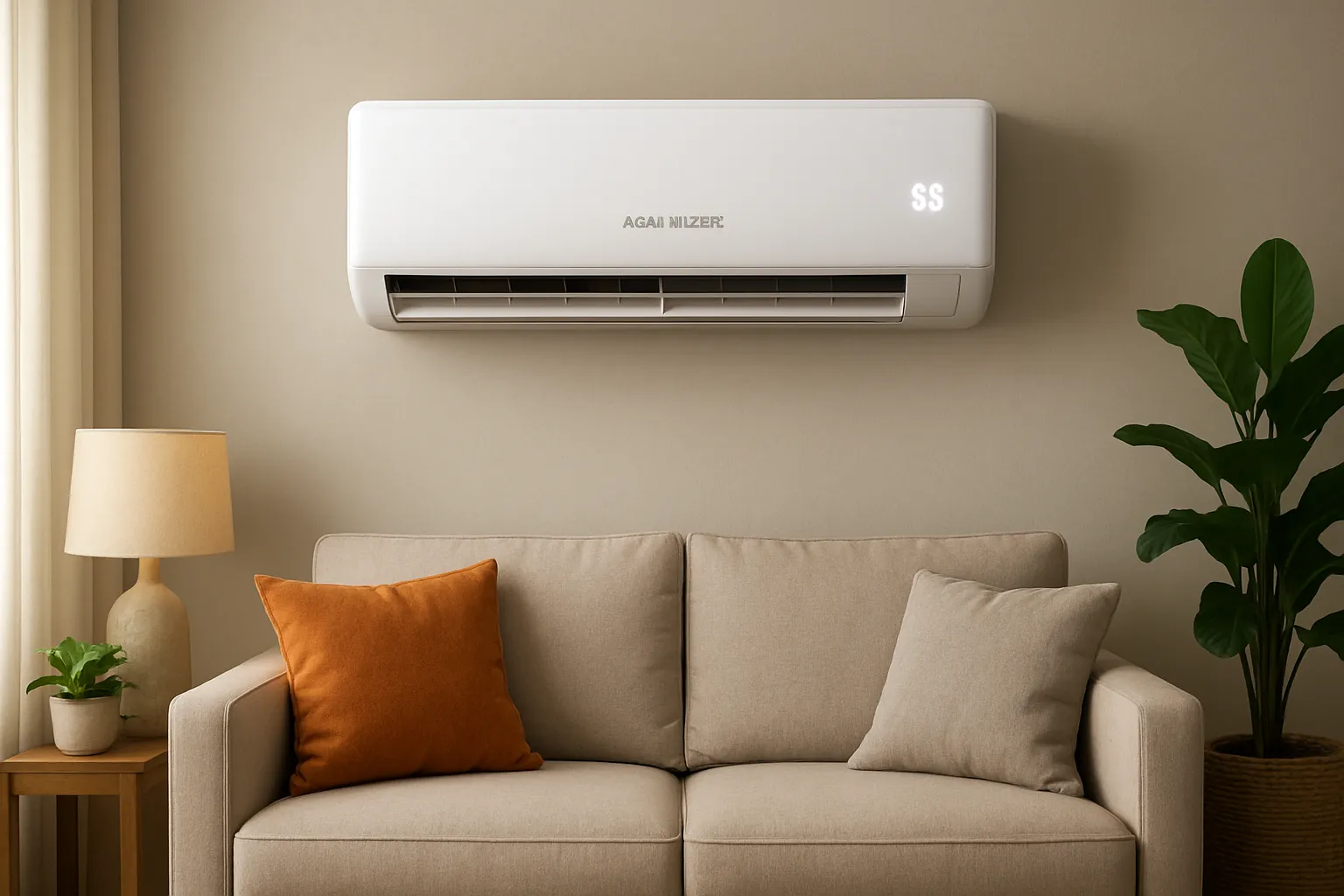
AKAI Nilgiree AC 2026: 55°C Cooling Claim?
TL;DR: The AKAI Nilgiree AC’s 55°C cooling claim means the unit is marketed to operate even when outdoor temperatures are extremely high, but it does not mean your room will become cold instantly at 55°C ambient heat. For Indian homes, judge it by tonnage, BEE star rating, ISEER, inverter performance, installation quality, local service support and your electricity tariff—not by the headline claim alone.
Last updated: July 2026
Key takeaways
- The 55°C cooling claim is mainly about high ambient operating capability, useful for very hot cities such as Delhi NCR, Jaipur, Nagpur, Ahmedabad and parts of Telangana, Rajasthan and Vidarbha.
- Check the exact AKAI Nilgiree variant before buying: 1 ton, 1.5 ton and 2 ton models may differ in star rating, ISEER, cooling capacity, annual energy consumption and warranty.
- For most Indian bedrooms, a 1.5 ton inverter split AC is the common choice, but top-floor rooms and west-facing rooms may need more careful heat-load sizing.
- Electricity cost matters more than the purchase discount if you run the AC for 6–10 hours daily in summer.
- A high-temperature claim will not compensate for poor installation, undersized copper pipe, bad drainage, direct sun on the outdoor unit or low voltage.
- Before paying, confirm BEE label year, copper condenser details, PCB/compressor warranty, installation charges, stabilizer requirement and service availability in your city.
Table of contents
- What the 55°C cooling claim actually means
- AKAI Nilgiree AC 2026: what to verify before trusting the listing
- Is the Nilgiree AC suitable for very hot Indian cities?
- Tonnage guide for Indian rooms
- Electricity bill estimate: realistic Indian examples
- Features that matter more than marketing words
- Installation checks for better cooling at high temperatures
- AKAI Nilgiree vs typical alternatives: comparison checklist
- Maintenance tips for peak-summer performance
- Practical next steps
What the 55°C cooling claim actually means
The phrase “55°C cooling” can sound dramatic, so it needs a clear explanation. In most AC marketing, a high ambient cooling claim means the outdoor unit is designed to keep operating when the outside air temperature is very high, up to the stated limit under specified conditions. It does not mean the AC will cool a room to 16°C when the outside temperature is 55°C, and it does not guarantee the same cooling speed in every home.
For an Indian buyer reading an AKAI Nilgiree AC 55 degree cooling review, the important question is not only “Can it run in extreme heat?” but also “Will it maintain comfortable room temperature in my specific room without a shocking electricity bill?” Those are different questions.
At 45–50°C outdoor temperature, every split AC works harder because the outdoor unit must reject heat into already hot air. Compressor load rises, cooling speed drops, and energy consumption can increase. If the outdoor unit is installed in a closed balcony, near a hot wall, or under direct afternoon sun without airflow, performance can fall further. So the 55°C claim is useful only when supported by correct tonnage, clean coils, proper refrigerant charge, good airflow and stable voltage.
For most households, comfort at 24–26°C is the practical target. If a properly sized AKAI Nilgiree inverter AC can bring a hot room down to this range and maintain it steadily, that matters more than chasing the lowest remote setting.
AKAI Nilgiree AC 2026: what to verify before trusting the listing
AKAI has sold air conditioners in India through different retail channels, and model names can vary by platform, batch and year. When you see “Nilgiree” attached to an AKAI AC listing, do not rely only on the title image or headline feature. Open the specification table and verify the exact model number.
Important details to confirm before buying:
- Capacity: Common capacities are 1 ton, 1.5 ton and 2 ton. The cooling capacity in watts is more useful than the tonnage label alone.
- BEE star rating: Check whether the model is 3-star or 5-star and confirm the rating period on the BEE label.
- ISEER value: Higher ISEER usually means better seasonal efficiency. Compare this number within the same tonnage category.
- Annual energy consumption: The BEE label gives an estimated annual unit consumption under standard test assumptions. Your actual bill may differ.
- Compressor type: Inverter ACs adjust speed according to load and are usually better for long daily use.
- Condenser material: Many buyers prefer copper condensers because they are easier to repair in Indian service conditions, though maintenance still matters.
- Warranty: Separate the comprehensive warranty from compressor, PCB and outdoor unit warranty. Terms can differ.
- Installation charges: Standard installation may not include extra copper pipe, drain pipe, stand, core cutting, electrical work or stabilizer.
Prices in 2026 can move sharply during summer, festive sales and stock clearance periods. As a broad market sense, 1.5 ton inverter split ACs from value-focused brands may appear around the mid-₹30,000 to mid-₹40,000 range, while 5-star versions and premium feature models can cost more. Treat any online price as approximate until checkout, because delivery pincode, bank offers and installation bundles change the final cost.
Is the Nilgiree AC suitable for very hot Indian cities?
The 55°C claim is most relevant for buyers in regions where summer outdoor temperatures regularly cross 43–45°C. Examples include parts of Rajasthan, Delhi NCR, Haryana, Punjab, Madhya Pradesh, Uttar Pradesh, Gujarat, Maharashtra’s Vidarbha region, and parts of Telangana and Andhra Pradesh. In these locations, the outdoor unit’s ability to survive and operate in high ambient heat is not just a marketing point; it can affect daily comfort.
However, suitability depends on the home. A 1.5 ton AC in a 130 sq ft bedroom on the middle floor may perform comfortably even in a hot city if the room is shaded and sealed well. The same 1.5 ton unit may struggle in a 170 sq ft top-floor room with a west-facing glass window and a poorly insulated roof.
Also consider voltage. Many hot regions face voltage drops during evening peak load when thousands of ACs are running. If the AKAI Nilgiree model has a wide operating voltage range, that is helpful, but it does not replace proper electrical safety. Ask the installer whether your home needs a stabilizer, MCB, proper earthing or a dedicated AC circuit. A weak plug point or shared wiring can cause nuisance tripping and safety risks.
For coastal cities, the 55°C feature is less important than corrosion protection, humidity handling, drainage and service response. In Mumbai, Chennai, Kochi or Goa, look closely at anti-corrosion coating, outdoor unit placement and annual wet-season maintenance.
Tonnage guide for Indian rooms
Correct tonnage is the foundation of cooling performance. An undersized AC runs continuously and may still not cool the room. An oversized AC can short-cycle, reduce humidity removal and waste money upfront.
Use this table as a starting point, then adjust for heat load:
| Room condition | Approx room size | Suggested capacity | Notes for Indian homes |
|---|---|---|---|
| Small bedroom, shaded, normal ceiling | 90–120 sq ft | 1 ton | Suitable for one or two occupants with limited direct sun |
| Typical bedroom, moderate heat | 120–160 sq ft | 1.5 ton | Common choice for Indian bedrooms and small living rooms |
| Top-floor or west-facing bedroom | 120–150 sq ft | 1.5 ton, possibly higher load model | Roof heat and afternoon sun increase cooling demand |
| Medium living room | 160–220 sq ft | 1.8–2 ton | Consider open doors, kitchen heat and occupancy |
| Large hall or open-plan area | 220 sq ft+ | Professional sizing needed | One AC may not distribute air evenly |
If your room has large windows, thin curtains, single brick walls, direct terrace heat, many electronics or frequent door opening, choose more carefully. Do not blindly buy a 1 ton unit because it is cheaper. In very hot weather, it may run nonstop and still feel weak.
For renters, also check whether the indoor unit can be placed on the right wall. Bad placement can make even a correct tonnage AC feel uneven. The indoor unit should ideally throw air across the room, not directly into a cupboard, curtain or short wall corner.
Electricity bill estimate: realistic Indian examples
An AC’s electricity consumption depends on outdoor temperature, set temperature, room insulation, star rating, compressor speed, maintenance and usage pattern. Still, a rough calculation helps compare options.
Use this simple formula:
Monthly cost = units consumed per day × days × electricity tariff
For example, suppose a 1.5 ton inverter AC averages around 0.9 to 1.3 kWh per hour during mixed summer use. This is not a fixed promise; it is a practical range for estimation. If you run it 8 hours nightly:
| Usage case | Assumed average draw | Daily use | Monthly units | At ₹7/unit | At ₹10/unit |
|---|---|---|---|---|---|
| Efficient use, sealed room, 26°C | 0.8 kWh/hour | 8 hours | 192 units | ₹1,344 | ₹1,920 |
| Typical hot-city use, 24–25°C | 1.1 kWh/hour | 8 hours | 264 units | ₹1,848 | ₹2,640 |
| Harsh condition, top floor, lower setting | 1.4 kWh/hour | 8 hours | 336 units | ₹2,352 | ₹3,360 |
This is only the AC portion of the bill. Your slab rate may increase when total household consumption crosses certain limits, so the final bill impact can be higher than a simple flat-rate calculation. In cities where tariffs reach ₹9–₹12 per unit in higher slabs, the difference between a more efficient and less efficient AC becomes very visible over a long summer.
A 5-star model may cost more upfront but can make sense if you run the AC for long hours every day. A 3-star inverter model may be acceptable for a guest room or short evening use. The right answer depends on runtime. If the AKAI Nilgiree model you are considering has a competitive ISEER and annual energy consumption number for its price, it becomes more attractive.
Features that matter more than marketing words
AC listings often mention turbo cooling, 4-way swing, sleep mode, anti-dust filter, smart diagnosis, convertible modes and high ambient cooling. Some features are useful, but buyers should separate measurable value from fancy naming.
Prioritise these features:
- Inverter compressor: Better for long usage because it can reduce compressor speed after reaching the set temperature.
- Strong cooling capacity: Check the rated cooling watts. A weak 1.5 ton model may not perform like a stronger one in a hot room.
- BEE label and ISEER: These are more comparable than vague “energy saver” claims.
- Copper condenser and serviceability: Important for long-term repair practicality in many Indian cities.
- PCB protection: Inverter ACs rely on electronics; surge and voltage protection matter.
- Noise level: Important for bedrooms, students, babies and work-from-home users.
- Airflow design: Good throw and swing help cool the room evenly.
- Warranty clarity: Compressor warranty is not the same as full AC warranty. Labour and gas charging may not be free after the comprehensive period.
Be careful with “convertible tonnage” claims. Convertible modes can reduce capacity and power draw in mild conditions, but they do not magically turn a wrong-sized AC into the correct one. In peak May heat, you still need adequate full-load cooling capacity.
Wi-Fi control is convenient if you want to switch on the AC before reaching home or monitor usage, but it should not be the deciding factor unless the core specifications are strong.
Installation checks for better cooling at high temperatures
Many complaints about AC cooling come from installation mistakes rather than the machine itself. This is especially true when outdoor temperatures are extreme.
Before installation, confirm the following with the technician:
| Installation point | What to ask | Why it matters |
|---|---|---|
| Outdoor unit airflow | Is there open space around the unit? | Hot air must escape; trapped heat reduces cooling |
| Copper pipe length | What is included and what is extra? | Excess or poor-quality piping can affect performance and cost |
| Vacuuming | Will the technician vacuum the line before gas release? | Proper commissioning protects efficiency and compressor life |
| Drain slope | Is water draining freely without backflow? | Prevents leakage inside the room |
| Electrical circuit | Is there a dedicated line, MCB and earthing? | Reduces tripping and safety risks |
| Wall strength | Can the indoor and outdoor brackets hold safely? | Vibration and unsafe mounting cause long-term issues |
| Sun exposure | Can the outdoor unit be shaded without blocking airflow? | Helps performance in hot afternoons |
Avoid installing the outdoor unit in a fully enclosed utility shaft unless ventilation is good. If multiple AC outdoor units are packed together, each unit may inhale hot exhaust from another unit. This can reduce cooling and increase power draw.
Ask for a proper installation bill and keep warranty documents. If the brand requires authorized installation for warranty validity, do not use a random technician just to save a small amount.
AKAI Nilgiree vs typical alternatives: comparison checklist
Use the table below when comparing the AKAI Nilgiree AC with models from Voltas, LG, Samsung, Daikin, Blue Star, Panasonic, Lloyd, Haier, Godrej or Carrier in the same price band.
| Factor | AKAI Nilgiree: what to check | Competing AC: what to compare | Buying signal |
|---|---|---|---|
| High ambient cooling | 55°C claim and operating range | Similar 52–55°C claims | Useful in hot inland cities, not enough alone |
| Energy efficiency | BEE stars, ISEER, annual units | Same tonnage and star class | Prefer lower annual units for long runtime |
| Price | Approx final price after offers | Include installation and accessories | Compare total cost, not app price only |
| Warranty | Compressor, PCB, comprehensive terms | Labour and gas terms | Longer warranty is useful only with service access |
| Service network | Local authorized technician availability | Response time in your area | Crucial for summer breakdowns |
| Build details | Condenser, coating, filters, airflow | Similar hardware quality | Better durability reduces ownership pain |
| Noise | Indoor dB rating if listed | Bedroom comfort ratings | Important for night use |
A lesser-known or value-positioned AC can be a sensible purchase if the specifications are honest, price is competitive and service is available locally. But if your city has weak service support for that brand, a slightly costlier model with faster after-sales may be the better real-world choice.
Maintenance tips for peak-summer performance
Even a capable high-ambient AC will lose performance if neglected. Indian conditions are dusty, and outdoor coils collect dirt quickly near roads, construction sites and industrial areas.
Follow these habits:
- Clean the indoor filter every 2–4 weeks during heavy use. In dusty cities, do it more often.
- Keep curtains closed during afternoon sun, especially for west-facing rooms.
- Set the AC to 24–26°C instead of 18–20°C. Lower settings increase load and may not improve comfort proportionately.
- Use a ceiling fan at low or medium speed to distribute cool air faster.
- Keep doors and windows sealed. Small gaps can continuously bring hot air inside.
- Do not block the outdoor unit with plants, storage boxes, grills or cloth covers while running.
- Book professional service before peak summer, not after the first heatwave.
- If cooling suddenly drops, do not keep running the AC for days. Call service to check gas pressure, coil condition, fan operation and error codes.
For homes using the AC daily for long hours, an annual service is the minimum. In dusty or coastal areas, two services a year may be reasonable. Always use trained technicians for gas charging, coil cleaning, PCB work and compressor-related faults.
Practical next steps
- Measure your room in square feet and note whether it is top-floor, west-facing or heavily sun-exposed.
- Shortlist the exact AKAI Nilgiree model number, not just the series name.
- Compare tonnage, BEE star rating, ISEER and annual energy consumption against two or three similar ACs.
- Calculate your expected monthly running cost using your local tariff, such as ₹7, ₹9 or ₹10 per unit.
- Call the local AKAI service contact or retailer and confirm installation process, response time and warranty support.
- Ask the seller for a full installed-cost estimate including stand, extra copper pipe, drain pipe, core cutting, stabilizer and electrical work if needed.
- On installation day, ensure proper outdoor airflow, vacuuming, drainage and safe electrical connection.
- Use 24–26°C settings, clean filters regularly and keep the room sealed for best comfort per rupee.
Conclusion
The AKAI Nilgiree AC’s 55°C cooling claim is relevant for Indian buyers facing harsh summers, but it should be treated as one part of the decision. A high ambient rating can help in extreme heat, yet the real experience depends on correct tonnage, efficiency rating, installation quality, room insulation, voltage stability and local service.
If the specific AKAI Nilgiree model you choose has a strong BEE label, suitable capacity, fair installed price and reliable support in your city, it can be worth considering. If any of those points are weak, compare alternatives before paying. The smartest AC purchase is not the one with the loudest claim; it is the one that cools your room reliably at a running cost you can live with.
About the author
AC Kharcha Team — research-focused AC guides for India. We study air conditioner specifications, electricity costs, installation practices and real buying concerns so Indian households can make better cooling decisions.
Frequently asked questions
What does the AKAI Nilgiree AC 55°C cooling claim mean?
It generally means the AC is marketed to operate in very high outdoor ambient temperatures up to 55°C under specified conditions. It does not mean the room will instantly cool to a very low temperature when it is 55°C outside.
Is AKAI Nilgiree AC good for Delhi, Jaipur or Ahmedabad summers?
It may be suitable if you choose the right tonnage, verify the BEE label and install the outdoor unit with proper airflow. For very hot cities, high ambient operation is useful, but service availability and correct sizing are equally important.
Should I buy a 3-star or 5-star AKAI Nilgiree AC?
Choose 5-star if you use the AC for long hours daily during summer and the price difference is reasonable. A 3-star inverter model can be acceptable for shorter use, guest rooms or tighter budgets. Compare ISEER and annual energy consumption before deciding.
How much electricity can a 1.5 ton AKAI Nilgiree inverter AC use?
Actual use depends on room heat, set temperature and star rating. As a rough estimate, a 1.5 ton inverter AC may average around 0.8 to 1.4 kWh per hour in Indian summer conditions. Multiply by your daily hours and local tariff for a bill estimate.
Does the 55°C claim remove the need for proper installation?
No. Poor installation can reduce cooling even in a good AC. Outdoor airflow, copper pipe quality, vacuuming, drainage, electrical safety and correct mounting are essential for performance and warranty protection.
Do I need a stabilizer for AKAI Nilgiree AC?
It depends on the model’s voltage range and your local power quality. Many inverter ACs mention stabilizer-free operation within a specified range, but areas with frequent voltage fluctuation may still need protection. Ask an authorized installer or electrician.
What should I check before buying AKAI Nilgiree AC online?
Check the exact model number, tonnage, BEE star rating, ISEER, annual energy consumption, condenser material, warranty terms, installation charges, return policy and local service availability before placing the order.
Last updated: 06 Sep, 2026 · Verified by editorial team
About the author
AC Kharcha Editorial Team
AC research & buying guides · India · We research air conditioners, electricity costs, and home cooling practices across Indian climates, then publish practical guides so households can buy and run ACs more confidently.
View all articles →Share this guide
Was this article helpful?
Related posts
 New AC models in India (2026)
Optimist 1.4 Ton 5-Star AC 2026: Can an Indian Startup Beat 1.5T Brands?
Optimist’s 1.4 ton 5-star AC 2026 is a bold first launch: ₹39,990, claimed ISEER 6.05, and a size that could suit Indian bedrooms.
 New AC models in India (2026)
Oakter Studio AC 5000 2026: 0.5 Ton AC for Small Rooms
A practical 2026 guide to Oakter Studio AC 5000-style 0.5 ton cooling for small Indian rooms, including room fit, electricity cost, installation checks and alternatives.
 New AC models in India (2026)
Haier Spartan AI Tower AC 2026: ₹99,990 AC?
Haier Spartan AI Tower AC 2026: ₹99,990 AC? A practical India-focused review for large rooms, with buying checks, bill estimates, installation tips, and value guidance.