
Hitachi AC 2026 India: Tier Guide
Hitachi AC 2026 India tier guide: understand which Hitachi air conditioner range suits your room, budget, electricity use and service expectations.
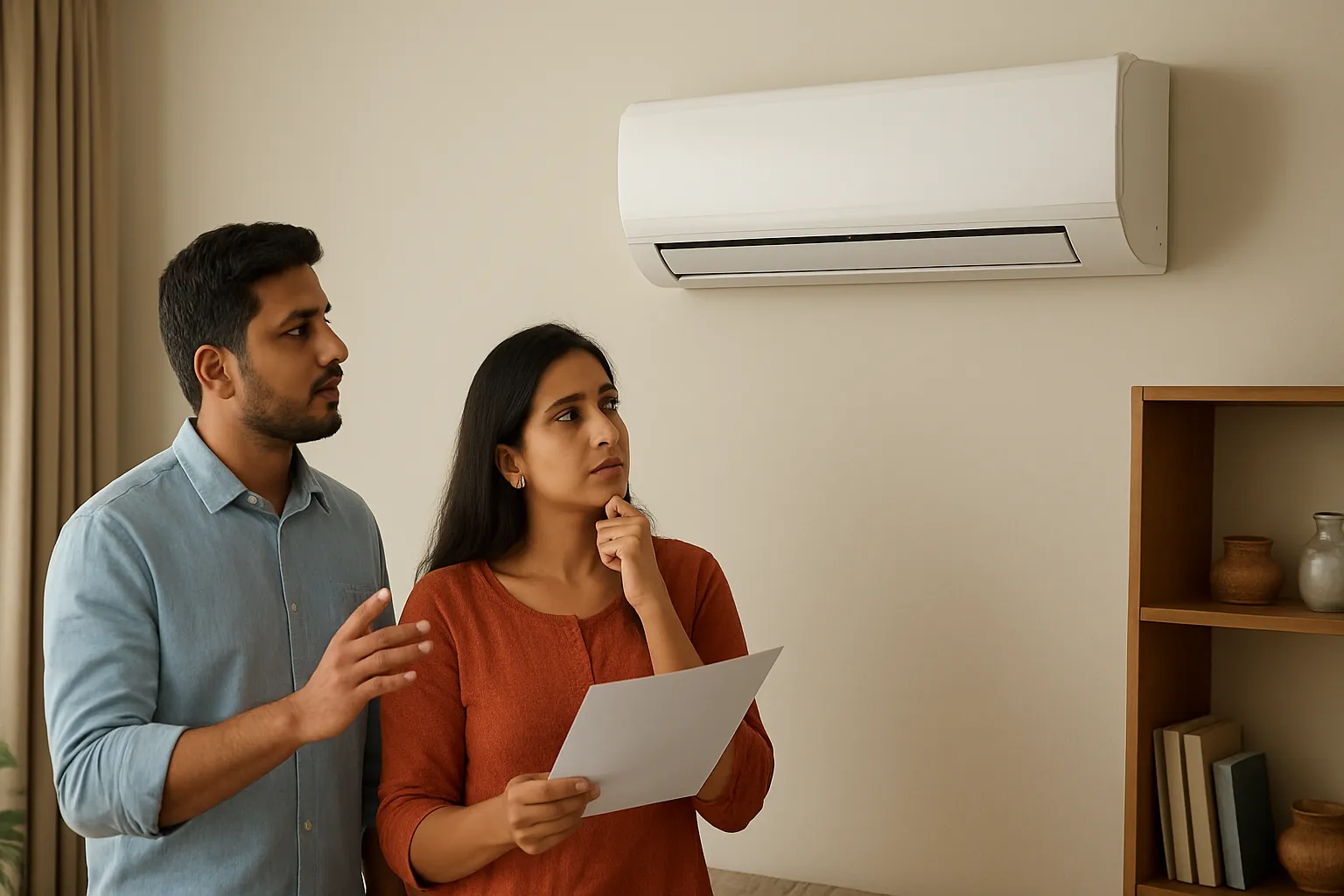
Hitachi AC 2026 India: Tier Guide
TL;DR: If you are comparing Hitachi ACs in India in 2026, think in three practical tiers: value 3-star models for limited use, mid-range inverter models for everyday bedrooms, and premium 5-star or feature-rich models for long summer runtime. The right choice depends less on the model name and more on tonnage, BEE star rating, ISEER, room heat load, local service support, installation quality and your electricity tariff.
Last updated: July 2026
Key takeaways
- Hitachi is generally positioned as a serious cooling brand in India, but the best tier for you depends on usage hours and room conditions.
- For most Indian bedrooms, a 1.5-ton inverter split AC is the common shortlist size, but smaller rooms may need only 1 ton or 1.2 ton.
- A 5-star Hitachi AC usually makes more sense when the AC runs 6–10 hours daily in summer; for occasional use, a 3-star model can be more economical upfront.
- Do not judge only by “cooling power” marketing. Check BEE star label, ISEER, annual energy consumption, copper condenser details, noise level, warranty and service availability.
- Installation quality matters as much as the AC tier. Poor vacuuming, bad drain slope, excessive pipe bends or weak electrical wiring can ruin even a premium model.
- Approximate prices change heavily by city, season, bank offers and stock age, so verify the final delivered-and-installed cost before buying.
Table of contents
- How to Read This Hitachi AC Tier Guide
- Hitachi AC Tiers in India: Value, Mid-Range and Premium
- Which Hitachi AC Tier Fits Your Room?
- 3-Star vs 5-Star Hitachi AC: Bill Difference in India
- Hitachi Split, Window and Inverter AC Choices
- Features Worth Paying For in a Hitachi AC
- Price Bands and Total Cost of Ownership
- Installation and Service Checks Before You Pay
- Common Buying Mistakes with Hitachi ACs
- Practical Next Steps
How to Read This Hitachi AC Tier Guide
The Indian AC market is confusing because the same brand may sell basic models, high-efficiency inverter units and premium feature-packed variants at the same time. Hitachi is no different. You may see model names that include words like iZen, Yoshi, Kiyora, Shizen, Toushi, Kashikoi or similar series names depending on the year and retailer. These names can change, but the buying logic stays the same.
This hitachi ac india tier guide focuses on practical selection rather than only brochure labels. When comparing any Hitachi AC listing, look for these fixed data points first:
- Capacity: 1 ton, 1.2 ton, 1.5 ton, 1.8 ton or 2 ton.
- Type: inverter split, fixed-speed split or window AC.
- BEE star rating: commonly 3-star or 5-star in popular residential models.
- ISEER and annual energy consumption on the BEE label.
- Condenser and evaporator material, preferably copper for easier serviceability.
- Warranty terms for product, compressor, PCB/controller and gas charging exclusions.
- Installation scope and extra charges.
- Local service availability in your city or district.
A premium Hitachi model is not automatically the correct purchase. A small guest room used for two hours at night does not need the same tier as a west-facing top-floor bedroom in Nagpur, Ahmedabad, Delhi NCR, Jaipur, Hyderabad or Chennai that runs through long hot evenings.
Hitachi AC Tiers in India: Value, Mid-Range and Premium
Instead of treating every model as equal, divide Hitachi ACs into three useful tiers. This makes the decision clearer for Indian homes.
| Hitachi AC tier | Typical buyer | Common specification | Best for | Watch-outs |
|---|---|---|---|---|
| Value tier | Budget-focused users | 3-star split or window AC, basic remote, standard filters | Guest rooms, rented flats, limited daily use | Higher running cost if used all night daily |
| Mid-range tier | Most family buyers | 3-star or 5-star inverter split AC, copper condenser, decent warranty | Bedrooms and study rooms used daily in summer | Compare ISEER carefully; not all inverter models save equally |
| Premium tier | Heavy users and comfort-focused homes | 5-star inverter, better sensors, lower noise, advanced filters or smart controls | Long runtime, hot cities, top floors, premium interiors | Higher upfront cost; feature value depends on your use |
The value tier is usually about keeping purchase cost under control. It may suit a renter who may shift house soon or a family that needs cooling only during peak heat waves. The mid-range tier is where many buyers should start because it balances price, efficiency and comfort. The premium tier becomes attractive when electricity bills are a major concern or when the room is occupied for long hours.
For 2026, Indian buyers should also check the manufacturing year and BEE label validity. Retailers sometimes discount older stock. A discounted older model can still be a good buy if warranty starts from purchase date and the energy label is acceptable, but you should know exactly what you are buying.
Which Hitachi AC Tier Fits Your Room?
Tonnage is more important than brand tier. A wrongly sized AC can feel disappointing even if it is expensive. As a rough starting point for Indian homes:
| Room condition | Approximate room size | Suggested capacity to shortlist |
|---|---|---|
| Small bedroom with low heat load | Up to 100 sq ft | 0.8 ton to 1 ton |
| Standard bedroom | 110–150 sq ft | 1.2 ton to 1.5 ton |
| Large bedroom or small hall | 150–200 sq ft | 1.5 ton to 1.8 ton |
| Larger hall with open areas | 200–260 sq ft | 2 ton or multiple units depending layout |
These are not fixed rules. India has big heat-load differences. A 130 sq ft room in a shaded apartment in Bengaluru is not the same as a 130 sq ft top-floor room in Surat or Lucknow. Increase your cooling requirement if the room has a west-facing wall, large glass windows, poor false ceiling insulation, many appliances, direct roof heat or more than two regular occupants.
For a typical 120–150 sq ft bedroom, a 1.5-ton Hitachi inverter split AC is often the safest shortlist. If the room is compact and shaded, a 1-ton model may be enough. If the room is on the top floor with strong afternoon sun, do not blindly downsize just to save money. An undersized AC may run continuously, cool slowly and consume more electricity than expected.
3-Star vs 5-Star Hitachi AC: Bill Difference in India
The 3-star versus 5-star decision should be based on runtime. BEE star labels provide annual energy consumption estimates under standard test conditions. Your actual bill will depend on thermostat setting, outdoor temperature, insulation, maintenance and tariff slab.
Here is a simple example for understanding, not a guaranteed bill figure.
Assume two 1.5-ton Hitachi inverter split ACs:
- 3-star model estimated average draw during mixed operation: around 1.0–1.2 kW over time.
- 5-star model estimated average draw during mixed operation: around 0.8–1.0 kW over time.
- Usage: 8 hours per night for 120 hot days.
- Electricity tariff: ₹8 per unit, though many Indian households pay roughly ₹6–₹12 depending on state and slab.
If the 3-star unit averages 1.1 kW:
1.1 kW × 8 hours × 120 days = 1,056 units.
At ₹8 per unit, that is about ₹8,448 for the season.
If the 5-star unit averages 0.9 kW:
0.9 kW × 8 hours × 120 days = 864 units.
At ₹8 per unit, that is about ₹6,912 for the season.
Approximate seasonal difference: ₹1,536.
If the upfront price gap between similar Hitachi 3-star and 5-star models is ₹7,000–₹12,000, the payback may take several summers. But if you use the AC longer, your tariff is high, or the 5-star model has a much better ISEER, the premium can become worthwhile sooner.
For light use, a 3-star Hitachi inverter AC may be the smarter purchase. For daily summer use in hot cities, a 5-star inverter model deserves serious consideration.
Hitachi Split, Window and Inverter AC Choices
Most new Hitachi buyers in India now compare split inverter ACs, but window ACs and fixed-speed models still have a place.
Hitachi split AC
A split AC has a quieter indoor unit and an outdoor unit placed outside the room. It looks cleaner and usually offers more model choices in 1 ton, 1.5 ton and 2 ton capacities. For bedrooms, a split inverter Hitachi AC is the most common pick.
Choose this if you want better noise control, modern features and flexible placement. Check whether your wall can support the indoor unit and whether the outdoor unit can be installed safely with service access.
Hitachi window AC
A window AC can be cheaper to buy and simpler to install if your room already has a suitable window frame or wall opening. It is also easier to remove when shifting. However, window ACs are generally noisier inside the room and may offer fewer premium feature options.
Choose this if you are in a rented home, have an existing opening, and want a lower total installation cost.
Hitachi inverter AC
An inverter AC varies compressor speed instead of simply switching on and off repeatedly. This helps maintain more stable temperature and can save electricity during long runtime. Most mid-range and premium Hitachi split ACs now use inverter technology.
Choose this if the AC will run several hours daily. For very short use, the higher upfront cost may not always pay back quickly, but comfort is usually better.
Features Worth Paying For in a Hitachi AC
Hitachi AC listings may include many feature names. Some are useful; some are secondary. Prioritise measurable benefits.
| Feature | Worth paying extra? | Why it matters |
|---|---|---|
| Higher ISEER | Yes, for heavy use | Lower energy consumption over seasons |
| Copper condenser | Usually yes | Easier repairs and better long-term serviceability |
| Stabilizer-free operation | Useful, but verify range | Helps in areas with mild voltage fluctuation; severe fluctuation may still need stabilizer |
| Low indoor noise | Yes for bedrooms | Important for sleep and work-from-home use |
| Longer compressor warranty | Yes | Compressor replacement is expensive |
| PCB warranty or protection | Useful | Inverter AC PCB repairs can be costly |
| Wi-Fi control | Optional | Convenient, but not essential for cooling or savings |
| Advanced filters | Depends | Helpful for dust management, but filters need cleaning and replacement |
Do not overpay for a feature you will not use. Wi-Fi, app control and voice assistant compatibility are convenient, but they do not automatically reduce bills. Similarly, “4-way swing” can improve air distribution in some rooms, but correct indoor-unit placement is still more important.
A good Hitachi AC for Indian conditions should cool reliably at high outdoor temperatures, handle reasonable voltage variation, have serviceable parts and maintain efficiency with regular cleaning. Fancy names matter less than these basics.
Price Bands and Total Cost of Ownership
Approximate Hitachi AC prices in India can vary widely in 2026 based on city, sale period, dealer margin, online offers, card discounts and installation bundle. Treat the following as broad ranges, not fixed prices:
| Category | Approximate street price range | Typical use case |
|---|---|---|
| 1 ton 3-star split AC | ₹30,000–₹40,000 | Small bedroom, light to moderate use |
| 1.5 ton 3-star split inverter | ₹36,000–₹48,000 | Standard bedroom, budget-conscious daily use |
| 1.5 ton 5-star split inverter | ₹43,000–₹60,000 | Daily long use, hot cities, higher tariffs |
| 2 ton split inverter | ₹50,000–₹75,000+ | Larger rooms and halls |
| Window AC options | ₹25,000–₹42,000 | Rented homes or existing window slots |
The actual ownership cost includes more than the invoice. Add:
- Standard installation charge if not included.
- Extra copper pipe beyond free length.
- Outdoor stand or wall bracket.
- Drain pipe extension.
- Electrical work, MCB, plug top or wiring upgrade.
- Stabilizer if needed.
- Annual service cost.
- Possible gas leak repair or PCB repair after warranty exclusions.
For example, a ₹42,000 AC may become ₹47,000–₹50,000 after installation accessories and electrical work. Always ask the seller to list what is included. “Free installation” may not include core drilling, outdoor stand, extra copper pipe or wiring.
Installation and Service Checks Before You Pay
A premium Hitachi AC can perform poorly if installed carelessly. Before purchase, confirm these points:
- Outdoor unit has open airflow and is not trapped in a closed balcony.
- Technician can access the outdoor unit safely for future service.
- Indoor unit is placed where cool air can circulate across the room.
- Drain pipe has proper slope and does not drip onto neighbours or unsafe areas.
- Copper piping route is not unnecessarily long or sharply bent.
- Vacuum pump procedure will be followed before gas release.
- Wall hole will be sealed properly to prevent hot air, insects and moisture.
- Electrical line has suitable rating, earthing and MCB protection.
- Warranty invoice carries correct model number and serial number.
Also check local service feedback. A brand may have strong service in one city and weaker response in another. Before choosing a high-end Hitachi model, call the authorised service helpline or ask nearby dealers about technician availability in your area. For tier-2 and tier-3 cities, service network can matter more than one extra feature.
Common Buying Mistakes with Hitachi ACs
Buying 5-star only for the label
A 5-star Hitachi AC is efficient, but it is not always the best financial choice. If the room is used rarely, the extra upfront price may not recover quickly. Use expected runtime and tariff to decide.
Ignoring tonnage because the model is premium
A 1-ton premium AC cannot comfortably replace a properly sized 1.5-ton AC in a high-heat room. Correct capacity comes first.
Forgetting installation extras
Many buyers compare only online product prices and then feel surprised by installation accessories. Ask for a written estimate before final payment.
Choosing based only on lowest EMI
A low EMI may hide higher total cost, processing fees or reduced discount. Compare final payable amount, not just monthly number.
Not checking warranty exclusions
Compressor warranties often do not mean every repair is free. Gas charging, labour, transport, plastic parts and PCB terms may differ. Read the warranty card carefully.
Blocking the outdoor unit
In many apartments, outdoor units are placed in cramped utility shafts. If hot air cannot escape, cooling drops and electricity use rises. Keep clearance and service access in mind.
Practical Next Steps
- Measure your room in square feet and note roof exposure, window direction and sunlight.
- Decide usage pattern: occasional, daily night use or long daytime plus night operation.
- Shortlist the right capacity first, then compare Hitachi 3-star and 5-star models in that capacity.
- Check BEE label values, especially ISEER and annual energy consumption.
- Compare total installed cost, not just product price.
- Call or verify authorised service support in your city before buying a premium model.
- Ask the installer about vacuuming, drain route, outdoor stand, copper pipe length and electrical safety.
- After installation, use 24–26°C for efficient cooling, clean filters regularly and book service before peak summer.
Short Conclusion
This hitachi ac india tier guide is best used as a decision framework. Choose a value-tier Hitachi AC for light use and lower upfront cost, a mid-range inverter split AC for most bedrooms, and a premium 5-star model when the AC will run for many hours in a hot city or high-tariff household. The smartest purchase is not the most expensive model; it is the one with the right tonnage, reliable installation, suitable efficiency and dependable local service.
About the author
AC Kharcha Team — research-focused AC guides for India. We study Indian cooling needs, electricity cost patterns, installation practices and AC ownership issues to help households make clearer buying and usage decisions.
Frequently asked questions
Which Hitachi AC tier is best for most Indian bedrooms in 2026?
For many Indian bedrooms of around 110–150 sq ft, a 1.5-ton Hitachi inverter split AC in the mid-range tier is a practical starting point. Choose 3-star for moderate use and 5-star if the AC runs many hours daily.
Is a 5-star Hitachi AC always better than a 3-star model?
A 5-star model is usually more efficient, but it is not always the best value for light use. If you use the AC only occasionally, a 3-star inverter model may cost less overall. For long daily summer use, 5-star can reduce electricity consumption.
What tonnage Hitachi AC should I buy for a 150 sq ft room?
A 1.5-ton Hitachi AC is commonly suitable for a 150 sq ft room, but heat load matters. If the room is top-floor, west-facing or poorly insulated, you may need a stronger model or better insulation. If it is shaded and compact, a lower capacity may work.
Are Hitachi AC prices in India fixed across cities?
No. Prices vary by city, season, dealer, online sale, installation bundle, bank offer and model year. Treat any rupee figure as approximate and confirm the final delivered-and-installed cost before purchase.
Should I buy a stabilizer for a Hitachi inverter AC?
Many Hitachi inverter ACs mention stabilizer-free operation within a voltage range, but areas with frequent low voltage, high voltage or spikes may still need protection. Ask an authorised installer or electrician after checking your local voltage conditions.
What is more important: Hitachi model name or BEE ISEER rating?
The BEE star label and ISEER rating are more useful for comparing efficiency than model names. Series names can change by year and retailer, but capacity, ISEER, warranty, noise level and installation quality remain important.
Can poor installation affect a premium Hitachi AC?
Yes. Poor vacuuming, wrong drain slope, bad pipe routing, weak electrical wiring or blocked outdoor airflow can reduce cooling and efficiency. Always use authorised or skilled technicians and confirm the installation scope in writing.
Last updated: 06 Sep, 2026 · Verified by editorial team
About the author
AC Kharcha Editorial Team
AC research & buying guides · India · We research air conditioners, electricity costs, and home cooling practices across Indian climates, then publish practical guides so households can buy and run ACs more confidently.
View all articles →Share this guide
Was this article helpful?
Related posts
 New AC models in India (2026)
Optimist 1.4 Ton 5-Star AC 2026: Can an Indian Startup Beat 1.5T Brands?
Optimist’s 1.4 ton 5-star AC 2026 is a bold first launch: ₹39,990, claimed ISEER 6.05, and a size that could suit Indian bedrooms.
 New AC models in India (2026)
Oakter Studio AC 5000 2026: 0.5 Ton AC for Small Rooms
A practical 2026 guide to Oakter Studio AC 5000-style 0.5 ton cooling for small Indian rooms, including room fit, electricity cost, installation checks and alternatives.
 New AC models in India (2026)
AKAI Nilgiree AC 2026: 55°C Cooling Claim?
AKAI Nilgiree AC 2026: 55°C cooling claim explained with India-focused buying advice, bill estimates, installation checks and practical usage tips.