
Blue Star Hot & Cold AC 2026: worth it?
Blue Star Hot & Cold AC 2026: worth it? A practical India-focused guide covering heating and cooling use, electricity cost, tonnage, BEE ratings, installation and who should buy.
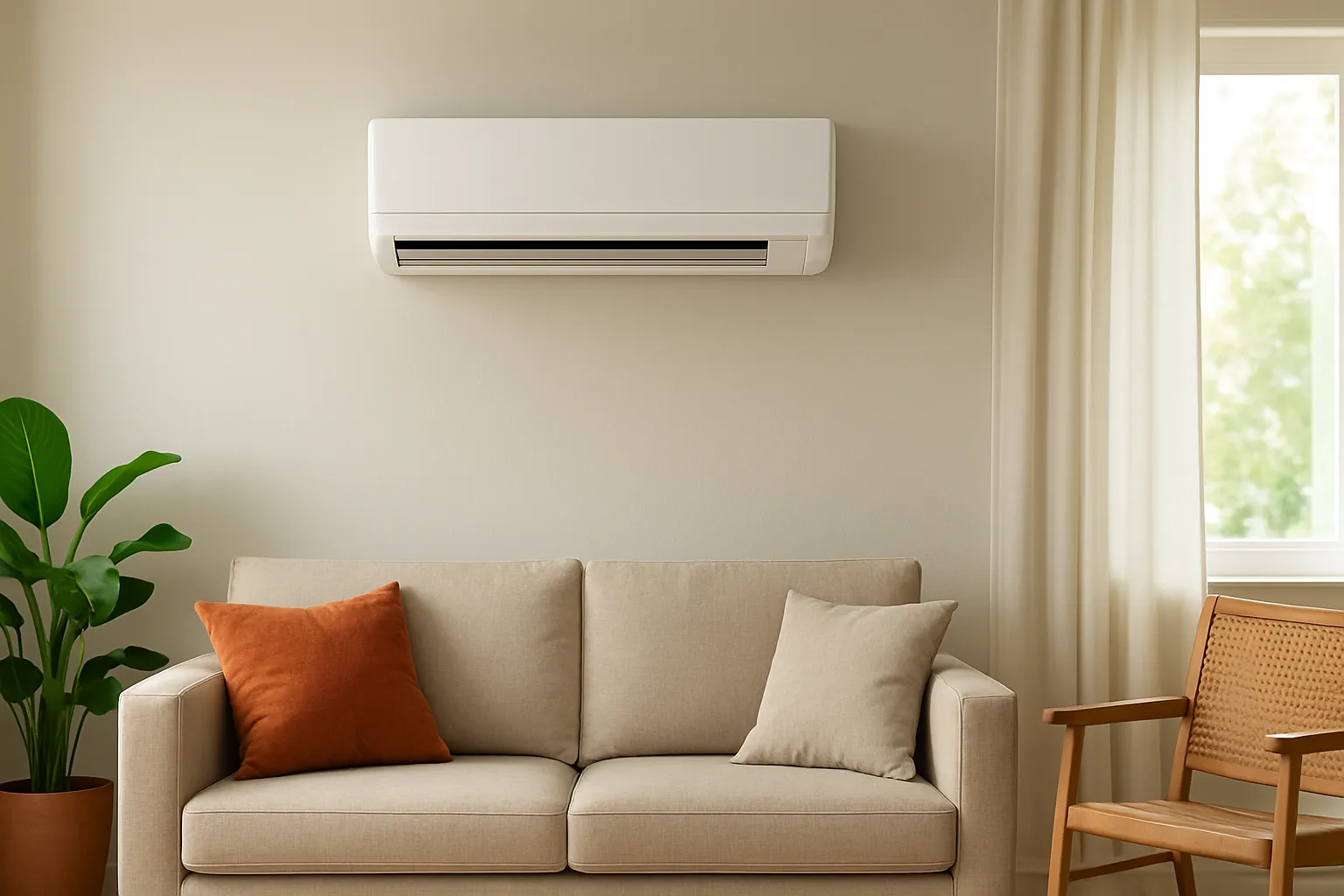
Blue Star Hot & Cold AC 2026: worth it?
TL;DR: A Blue Star Hot & Cold AC is worth it in 2026 if you live in a city that needs both summer cooling and winter heating, such as Delhi NCR, Chandigarh, Jaipur, Dehradun, parts of Punjab, Haryana, UP, Rajasthan or hill-adjacent areas. It is less compelling for coastal cities where winters are mild. Choose it only if the higher upfront price, inverter PCB complexity and installation requirements make sense for your usage. For year-round comfort in one room, it can be a cleaner and more convenient alternative to buying a separate room heater plus a regular split AC.
Last updated: July 2026
Key takeaways
- A hot and cold AC works like a reverse-cycle heat pump: it cools in summer and heats in winter using the same split AC system.
- Blue Star hot and cold inverter models usually make more sense in North and North-West India than in Mumbai, Chennai, Kochi or Goa.
- The value depends on winter usage. If you will use heating for only 10–15 nights a year, a normal cooling-only AC may be the better buy.
- For frequent winter heating, a heat-pump AC can often deliver more heat per unit of electricity than a basic resistance room heater, but actual bills depend on settings, room leakage and tariff.
- Check BEE star rating, ISEER, heating capacity, operating temperature range, warranty terms, PCB protection and local service availability before buying.
- Installation quality matters more than many brochure features: wrong vacuuming, poor drain slope, exposed copper lines or a cramped outdoor unit can reduce performance.
- Budget for stabilizer or voltage protection if your area has voltage fluctuations, especially for inverter models with electronic control boards.
Table of contents
- What is a Blue Star Hot & Cold AC?
- Who should consider it in India in 2026?
- Blue Star Hot & Cold AC vs normal AC plus room heater
- Running cost examples for Indian homes
- Tonnage, BEE stars and features to check
- Buying checklist before paying
- Installation and service tips for hot and cold models
- Common mistakes to avoid
- Practical next steps
- Conclusion
What is a Blue Star Hot & Cold AC?
A Blue Star Hot & Cold AC is a split air conditioner designed for both cooling and heating. In cooling mode, it behaves like a regular split AC: heat is removed from the room and rejected outside through the outdoor unit. In heating mode, the cycle is reversed. The outdoor unit absorbs heat from outside air and the indoor unit releases warm air into the room.
This type of system is commonly called a reverse-cycle AC or heat-pump AC. For Indian buyers, the main attraction is simple: one wall-mounted indoor unit can handle May-June heat and December-January cold in the same bedroom or living room.
Blue Star sells multiple categories of room ACs in India, including inverter split ACs, fixed-speed models, window ACs, commercial cooling products and selected hot and cold split AC models. Exact model codes and availability change by season and retailer, so you should verify the current 2026 lineup on Blue Star’s official site, large offline dealers and trusted online marketplaces before finalising.
In listings, you may see terms such as:
- Hot & Cold split AC
- Inverter heat pump AC
- 1 ton, 1.5 ton or 2 ton hot and cold AC
- 3 Star or 5 Star inverter hot and cold AC
- Convertible cooling modes
- Anti-corrosive blue fins or gold fins
- PM filters, dust filters or anti-bacterial filters
- Stabilizer-free operation range
The important point is not the label alone. Confirm that the model has a proper heating mode, not just a “turbo” or “dry” mode. Also check the heating capacity in the specification sheet, because some models are stronger at cooling than heating.
Who should consider it in India in 2026?
The question “blue star hot cold ac worth it” depends heavily on your city and your winter comfort needs. India is not one climate. A smart purchase in Gurugram may be unnecessary in Chennai.
A hot and cold AC is more likely to be worth it for:
- Delhi NCR households using heaters for several weeks in winter
- Chandigarh, Ludhiana, Amritsar, Jalandhar and other Punjab cities with cold nights
- Jaipur, Kota, Udaipur and parts of Rajasthan where winter mornings can feel sharp indoors
- Dehradun and nearby areas where homes need both cooling and winter heating
- Lucknow, Kanpur, Meerut, Agra and similar North Indian cities with seasonal heating demand
- Bedrooms for elderly family members who need steady indoor comfort, provided installation and safety are handled properly
- Home offices where one room is used daily across seasons
It is less likely to be worth it for:
- Homes in Mumbai, Navi Mumbai and coastal Maharashtra with mild winters
- Chennai, Kochi, Mangalore, Goa and similar coastal locations
- Buyers who use AC only for short summer bursts and do not need winter heating
- Rooms where a portable heater is used only a few nights a year
- Tenants who may move soon and cannot recover the higher upfront cost
If your winter is mostly about wearing a sweater for a few mornings, a hot and cold AC is overkill. If your family runs oil-filled radiators, fan heaters or blower heaters for many nights every winter, then a hot and cold AC deserves serious comparison.
Blue Star Hot & Cold AC vs normal AC plus room heater
Many Indian buyers compare three options: a normal cooling-only AC, a normal AC plus room heater, or a hot and cold AC. The best choice depends on budget, room usage and how long winter heating is required.
| Option | Upfront cost | Winter comfort | Electricity behaviour | Best for |
|---|---|---|---|---|
| Cooling-only split AC | Lower than hot and cold models | No heating | Summer bill only | Warm cities or low winter usage |
| Cooling-only AC + basic fan heater | Moderate combined cost | Quick local heating, can dry air | Heater may draw around 1–2 kW continuously depending on setting | Occasional winter use |
| Cooling-only AC + oil-filled radiator | Higher than fan heater, still separate device | Gentle heating, slower warm-up | Often 1–2.5 kW depending on model and thermostat cycle | Small rooms needing silent heating |
| Blue Star Hot & Cold AC | Higher AC purchase price | Whole-room heating from wall unit | Heat pump can be efficient, but depends on conditions | Regular summer cooling and winter heating in same room |
The comfort difference is also important. A small fan heater warms the area in front of it quickly but may not heat the whole bedroom evenly. An oil-filled radiator gives steadier heat but takes time. A hot and cold split AC circulates warm air through the room using the indoor blower, so it can feel more uniform when correctly sized.
However, heating through an AC also has trade-offs. The indoor fan runs, so there is some air movement. The outdoor unit must function in cold weather. If the room has gaps under doors or leaky windows, warm air escapes and the AC runs longer. In very cold outdoor conditions, heat-pump performance may reduce, although most Indian plains are not as extreme as snowy climates.
Running cost examples for Indian homes
Electricity cost is where the decision becomes practical. Do not rely only on “power saving” marketing. Use your own tariff and expected hours.
A simple formula is:
Monthly cost = approximate power draw in kW × hours used per day × days × electricity rate per unit
One unit of electricity means 1 kWh. Residential tariffs vary widely by state, slab, subsidy, fixed charges and consumption level. In many urban homes, a rough all-in rate may fall around ₹6–₹10 per unit, but your actual bill may be lower or higher. Use your latest bill for better accuracy.
Example 1: Summer cooling in a Delhi bedroom
Assume a 1.5 ton inverter hot and cold AC used for cooling for 8 hours per night. Because inverter ACs modulate, actual average draw may be much lower than peak rated input once the room is cooled. For a rough estimate, assume average draw of 0.9 kW over the night.
- 0.9 kW × 8 hours × 30 days = 216 units
- At ₹8 per unit = about ₹1,728 per month
If the room is top-floor, west-facing, poorly insulated or set at 18°C, the draw can be higher. If the room is shaded, sealed well and set at 25–26°C with a fan, the draw can be lower.
Example 2: Winter heating with a hot and cold AC
Assume the same room uses heating mode for 5 hours a night during a cold month. If the average electrical draw is around 0.7–1.1 kW depending on outdoor temperature and thermostat setting:
- At 0.8 kW × 5 hours × 30 days = 120 units
- At ₹8 per unit = about ₹960 per month
This is only an illustration. Your actual usage may vary due to insulation, outdoor temperature, tonnage, fan speed, set temperature and model efficiency.
Example 3: Basic room heater comparison
A 2 kW fan heater used for 5 hours daily would consume:
- 2 kW × 5 hours × 30 days = 300 units
- At ₹8 per unit = about ₹2,400 per month
Many heaters cycle on and off with thermostats, so the real number may be lower. Still, this shows why regular winter heating users consider heat-pump ACs. A hot and cold AC can be efficient because it moves heat instead of generating all heat directly through resistance. But it must be correctly installed and used sensibly.
Tonnage, BEE stars and features to check
A Blue Star hot and cold AC is worth considering only if you select the right size and efficiency. Oversizing or undersizing can spoil both comfort and bills.
Tonnage guide for typical Indian rooms
Use this as a starting point, not a final engineering calculation:
| Room condition | Approx room size | Suggested capacity |
|---|---|---|
| Small bedroom, shaded, normal ceiling | Up to 100–120 sq ft | 1 ton |
| Standard bedroom, one sun-facing wall | 120–170 sq ft | 1.5 ton |
| Large bedroom or small living room | 170–220 sq ft | 1.5 ton or 2 ton depending on heat load |
| Top-floor room, west-facing, large windows | Same area as above | Consider higher capacity after site inspection |
For heating, a slightly undersized unit may take longer to warm the room. For cooling, an oversized unit can cool quickly but may short-cycle, reduce humidity control and waste money. If your room has high ceilings, big glass windows, direct afternoon sun or many occupants, ask for a proper heat-load check.
BEE star rating and ISEER
In India, BEE star ratings help compare seasonal efficiency. For cooling, check the ISEER value and star label validity period. Higher star models usually cost more upfront but can save electricity if the AC runs many hours daily.
For hot and cold models, do not look at cooling efficiency alone. Check heating performance information too, if provided by the brand. Retail pages may highlight cooling numbers more prominently than heating numbers.
Inverter vs fixed-speed
Most serious hot and cold split AC options in 2026 are inverter models. An inverter compressor can vary speed according to load, which helps during long usage. It also improves comfort because the room temperature fluctuates less than a basic fixed-speed AC.
The downside is repair complexity. Inverter PCBs and sensors can be expensive if damaged after warranty. This makes voltage protection, clean installation and brand service support important.
Features worth checking
Prioritise these features over vague brochure terms:
- Copper condenser and copper connecting pipe details
- BEE star rating and ISEER label validity
- Cooling and heating capacity in watts
- Operating voltage range and stabilizer guidance
- Compressor warranty and PCB warranty terms
- Outdoor unit anti-corrosion coating, useful in coastal or polluted areas
- Noise level for indoor unit, especially for bedrooms
- Filter accessibility for regular cleaning
- Swing control and airflow reach
- Clear heating mode in remote and manual
Features like Wi-Fi, app control and voice assistant support are nice but not essential. They should not decide the purchase unless you genuinely use smart-home controls.
Buying checklist before paying
Use this checklist while comparing Blue Star hot and cold AC listings in 2026.
| Checkpoint | What to ask or verify | Why it matters |
|---|---|---|
| Exact model number | Match box, invoice and website listing | Avoid confusion between cooling-only and hot-cold variants |
| Tonnage | 1 ton, 1.5 ton or 2 ton based on room heat load | Wrong capacity affects comfort and bills |
| Star rating | Current BEE label and ISEER | Helps estimate long-term electricity cost |
| Heating mode | Confirm true hot and cold operation | Some buyers confuse modes on remote |
| Warranty | Compressor, PCB, product warranty | Inverter repairs can be costly |
| Installation scope | Standard copper length, drain pipe, stand, core cutting, extra charges | Prevents surprise billing |
| Voltage condition | Need for stabilizer or surge protection | Protects electronics in unstable areas |
| Service network | Blue Star authorised service in your locality | Faster support during peak season |
| Return policy | Especially for online purchase | Useful if wrong model or damaged unit arrives |
| Invoice GST details | Proper tax invoice and serial number | Needed for warranty claims |
Approximate pricing changes by city, tonnage, star rating, season and offers. In general, expect hot and cold inverter split ACs to cost more than comparable cooling-only models. A 1.5 ton 3 Star hot and cold inverter model may often sit in a mid-to-premium price band, while 5 Star models usually command a higher price. Treat any rupee figure online as approximate until you check current dealer quotes, installation extras and card discounts.
Installation and service tips for hot and cold models
A premium AC can perform poorly if installed badly. Hot and cold units need the same careful installation as regular split ACs, with extra attention because the system will run across seasons.
Indoor unit placement
Place the indoor unit where airflow can cover the bed or seating area without blowing directly on faces all night. Avoid placing it above wardrobes or in corners where return air is restricted. For heating mode, remember warm air tends to rise, so good swing control and fan circulation help distribute heat.
Outdoor unit clearance
The outdoor unit needs free air movement. Avoid cramped balconies where hot discharge air recirculates in summer. In winter heating mode, the outdoor unit also exchanges heat with outside air, so blocked airflow reduces performance. Keep enough space around the unit as per Blue Star’s installation manual.
Copper pipe and vacuuming
Insist on proper copper piping, insulation and vacuuming before gas release. Skipping vacuuming can leave moisture and air in the system, which may affect cooling, heating and compressor life. This is one of the most common shortcuts during rushed peak-season installations.
Drainage
Cooling mode produces condensate from the indoor unit. Heating mode may create condensate around the outdoor unit in some conditions. Ensure both indoor drain routing and outdoor placement are safe, especially in apartments where water dripping can disturb neighbours.
Electrical safety
Use a proper dedicated electrical point with correct wiring, MCB and earthing. Do not run a 1.5 ton or 2 ton AC through loose extension boards. If your area has frequent voltage dips or spikes, ask Blue Star authorised service or a qualified electrician whether a stabilizer, surge protector or voltage guard is recommended for your model.
Common mistakes to avoid
Buying only because it says “hot and cold”
If winter heating is not a real need, the feature may remain unused. In that case, put the money towards a higher BEE star cooling-only AC, better installation or improved room insulation.
Ignoring local service quality
Blue Star has a recognised presence in Indian cooling, but service experience still depends on your city, dealer and technician availability. Before buying, ask nearby residents, local dealers and service centres about response time in your area. Peak summer and peak winter demand can delay visits.
Choosing the wrong tonnage for top-floor rooms
Top-floor Indian rooms can become heat traps. A standard 1.5 ton suggestion for a 150 sq ft room may fail if there is direct roof heat, poor false ceiling insulation and west-facing glass. For such rooms, reducing heat load through curtains, roof treatment or insulation may be as important as AC capacity.
Setting extreme temperatures
Running cooling at 18°C in May or heating at 30°C in January increases electricity use and stresses the system. For many homes, 24–26°C cooling with a ceiling fan is comfortable. In heating mode, try moderate settings around 22–24°C and adjust based on comfort.
Not cleaning filters
Dusty filters reduce airflow, increase running time and make comfort worse. In Indian cities with dust, construction activity or pets, clean filters more often than the brochure minimum. Most users can remove and wash basic mesh filters, but follow the manual and dry them before reinstalling.
Forgetting off-season checks
A hot and cold AC may be used before summer and before winter. Book preventive service before heavy usage starts. Waiting until the first heat wave or cold wave can mean long service queues.
Practical next steps
- Decide if winter heating is a real requirement. Count how many days your family used heaters last winter and for how many hours.
- Measure the room. Note square footage, ceiling height, top-floor exposure, window direction and number of occupants.
- Shortlist by tonnage and BEE rating. Do not compare a 1 ton 3 Star model with a 1.5 ton 5 Star model as if they are the same category.
- Verify the exact Blue Star model code. Confirm that it is a true hot and cold AC with heating mode.
- Estimate running cost. Use your electricity bill rate, not a random national average.
- Ask for a full installation quote. Include stand, extra copper, drain pipe, core cutting, wiring, stabilizer and GST if applicable.
- Check warranty and service. Prefer authorised installation and keep invoice, warranty card and service records.
- Improve the room. Seal gaps, use curtains, reduce direct sun and keep filters clean. These steps improve both cooling and heating performance.
Conclusion
So, is a Blue Star Hot & Cold AC worth it in 2026? Yes, for the right Indian home. If you live in a region with harsh summers and meaningful winters, and you use one room for long hours, it can be a sensible year-round comfort appliance. It may reduce the need for separate heaters, save floor space and provide more even heating than small portable devices.
But it is not automatically the best choice for everyone. In coastal or warm-winter cities, a good cooling-only inverter AC may be more economical. For very occasional heating, a separate heater may cost less upfront. The best decision comes from matching tonnage, BEE rating, local tariff, winter usage and service support—not from brand name alone.
For most buyers asking whether a Blue Star hot cold AC is worth it, the answer is: buy it only if you will use both modes regularly, install it properly, and have reliable service support in your city.
About the author
AC Kharcha Team — research-focused AC guides for India. We study air conditioner specifications, electricity cost patterns, installation issues and practical home usage so Indian buyers can make clearer cooling and heating decisions.
Frequently asked questions
Is a Blue Star Hot & Cold AC worth it for Delhi NCR?
Yes, it can be worth it in Delhi NCR if you need both summer cooling and winter heating for the same room. The value is strongest for bedrooms or home offices used for many hours daily. Check tonnage, BEE rating, installation quality and local Blue Star service support before buying.
Is a hot and cold AC better than a room heater?
For regular whole-room heating, a hot and cold AC can be more convenient and may use electricity more efficiently than a basic resistance heater. For occasional use on a few cold nights, a room heater is usually cheaper upfront. Actual running cost depends on tariff, room insulation and temperature setting.
Does a Blue Star Hot & Cold AC consume more electricity in heating mode?
Heating mode does consume electricity, but a heat-pump AC moves heat rather than producing all heat through a resistance coil. In many Indian winter conditions, it can be efficient. However, bills still depend on hours of use, room leakage, outdoor temperature, set temperature and model efficiency.
Which tonnage is suitable for a Blue Star Hot & Cold AC in a bedroom?
For many Indian bedrooms, 1 ton can suit small shaded rooms up to about 100–120 sq ft, while 1.5 ton is common for 120–170 sq ft rooms. Top-floor, west-facing or poorly insulated rooms may need a higher capacity or heat-load assessment.
Should I buy a 3 Star or 5 Star Blue Star Hot & Cold AC?
Choose 5 Star if the AC will run for long hours in summer and winter, because the higher upfront cost may be recovered through lower electricity use over time. A 3 Star model can be acceptable for moderate usage or tighter budgets. Always compare current BEE label values and prices.
Do hot and cold ACs need a stabilizer?
Some models advertise stabilizer-free operation within a specified voltage range, but Indian supply conditions vary by locality. If your area has frequent voltage dips, spikes or outages, ask Blue Star authorised service or a qualified electrician whether additional voltage protection is recommended.
Is a Blue Star Hot & Cold AC useful in Mumbai or Chennai?
Usually it is less useful in Mumbai, Chennai and similar coastal cities because winter heating demand is low. A cooling-only inverter AC with a good BEE rating may be a better use of budget unless you have a specific heating need.
What should I verify before buying a Blue Star Hot & Cold AC online?
Verify the exact model number, heating mode, tonnage, BEE star rating, warranty, seller reputation, installation charges, return policy and whether authorised installation is available in your PIN code. Keep the invoice and serial number for warranty claims.
Last updated: 06 Sep, 2026 · Verified by editorial team
About the author
AC Kharcha Editorial Team
AC research & buying guides · India · We research air conditioners, electricity costs, and home cooling practices across Indian climates, then publish practical guides so households can buy and run ACs more confidently.
View all articles →Share this guide
Was this article helpful?
Related posts
 New AC models in India (2026)
Optimist 1.4 Ton 5-Star AC 2026: Can an Indian Startup Beat 1.5T Brands?
Optimist’s 1.4 ton 5-star AC 2026 is a bold first launch: ₹39,990, claimed ISEER 6.05, and a size that could suit Indian bedrooms.
 New AC models in India (2026)
Oakter Studio AC 5000 2026: 0.5 Ton AC for Small Rooms
A practical 2026 guide to Oakter Studio AC 5000-style 0.5 ton cooling for small Indian rooms, including room fit, electricity cost, installation checks and alternatives.
 New AC models in India (2026)
AKAI Nilgiree AC 2026: 55°C Cooling Claim?
AKAI Nilgiree AC 2026: 55°C cooling claim explained with India-focused buying advice, bill estimates, installation checks and practical usage tips.