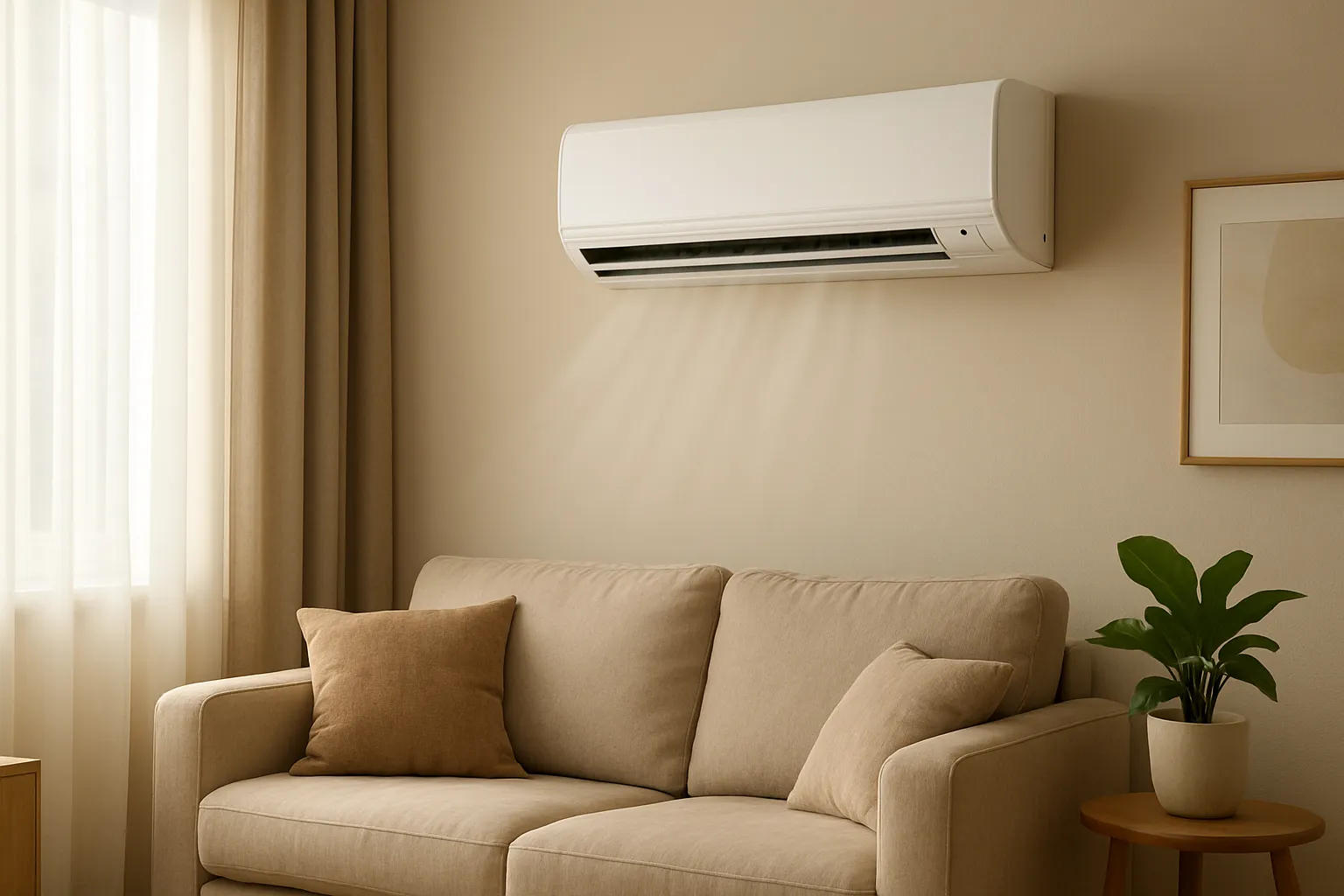
Pune Smart ToD Meter 2026: AC Bill Kamano Guide
Pune Smart ToD Meter 2026: a practical AC bill guide for households using smart meters, ToD tariffs, inverter ACs, BEE stars, and better cooling habits.
Pune Smart ToD Meter 2026: AC Bill Kamano Guide
TL;DR: If your Pune home has a smart meter with Time-of-Day billing, your AC bill depends not only on how many units you consume, but also when you consume them. Run heavy cooling more during lower-rate hours where possible, avoid unnecessary AC use during peak evening slots, choose the right tonnage and BEE star rating, keep the room sealed, and track daily units in your smart meter/app. You do not need to stop using the AC; you need to shift, size, maintain, and operate it smartly.
Last updated: July 2026
Key takeaways
- Pune smart meters can make AC usage more visible because you can track units more frequently than with old monthly-only meters.
- Time-of-Day billing means the same 1.5 ton AC can cost more or less depending on the time slot in which it runs.
- In many Pune homes, the costly AC window is not the whole day; it is long, careless evening use after the room is already cool.
- Inverter ACs with higher ISEER ratings usually make more sense for bedrooms and work-from-home rooms running 6–10 hours daily.
- A 1.5 ton 5-star inverter AC can still waste electricity if the room is west-facing, poorly sealed, over-occupied, or installed badly.
- The best savings come from combining tariff timing, correct temperature setting, clean filters, insulation, and realistic runtime planning.
- Always verify current MSEDCL tariff slabs, ToD time bands, taxes, duties, and fixed charges from your latest bill or official source because rates can change.
Table of contents
- What a smart ToD meter changes for Pune AC users
- How Pune AC bills are calculated under ToD billing
- Peak-hour AC habits that quietly increase your bill
- AC selection for Pune flats and bungalows in 2026
- Bill math examples: old habits vs ToD-aware usage
- Smart meter checklist before blaming the AC
- Room cooling improvements that work in Pune weather
- Installation and service tips for lower AC consumption
- Practical next steps
- Conclusion
What a smart ToD meter changes for Pune AC users
A normal electricity meter mainly tells you the final monthly consumption. A smart meter can give more frequent usage visibility, and when Time-of-Day billing applies, it can separate consumption by time band. For AC users in Pune, this matters because air conditioners are usually the biggest summer load after geysers in many homes.
In a typical Pune flat, lights, fans, Wi-Fi router, TV, laptop chargers, and refrigerator may together consume a moderate number of units. But one split AC running for several hours can add a large share to the bill. Under ToD billing, the cost of those units can vary by time slot. If a household uses the AC heavily during a higher-rate period, the bill can rise even if total units look similar to a neighbour’s consumption.
A smart ToD meter does not automatically reduce your bill. It only gives the billing system and the consumer a better time-wise picture. Savings come when you use that information. For example, you may pre-cool a bedroom slightly before a peak slot, use fan support during peak hours, avoid running two ACs at the same time in the evening, or shift laundry, ironing, EV charging, and dishwasher usage away from high-rate windows if those apply to your tariff.
Pune’s climate also makes this topic important. Unlike coastal cities where humidity may dominate, Pune often has hot afternoons, warm evenings, and relatively more comfortable late nights in some months. That means timing and ventilation choices can make a real difference. In April and May, AC use may be unavoidable. In June to September, dehumidification and short cooling cycles may be enough for some homes. A ToD-aware user adjusts by season instead of running the same routine all year.
How Pune AC bills are calculated under ToD billing
Your AC bill is not a separate bill; it is part of your total electricity bill. But you can estimate the AC portion using this simple method:
Approximate AC cost = AC units consumed × applicable energy rate + related taxes/duties impact
For a rough home estimate, focus first on units. One unit means 1 kWh. If an AC draws 1.2 kW on average and runs for 5 hours, it consumes around 6 units for that period. Inverter ACs do not draw the same power continuously. They may draw higher power during initial cooling and lower power after the room stabilises. Fixed-speed ACs cycle the compressor on and off, so average consumption depends on room heat load and thermostat setting.
ToD billing adds a time layer. A unit used in a peak band may cost more than a unit used in an off-peak band. The exact tariff depends on your consumer category, sanctioned load, billing rules, and the latest applicable order. Do not rely on social media screenshots for tariff rates. Check your latest bill, MSEDCL communication, or official tariff schedule.
For AC planning, divide your day into practical household slots:
| Time slot | Common AC use in Pune homes | Bill risk | Better habit |
|---|---|---|---|
| Afternoon | Work-from-home room, senior citizen room, kids at home | Medium to high because outdoor heat load is high | Use curtains, set 25–26°C, cool only occupied room |
| Early evening | Family returns home, cooking heat, two rooms may be used | Often high if ToD peak applies | Avoid running multiple ACs together unless needed |
| Late night | Bedroom AC use | Usually lower load after room cools | Use sleep mode/timer and fan support |
| Early morning | Some homes need no AC | Low need in many seasons | Switch to fan/ventilation when outdoor air is pleasant |
Remember that the electricity bill also includes fixed charges, wheeling charges, fuel adjustment or similar components, electricity duty, and other approved charges. So your final payable amount may not match a simple units × rate calculation exactly. Still, unit estimation is useful because AC behaviour is one of the few parts you can control daily.
Peak-hour AC habits that quietly increase your bill
The most expensive AC habit is not always setting 18°C. Often it is running the AC without noticing time, room condition, or occupancy. In Pune apartments, these habits are common:
-
Starting the AC at 18°C after returning home
Many users set 18°C because the room feels hot. This makes the compressor work harder for longer. A better approach is 24–26°C with high fan speed for the first 15–20 minutes, then auto or medium fan. -
Cooling an open-plan living area during cooking
If the kitchen heat enters the hall, the AC has to remove both outdoor heat and cooking heat. Use the chimney/exhaust, close kitchen separation if available, and start the AC after the most intense cooking period when practical. -
Running two ACs during the same peak slot
A hall AC and bedroom AC together can create a sharp consumption block. If ToD peak pricing applies, stagger usage where possible. Cool the bedroom before sleep and turn off the hall AC once everyone moves out. -
Leaving balcony doors slightly open
This is common in rented flats where door alignment is poor. Even a small air leak can increase compressor runtime. Use foam strips, door sweeps, or simple curtain barriers. -
Ignoring filter cleaning
A clogged filter reduces airflow. The room cools slowly, the AC runs longer, and users lower the temperature further. In dusty areas near roads, construction sites, or open grounds, filters may need cleaning every 2–3 weeks in summer. -
Using dry mode wrongly
Dry mode can help in humid monsoon weather, but it is not always the best for peak summer heat. If the room is hot and dry, cooling mode at a sensible temperature may be more comfortable.
AC selection for Pune flats and bungalows in 2026
If you are buying a new AC after getting a smart ToD meter, do not buy only by discount. Choose based on runtime. A low-priced 3-star fixed-speed AC may be acceptable for a guest room used occasionally. But for a master bedroom used every night from March to June, a 5-star inverter split AC can reduce running cost over years, especially if tariffs rise.
Approximate tonnage guidance for Pune homes:
| Room type | Approx room size | Suggested AC capacity | Notes for Pune conditions |
|---|---|---|---|
| Small bedroom | 90–120 sq ft | 1.0 ton | Works if not top-floor/west-facing and occupancy is low |
| Standard bedroom | 120–170 sq ft | 1.5 ton | Most common choice for Pune flats |
| Large bedroom/small hall | 170–220 sq ft | 1.5 ton heavy-duty or 2.0 ton | Consider sun exposure and ceiling height |
| Large hall | 220–300 sq ft | 2.0 ton or more | Open kitchen and large windows increase load |
| Top-floor west-facing room | Any size | Add heat-load margin | Insulation and curtains become very important |
For 2026, look at the BEE star label and ISEER value, not just star count. A 5-star inverter AC generally has a higher ISEER than a 3-star model, but compare the actual label because ratings can differ by year and capacity. Also check the annual energy consumption printed on the BEE label. It is based on standard test assumptions, not your exact home, but it helps compare models.
Model categories to compare include 1.5 ton 3-star inverter split ACs, 1.5 ton 5-star inverter split ACs, and 1 ton inverter ACs for smaller rooms. Popular brands in Pune retail and online markets often include LG, Daikin, Blue Star, Voltas, Panasonic, Carrier, Hitachi, Lloyd, Samsung, and Whirlpool. Prices vary by season and offers. As a rough 2026 market range, a 1.5 ton 3-star inverter split AC may be around ₹32,000–₹42,000, while a 1.5 ton 5-star inverter split AC may be around ₹40,000–₹55,000 or more depending on brand, condenser material, warranty, Wi-Fi features, and installation inclusions. Treat these as approximate ranges and verify before buying.
Do not overvalue Wi-Fi control unless you will actually use scheduling. In a ToD meter home, Wi-Fi scheduling can be useful if it helps you avoid peak slots or set timers reliably. But a Wi-Fi AC with poor efficiency is not better than a non-Wi-Fi AC with a stronger ISEER rating.
Bill math examples: old habits vs ToD-aware usage
Let us take a realistic example for a Pune bedroom with a 1.5 ton inverter AC. Actual consumption depends on model, room heat, set temperature, outdoor temperature, and installation quality. For easy understanding, assume the AC averages around 0.9 to 1.2 units per hour after considering compressor modulation in summer. During extreme heat or poor insulation, it can be higher.
Example 1: Evening-heavy usage
A household runs the bedroom AC from 8 pm to 2 am, around 6 hours daily. Assume average consumption is 1 unit per hour.
- Daily AC units: 6 units
- Monthly AC units: about 180 units
- If average effective energy cost is approximately ₹8–₹11 per unit after considering tariff components, AC energy impact may be roughly ₹1,440–₹1,980 before exact bill adjustments.
If a large share falls in a higher ToD band, the cost can be higher than the same units used in a lower-rate band. The point is not that night usage is bad; it is that peak-slot awareness matters.
Example 2: ToD-aware routine
Same home changes usage:
- Pre-cools room for 30–45 minutes before the most expensive slot if applicable.
- Uses 25°C instead of 22°C.
- Keeps ceiling fan at low/medium speed.
- Uses sleep mode after midnight.
- Switches off AC for the hall once the family moves to bedrooms.
If these changes reduce average daily consumption from 6 units to 4.8 units, monthly AC units drop from 180 to about 144. At an approximate effective cost of ₹8–₹11 per unit, this can reduce the energy portion by around ₹288–₹396 per month for that one AC. In hotter months or homes with two ACs, the impact can be larger. These are not guaranteed savings; they are planning estimates.
Example 3: Wrong AC size penalty
A 1 ton AC in a 180 sq ft west-facing top-floor room may run almost continuously and still feel inadequate. Users then set 18–20°C and complain about high bills. A correctly sized 1.5 ton inverter AC may reach comfort faster and modulate better. Oversizing can also be a problem: a 2 ton fixed-speed AC in a small room may short-cycle, feel clammy, and waste power. Correct tonnage is a bill-control tool, not just a comfort choice.
Smart meter checklist before blaming the AC
If your bill jumps after smart meter installation, do not immediately assume the meter is faulty or the AC is defective. Check systematically.
| Check | What to do | Why it matters |
|---|---|---|
| Billing period | Compare number of billed days | A longer cycle can look like a sudden jump |
| Tariff category | Confirm domestic category and sanctioned load | Wrong category/load can affect charges |
| ToD breakup | Check peak/off-peak units if shown | Reveals whether evening AC use is costly |
| Previous arrears | Look for adjustments or unpaid amount | Not all bill increases are consumption increases |
| Other loads | Geyser, pump, EV charging, induction, dryer | AC may not be the only heavy load |
| AC runtime | Note actual hours for 7 days | Memory often underestimates usage |
| Meter reading/app data | Compare daily trend | Helps identify abnormal spikes |
A useful home test is a controlled observation, not tampering. Turn off major appliances except the refrigerator and essential loads, note the smart meter reading/app trend, then run one AC for one hour at a normal setting and note the change. This gives a rough sense of hourly consumption. Do not open meter seals, bypass wiring, or attempt electrical work yourself. For suspected faults, use official complaint channels and a qualified electrician for internal wiring checks.
Also check whether your AC is on a shared circuit with loose connections, undersized wiring, or voltage problems. Poor electrical condition can reduce performance and create safety risks. Inverter AC PCBs are sensitive to voltage fluctuations, so correct earthing and surge protection are worth discussing with a technician.
Room cooling improvements that work in Pune weather
Pune has many flats with large sliding windows, balconies, and west-facing walls. These design features can increase heat load. Before spending ₹50,000 on a new AC, improve the room.
Use thick curtains or blackout blinds on west and south-facing windows. Reflective window film can help in some homes, but choose good-quality film and confirm society rules if applicable. Seal gaps around sliding doors. If the balcony door has a visible gap at the bottom, a simple door sweep can reduce hot air leakage.
For top-floor rooms, roof heat is a major issue. If you own the property, terrace heat coating, insulation, or shade structures may reduce heat gain. In rented homes, practical options include curtains, cross-ventilation during cooler hours, and avoiding heat-generating appliances in the AC room.
Furniture placement also matters. Do not block the indoor unit airflow with wardrobes, loft panels, or curtains. The AC should throw air across the room, not directly into a wall two feet away. Keep the outdoor unit in a ventilated location. If the outdoor unit is trapped in a closed balcony with hot air recirculation, energy consumption can rise and cooling can fall.
Set temperature is the easiest daily improvement. For most users, 24–26°C with fan support feels comfortable and uses less electricity than 20–22°C. Every home is different, but extremely low settings usually increase compressor load. Use sleep mode or timer instead of letting the AC run at full comfort setting until morning.
Installation and service tips for lower AC consumption
Installation quality directly affects AC bill. Even a high-end 5-star inverter AC can perform badly if installed carelessly. In Pune, where many installations happen during peak summer rush, supervise the basics.
Ask for proper vacuuming of copper lines before gas release. Skipping vacuuming can leave moisture and air in the system, affecting long-term performance. Confirm copper pipe length and insulation quality. Poor insulation on refrigerant pipes causes cooling loss. Ensure the drain pipe has correct slope to avoid leakage and humidity issues.
Outdoor unit placement should allow airflow and service access. Avoid locations where hot discharge air returns into the condenser. Keep reasonable clearance around the unit as per brand guidance. If the outdoor unit is placed on a shaky bracket, vibration and noise may increase. Use proper fasteners and anti-vibration pads where needed.
For service, clean indoor filters regularly yourself if the manual allows. Book professional wet service before peak summer or after heavy dusty months. During service, ask the technician to check coil condition, blower cleanliness, gas pressure only if symptoms indicate, electrical terminals, remote sensors, and drain line. Do not allow unnecessary gas top-up without leak diagnosis. AC refrigerant does not get “used up” like fuel; low gas usually means leakage or installation issue.
If you are buying a new AC, compare warranties carefully. Compressor warranties of 10 years are common in many models, but PCB warranty, labour charges, gas charging, and visit charges may differ. For inverter ACs, PCB cost can be significant after warranty. A slightly more expensive model with better local service support in Pune may be more practical than a cheaper model with weak technician availability.
Practical next steps
- Check your latest electricity bill for tariff category, sanctioned load, billed units, fixed charges, and any ToD breakup shown.
- Track AC runtime for one week room by room. Write actual start and stop times instead of guessing.
- Identify peak-slot overlap based on your applicable ToD schedule. Shift avoidable heavy loads away from expensive periods where possible.
- Set AC temperature to 24–26°C and use the ceiling fan at low or medium speed for better air mixing.
- Clean filters every 2–4 weeks in summer, especially if your area has dust, road work, or nearby construction.
- Seal the room with curtains, door strips, and closed balcony gaps before assuming you need a bigger AC.
- For new purchases, shortlist by tonnage, BEE star label, ISEER, annual energy consumption, warranty, and Pune service support.
- For high bills, compare daily smart meter data with appliance usage before filing a complaint or replacing the AC.
- Use timers and sleep mode to avoid accidental all-night high-power operation.
- Get electrical checks done professionally if there is tripping, burning smell, overheating plug points, or frequent voltage fluctuation.
Conclusion
A Pune smart ToD meter changes the AC bill conversation from “How many hours did we use the AC?” to “When, where, and how efficiently did we use it?” The meter itself is not the enemy. Poor timing, wrong tonnage, low set temperatures, dusty filters, leaky rooms, and bad installation usually create the bigger cost problem.
For 2026, the practical approach is simple: understand your tariff, track your AC units, avoid careless peak-hour usage, buy the right BEE-rated inverter AC for high-runtime rooms, and maintain the system before summer stress begins. You may not control the weather or tariff revisions, but you can control runtime, temperature, airflow, insulation, and service quality.
About the author
AC Kharcha Team — research-focused AC guides for India. We study air conditioner specifications, electricity cost patterns, installation practices, and everyday cooling habits to help Indian households make better AC decisions.
Frequently asked questions
Does a Pune smart ToD meter make AC electricity more expensive?
Not by itself. A smart ToD meter records consumption by time period where Time-of-Day billing applies. Your AC can cost more if you run it heavily during higher-rate slots, and less if you reduce or shift usage to lower-rate slots where practical. Always check your latest tariff and bill details.
What is the best AC temperature to reduce bills in Pune?
For most Pune homes, 24–26°C with a ceiling fan at low or medium speed is a good balance of comfort and electricity saving. Very low settings like 18–20°C usually increase compressor runtime and can raise bills.
Is a 5-star inverter AC worth it for a smart meter home?
It is usually worth considering if the AC runs daily for long hours, such as in bedrooms or work-from-home rooms. For occasional guest-room use, a 3-star inverter may be enough. Compare ISEER, BEE annual energy consumption, price difference, and warranty before deciding.
How can I estimate my AC units from smart meter data?
Note your meter/app reading before running the AC, keep other heavy appliances off as far as practical, run the AC for one hour at a normal setting, and compare the unit change. This gives a rough hourly estimate. Do not touch meter wiring or seals.
Why did my bill increase after smart meter installation?
Possible reasons include higher actual usage, longer billing period, tariff or duty changes, ToD peak usage, previous adjustments, or other heavy loads such as geysers, pumps, induction cooktops, dryers, or EV charging. Compare billed days, units, ToD breakup, and daily usage before blaming the AC.
Should I run the AC before peak ToD hours to save money?
Pre-cooling can help in some homes if your tariff has a clearly higher peak period and the room is well sealed. Cool the room moderately before the peak slot, then use a higher temperature setting, fan support, sleep mode, or timer. Do not overcool the room, as that can waste energy.
Which AC size is suitable for a typical Pune bedroom?
A 1.5 ton split AC is common for 120–170 sq ft bedrooms in Pune. A 1 ton AC may suit smaller rooms around 90–120 sq ft, while top-floor, west-facing, or larger rooms may need more capacity. Heat load, ceiling height, windows, and occupancy matter.
Can dirty filters affect my ToD meter AC bill?
Yes. Dirty filters reduce airflow, slow down cooling, and make the compressor run longer. In dusty Pune conditions, cleaning filters every 2–4 weeks during summer can help maintain efficiency and comfort.
Last updated: 31 Aug, 2026 · Verified by editorial team
About the author
AC Kharcha Editorial Team
AC research & buying guides · India · We research air conditioners, electricity costs, and home cooling practices across Indian climates, then publish practical guides so households can buy and run ACs more confidently.
View all articles →Share this guide
Was this article helpful?
Related posts
 AC electricity bill in India: city DISCOM cost and savings
Dry mode vs cool mode AC: Kolkata monsoon bill guide | AC Kharcha
For Kolkata’s monsoon, Dry Mode helps when the room feels sticky, while Cool Mode is better when the room is truly hot. Choose by room condition, not habit.
 AC electricity bill in India: city DISCOM cost and savings
MP AC Bill 2026: Indore/Bhopal 1.5 Ton AC Running Cost
MP AC bill 2026 for Indore and Bhopal homes: estimate 1.5 ton AC electricity cost, compare star ratings, and learn practical ways to reduce summer khoroch.
 AC electricity bill in India: city DISCOM cost and savings
Punjab PSPCL AC Bill 2026: 1.5 Ton Cost After 300 Free Units
Punjab PSPCL AC Bill 2026: 1.5 Ton Cost After 300 Free Units — a clear guide to estimating monthly AC electricity cost, understanding free-unit impact, and reducing summer bills.