
Dry mode vs cool mode AC: Kolkata monsoon bill guide | AC Kharcha
For Kolkata’s monsoon, Dry Mode helps when the room feels sticky, while Cool Mode is better when the room is truly hot. Choose by room condition, not habit.
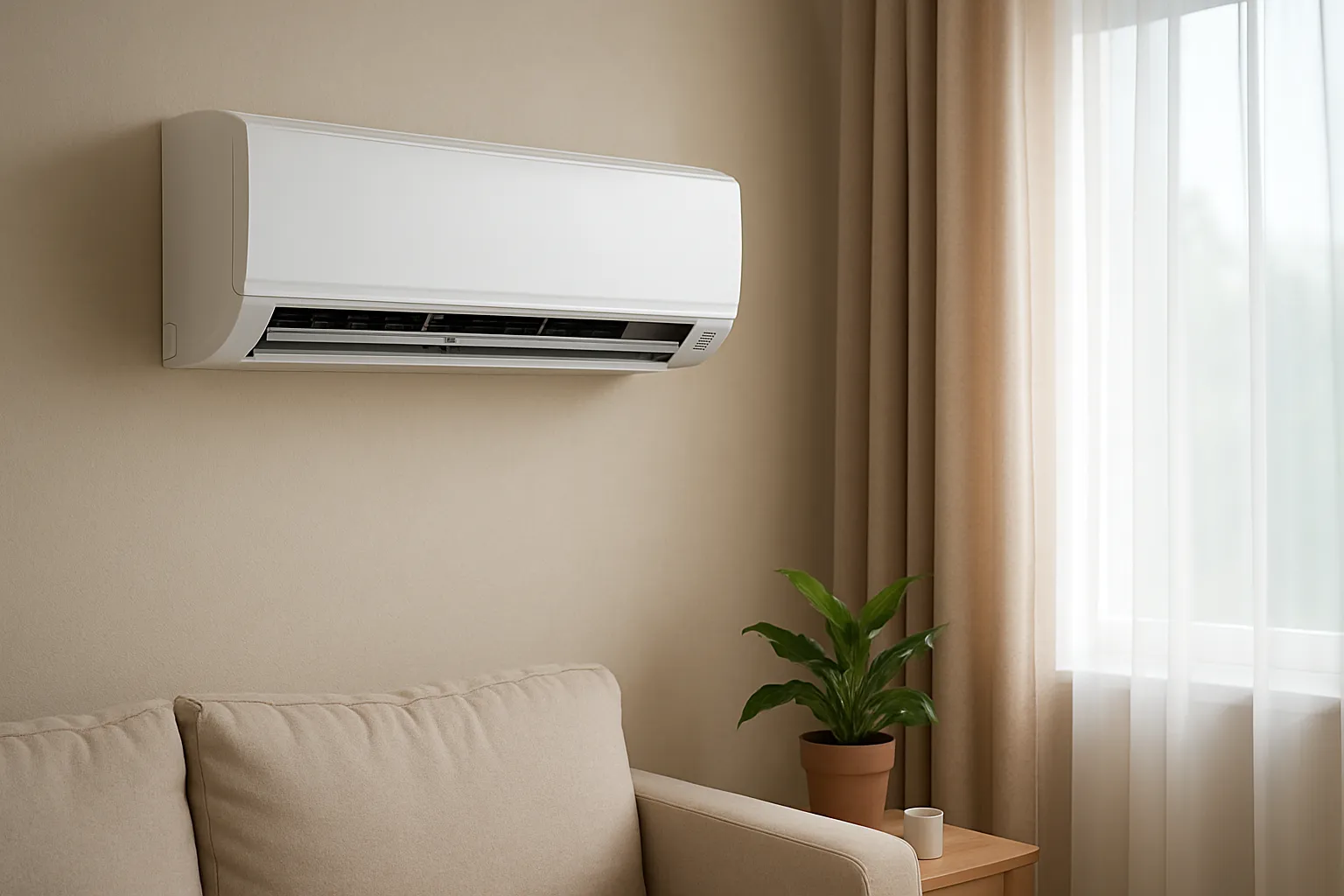
Dry mode vs cool mode for Kolkata monsoon AC bills
Dry Mode vs Cool Mode comes down to one thing: use Dry Mode for sticky, humid rooms and Cool Mode for genuinely hot rooms. Your bill depends more on runtime, set temperature, room size, and efficiency than on the mode name alone.
Last updated: July 2026
Key takeaways
- Dry Mode is most useful on humid, rainy Kolkata evenings when comfort is limited by moisture, not only heat.
- Cool Mode is still the right choice for hot afternoons, sun-facing rooms, and bedrooms that need stronger cooling.
- A higher BEE star rating and better ISEER can matter across the season because the AC still uses electricity whenever it runs. See BEE’s star labelling program: https://beeindia.gov.in/content/star-labeling-programme.
- Dry Mode may feel more comfortable for sleep because it reduces the sticky feeling without overcooling the room.
- The best monsoon setting is usually a sensible temperature, a closed room, and a timer—not the coldest possible setting.
- Drain water in Dry Mode is normal because the AC is removing moisture from indoor air.
- For most Kolkata homes, the winning strategy is mode selection based on room condition, not one fixed setting for all rainy days.
Table of contents
- Why Kolkata feels different in monsoon
- What Dry Mode actually does
- Dry Mode vs Cool Mode: what changes for comfort and bills
- When Dry Mode works best in Kolkata homes
- When Cool Mode is still the better choice
- Best monsoon settings for bedrooms and living rooms
- Mistakes that raise humidity and electricity use
- How BEE stars and ISEER affect real bills
- Quick decision table for Kolkata households
- Practical next steps before your next rainy night
Why Kolkata feels different in monsoon
Kolkata’s monsoon is not just a story of rain. It is a story of moisture that hangs around after the rain stops. Walls feel damp. Curtains hold on to humidity. Bedding can feel heavy. Even your skin can feel sticky before the room has become truly hot. That is why a bedroom in Salt Lake, Behala, New Town, Ballygunge, Garia, or Howrah can feel uncomfortable on a night that does not seem especially warm.
Why does that happen? Because the air carries more moisture, sweat evaporates more slowly, and the room never quite resets to a dry, fresh feeling. The temperature may look manageable on a weather app, yet you still feel sweaty or clammy. That mismatch is exactly where the dry mode vs cool mode decision matters.
Many readers assume the AC is weak when the room does not feel “cold enough.” Often, the real problem is humidity. If the room is already close to a comfortable temperature, forcing more cold air at it may not solve the sticky feeling. It can even make sleep less pleasant. A better question is simple: is the room hot, or is it just damp?
What Dry Mode actually does
Dry Mode is meant for humid weather. In a typical room AC, it changes how the compressor and fan behave so the unit focuses more on removing moisture from indoor air. The effect is usually a room that feels less sticky, less muggy, and easier to live in during a rainy spell.
Dry Mode is not a stand-alone dehumidifier, and it is not a secret low-bill switch. It is still an air-conditioning comfort mode. Depending on the model, the compressor may cycle differently and the fan may run more slowly so the air spends more time losing moisture before it returns to the room. That is why the setting often feels softer than full cooling.
For Kolkata homes, this matters because the problem is often not intense heat. It is damp air trapped indoors after repeated rain. If your bedroom already feels reasonably cool, Dry Mode can be the more natural first choice. If the room is warm and humid, you may need Cool Mode first and a gentler setting later.
You should also expect water drainage. That is normal. The unit is pulling moisture out of the air, and that moisture has to leave through the drain line. If you see water dripping into the room or pooling near the indoor unit, that is a maintenance problem, not a reason to avoid Dry Mode.
Dry Mode vs Cool Mode: what changes for comfort and bills
The biggest difference is the job each mode is trying to do.
- Dry Mode aims to reduce humidity and improve comfort in sticky weather.
- Cool Mode aims to lower room temperature more directly and more predictably.
Comfort difference
Dry Mode usually feels gentler. That is why it can work well in bedrooms. Many people do not want a strong blast of cold air all night during the monsoon. They want the room to stop feeling damp. Dry Mode can help sheets feel less clammy and reduce the heavy-air feeling without pushing the room into an overly chilled state.
Cool Mode is better when the room is actually hot. If sunlight has heated a west-facing room, if several people are in the room, or if you have just come home sweaty, Dry Mode may feel too weak. Cool Mode gives a clearer temperature drop and is easier to trust when comfort needs are obvious.
Electricity and bill difference
Your bill does not depend only on the mode label. It depends on how long the AC runs, the set temperature, how hot and humid the room is, how many people are inside, and how efficient the AC is. That is why one person can feel that Dry Mode saves money while another sees no real difference.
A room that feels comfortable at 27°C in Dry Mode may cost less to run than a room forced down to 23°C in Cool Mode. But if Dry Mode cannot keep the room comfortable and you keep the AC running anyway, the expected saving disappears. Which mode is cheaper? The one that gets the room comfortable without asking the compressor to work longer than necessary.
A simple bill example
Imagine a 1.5 ton inverter AC in a Kolkata bedroom during a humid night.
- If you start with Dry Mode at a sensible setting and the room settles comfortably in about an hour, the compressor may not need to work as hard afterward.
- If you use Cool Mode and set a very low temperature because the room feels sticky, the compressor may keep running longer to chase that lower target.
The exact units will vary a lot. Room size, wall insulation, sunlight, occupancy, and the unit’s ISEER can change the result significantly. Treat any bill comparison as directional, not fixed. That is also why broad claims like “this mode always saves electricity” are rarely useful in real homes.
When Dry Mode works best in Kolkata homes
Dry Mode is most useful when the room is already close to comfortable but the air feels wet, stuffy, or unpleasant. That often happens during rainy evenings, after an afternoon shower, or when humid air lingers indoors for hours.
Common Kolkata use cases include bedrooms that feel clammy at night, living rooms that become sticky after rain, and small rooms with moderate temperature but high moisture. It is also helpful when you want comfort without a strong cold draft. In real homes we see this often: the family does not complain that the room is hot, only that it feels heavy.
Dry Mode is often a good first choice when:
- the weather is rainy rather than scorching,
- you do not want the room overcooled,
- you are sleeping and want a quieter, softer feel,
- the family complains of dampness more than heat.
That makes it a practical monsoon setting for many households. It does not need to win every situation. It only needs to solve the real problem in front of you.
When Cool Mode is still the better choice
Cool Mode should not be replaced blindly. It still does the heavier cooling work and is the right answer in many real-life Kolkata situations.
Use Cool Mode when the room is hot due to direct sunlight, your bedroom faces west or gets afternoon heat, several people are sharing the room, or you need faster relief after coming home. Those are not edge cases. They are ordinary summer-and-monsoon situations in Kolkata.
A common mistake is using Dry Mode because it sounds economical, while the room is actually warm. In that case, the AC may struggle, run longer, and still leave people unsatisfied. Then someone lowers the temperature, the compressor works harder, and the supposed benefit disappears. Why fight the room with the wrong mode?
If your room is hot and humid, start with Cool Mode. Once the room becomes comfortable, you can try a higher set temperature or a softer setting later in the night, depending on your AC model.
Best monsoon settings for bedrooms and living rooms
A practical setting matters more than chasing the “best” button.
For many Kolkata bedrooms, a good starting point is 26°C to 28°C, Dry Mode if the room is sticky more than hot, Cool Mode if the room is actually warm, auto or low fan if the airflow feels harsh, and a sleep timer if the room usually stays comfortable after some time.
For living rooms, the setting often needs to be more responsive because occupancy changes and doors open more often. If family members are moving in and out, Dry Mode may lose effectiveness because outside humid air keeps entering. In that case, Cool Mode can be more practical.
Fan speed: auto or low?
There is no single best answer for every home. Auto fan is usually the safe starting point. Low fan can feel better in a bedroom because it is quieter and gentler. The right choice is the one that gives you comfort without pushing the set temperature lower than necessary.
Timer use
A timer can help because many monsoon rooms cool down after the first phase of operation. If your bedroom usually feels good after 1 to 2 hours, there is little reason to keep running at full effort all night. Set the timer. Let the room work for you, not against your bill.
Mistakes that raise humidity and electricity use
The easiest way to waste money in monsoon is to use the AC in the wrong room condition.
Common mistakes
- Keeping windows slightly open while the AC runs.
- Using Dry Mode in a room that is actually hot.
- Setting a very low temperature just because the weather is wet.
- Ignoring filter cleaning, which can reduce airflow and comfort.
- Forgetting to check the drain line if water is dripping inside.
- Running the AC all night without checking whether the room still needs it.
Why water from the drain is normal
If you notice water exiting through the drain pipe in Dry Mode, that is usually expected. The AC is taking moisture out of indoor air, and that moisture has to leave the system. The drain line is part of normal operation.
What is not normal is water spilling into the room, a blocked drain, or signs of leakage around the indoor unit. Those are maintenance issues, not reasons to avoid Dry Mode itself.
Small habits that help more than people expect
Close the room properly. Pull the curtains if sun still reaches the space. Clean the filter on schedule. Keep the door shut once the room is comfortable. These are boring steps, but they often save more electricity than changing between modes every 10 minutes. In monsoon, comfort is often won by sealing the room, not by chasing colder settings.
How BEE stars and ISEER affect real bills
When people discuss AC bills, they often focus too much on tonnage and too little on efficiency. In India, the BEE star label and ISEER matter because they help compare how efficiently an AC uses electricity. BEE’s own star labelling framework is the place to check the current label and programme details: https://beeindia.gov.in/content/star-labeling-programme.
A better-rated AC is not a guarantee of a low bill, but it gives you a stronger starting point. That matters in Kolkata because monsoon comfort can mean frequent use over long periods. Even if Dry Mode reduces how hard the AC works in a given hour, a less efficient machine can still consume more over the season than a better-rated one.
What to check before buying
- BEE star rating on the current model year label.
- ISEER figure if available.
- Whether the unit is inverter or fixed-speed.
- Whether the tonnage matches your room size.
- Whether the model has a reliable drain arrangement and service support.
For a humid city like Kolkata, efficiency is not just a summer issue. It matters whenever the AC runs for comfort, especially on damp nights when the machine may be used often but not always at full cooling demand.
Why efficiency still matters in monsoon
Monsoon does not remove the need for cooling. It changes the shape of the load. The room may not be blazing hot, yet the AC still has to work against humidity. That means the machine runs for comfort, and whenever it runs, efficiency matters. A well-sized, efficient unit gives you more breathing room when the weather stays damp for days.
Quick decision table for Kolkata households
| Situation in the room | Better mode | Why it fits | Watch out for |
|---|---|---|---|
| Sticky but not very hot rainy evening | Dry Mode | Targets moisture and improves comfort | May feel weak if the room is still warm |
| Hot afternoon with sun on the wall | Cool Mode | Gives faster, stronger cooling | Lower settings can raise electricity use |
| Bedroom at night, humid and clammy | Dry Mode first | Often feels softer for sleep | Use a timer and keep doors/windows shut |
| Living room with people coming and going | Cool Mode or mixed use | Handles heat and humidity better | Open doors reduce effectiveness |
| New AC purchase for monsoon comfort | Higher BEE star, better ISEER | Better efficiency across the season | Verify the label and model carefully |
Best for / skip if
Best for:
- Kolkata homeowners who want better night comfort during monsoon.
- Renters in humid flats where the room feels sticky but not scorching.
- Families trying to reduce overcooling while keeping the room comfortable.
- Buyers comparing AC models for efficient rainy-season use.
Skip if:
- The room is actually hot and needs immediate cooling.
- There is a leakage, drainage, or filter problem.
- You expect Dry Mode to work like a full dehumidifier in a severely damp room.
- The room is open to humid outdoor air most of the time.
Practical next steps before your next rainy night
- On the next humid evening, start with Dry Mode if the room feels sticky more than hot.
- If the room still feels warm after 20 to 30 minutes, switch to Cool Mode instead of forcing Dry Mode.
- Try a set point around 26°C to 28°C before lowering it further.
- Close windows, check curtains, and make sure the drain line is working properly.
- Use the sleep timer for bedrooms that do not need all-night active cooling.
- If you are shopping for a new unit, compare BEE star rating and ISEER, not just brand or tonnage.
Comparison table
| Factor | Dry Mode | Cool Mode |
|---|---|---|
| Main purpose | Reduce humidity | Lower temperature |
| Best for | Sticky, damp rooms | Warm or sun-heated rooms |
| Comfort feel | Softer, gentler | Stronger, more direct |
| Overnight use | Often good for bedrooms | Better if the room stays warm |
| Bill impact | Depends on runtime and room load | Depends on runtime and set temperature |
| Drain water | Normal and expected | Also possible, but usually less focused on moisture removal |
| Risk of overcooling | Lower | Higher if set too cold |
Conclusion
For Kolkata monsoon, dry mode vs cool mode is not a one-size-fits-all question. Dry Mode is often better when the room feels sticky, heavy, or damp. Cool Mode is still the stronger option when the room is actually hot. The most sensible bill-saving approach is to match the mode to the real problem, keep the set temperature reasonable, and choose an efficient AC in the first place.
If you want a simple rule, start with Dry Mode on humid rainy nights, switch to Cool Mode when heat is the main issue, and use a timer so you are not paying for unnecessary runtime.
About the author
AC Kharcha Team — research-focused AC guides for India. We write practical, India-specific articles to help households choose the right AC settings, understand BEE labels, and manage electricity use more wisely.
Frequently asked questions
Can Dry Mode replace a dehumidifier in Kolkata monsoon?
Not fully. Dry Mode reduces moisture while the AC is running, but it is still an AC comfort mode, not a dedicated dehumidifier. It works best for humid rooms that also need light cooling.
Should I use auto fan or low fan in Dry Mode?
There is no single best answer. Auto is a safe starting point, while low fan can feel quieter and gentler in a bedroom. Choose the setting that keeps you comfortable without dropping the temperature too far.
Why does water come from the drain pipe in Dry Mode?
Because the AC is removing moisture from indoor air. The collected condensate exits through the drain line, so water at the drain is normal in Dry Mode.
Does Dry Mode damage the compressor?
No, not when used as intended. Dry Mode is a normal rainy-day function. Problems usually come from misuse, bad maintenance, or system issues rather than Dry Mode itself.
Is Dry Mode useful during light rain but not peak afternoon heat?
Yes, that is a good rule of thumb. Dry Mode is meant for humid, rainy conditions, while Cool Mode is better when the room is actually hot and needs stronger cooling.
Will a higher BEE star rating help in monsoon?
Yes, because efficiency still matters whenever the AC runs. A better BEE label and stronger ISEER can help reduce wasted electricity over the season, though your actual bill still depends on use and room conditions.
What is the best AC setting for a humid Kolkata bedroom?
A practical starting point is 26–28°C with Dry Mode or mild Cool Mode, plus a timer and a closed room. Adjust based on comfort, because actual performance depends on room size, insulation, and outdoor humidity.
Last updated: 06 Sep, 2026 · Verified by editorial team
About the author
AC Kharcha Editorial Team
AC research & buying guides · India · We research air conditioners, electricity costs, and home cooling practices across Indian climates, then publish practical guides so households can buy and run ACs more confidently.
View all articles →Share this guide
Was this article helpful?
Related posts
 AC electricity bill in India: city DISCOM cost and savings
MP AC Bill 2026: Indore/Bhopal 1.5 Ton AC Running Cost
MP AC bill 2026 for Indore and Bhopal homes: estimate 1.5 ton AC electricity cost, compare star ratings, and learn practical ways to reduce summer khoroch.
 AC electricity bill in India: city DISCOM cost and savings
Punjab PSPCL AC Bill 2026: 1.5 Ton Cost After 300 Free Units
Punjab PSPCL AC Bill 2026: 1.5 Ton Cost After 300 Free Units — a clear guide to estimating monthly AC electricity cost, understanding free-unit impact, and reducing summer bills.
 AC electricity bill in India: city DISCOM cost and savings
Voltas AI Energy Manager: can it cap AC units? | AC Kharcha
A detailed India-focused guide to Voltas AI Energy Manager, possible AC unit caps, smart AC setup, electricity bill impact, and practical buying checks.