
MP AC Bill 2026: Indore/Bhopal 1.5 Ton AC Running Cost
MP AC bill 2026 for Indore and Bhopal homes: estimate 1.5 ton AC electricity cost, compare star ratings, and learn practical ways to reduce summer khoroch.
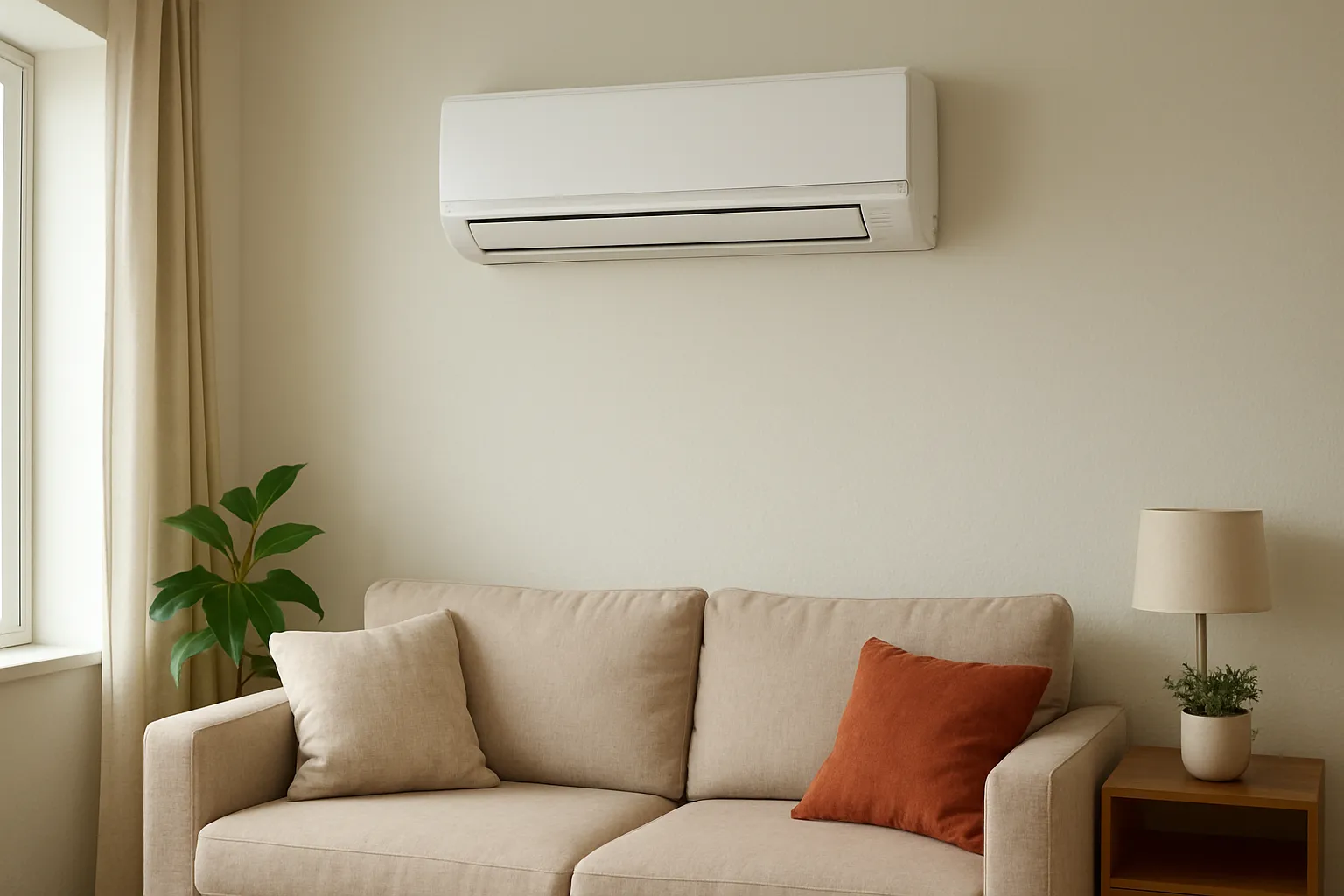
MP AC Bill 2026: Indore/Bhopal 1.5 Ton AC Running Cost
TL;DR: For a typical 1.5 ton split AC in Indore or Bhopal, monthly electricity cost in summer can roughly range from ₹1,200 to ₹4,500+ depending on daily runtime, BEE star rating, room heat load, set temperature, and your MP electricity slab. A 5-star inverter AC used sensibly at 24–26°C usually costs less to run than an older fixed-speed or low-star model, but the final bill depends on your actual units consumed and tariff category.
Last updated: July 2026
Key takeaways
- A 1.5 ton AC is suitable for many 120–180 sq ft bedrooms in Indore and Bhopal, but top-floor rooms, west-facing walls, and poor insulation can increase running cost.
- In Madhya Pradesh homes, AC bill calculation should be based on kWh units, not only the tonnage printed on the box.
- A 1.5 ton inverter AC may average far below its peak input power after the room reaches temperature, especially at 24–26°C.
- For 6–8 hours nightly use, the difference between a 3-star and 5-star AC can become noticeable across April, May, June, and humid monsoon evenings.
- Bhopal’s lake-side humidity and Indore’s dry heat can feel different, but both cities need correct installation, clean filters, and outdoor unit airflow for lower khoroch.
- Approximate bill estimates are useful for planning, but your actual MP electricity bill depends on tariff slabs, fixed charges, taxes, other appliances, and meter reading cycle.
Table of contents
- Why 1.5 Ton AC Bill Planning Matters in MP
- How to Calculate AC Electricity Cost in Indore and Bhopal
- Estimated 1.5 Ton AC Monthly Bill in 2026
- Indore vs Bhopal: What Changes in Real Usage
- 3-Star vs 5-Star vs Older AC: Running Cost Comparison
- Room Size, Floor Level, and Sun Exposure
- Installation and Electrical Checks Before Summer
- Practical Ways to Reduce AC Khoroch in MP
- When to Upgrade Your Old 1.5 Ton AC
- Practical Next Steps
Why 1.5 Ton AC Bill Planning Matters in MP
In Indore and Bhopal, a 1.5 ton AC is one of the most common choices for bedrooms, medium drawing rooms, rental flats, and compact independent-house rooms. It cools faster than a 1 ton unit in many Indian rooms and is usually cheaper than a 2 ton AC. But the main question for most families is not only, “Which AC should I buy?” It is, “How much will my MP electricity bill increase after using this AC?”
That is where the phrase mp ac bill indore bhopal 1 5 ton khoroch becomes important. “Khoroch” simply means the running expense you feel every month. In 2026, purchase price is only one part of the decision. A 1.5 ton AC may cost around ₹32,000 to ₹55,000 approximately depending on brand, star rating, inverter technology, warranty, copper condenser, and seasonal discounts. But over five summers, electricity can become the bigger cost.
For example, a family using AC only for two hours after dinner will have a very different bill from a family running it from 10 pm to 6 am daily. A student living in a rented Indore flat may use the AC differently from a family in a top-floor Bhopal apartment with afternoon sun. So instead of relying on one fixed number, you should estimate a range using your daily hours, AC efficiency, and local tariff.
How to Calculate AC Electricity Cost in Indore and Bhopal
Your electricity bill is based on units, and 1 unit means 1 kilowatt-hour, written as 1 kWh. The basic formula is simple:
Monthly AC units = Average AC power in kW × daily hours × days used
Then:
Monthly AC cost = Monthly AC units × effective per-unit electricity cost
The tricky part is “average AC power”. A 1.5 ton AC does not consume the same power every minute. A fixed-speed AC may run near its rated input when the compressor is on and then cut off. An inverter AC changes compressor speed and can reduce power draw after the room reaches the set temperature.
Approximate input ranges for modern 1.5 ton split ACs in India:
| AC type | Typical rated/average behavior | Approximate power range during use | Best suited for |
|---|---|---|---|
| 1.5 ton 3-star fixed-speed | Compressor cycles on/off | 1.4–1.8 kW when compressor is on | Short usage, lower upfront budget |
| 1.5 ton 3-star inverter | Modulates after cooling | About 0.8–1.6 kW depending on load | Moderate nightly use |
| 1.5 ton 5-star inverter | Better ISEER, lower seasonal units | About 0.6–1.5 kW depending on load | Long daily use, bedrooms |
| Old 1.5 ton non-inverter | Efficiency may have degraded | 1.6–2.2 kW in heavy load | Only if usage is very limited |
These are broad ranges. Always check the BEE label, annual energy consumption, ISEER value, and model specifications before buying. Also remember that your total bill includes lights, fans, fridge, geyser, washing machine, water pump, router, TV, and fixed charges.
Estimated 1.5 Ton AC Monthly Bill in 2026
Electricity tariffs in Madhya Pradesh vary by consumer category, slab, connected load, and billing structure. For a simple estimate, many urban households can use an effective cost range of around ₹7 to ₹10 per unit after considering energy charges and other bill components. This is only an approximation; check your latest bill for a better number.
Below is a practical estimate for a 1.5 ton inverter AC in Indore or Bhopal. The table assumes an average draw after cycling/modulation, not maximum compressor load all the time.
| Daily AC use | Estimated daily units | Monthly units for AC only | Approx. monthly cost at ₹8/unit | Approx. monthly cost at ₹10/unit |
|---|---|---|---|---|
| 2 hours/day | 2–3 units | 60–90 units | ₹480–₹720 | ₹600–₹900 |
| 4 hours/day | 4–6 units | 120–180 units | ₹960–₹1,440 | ₹1,200–₹1,800 |
| 6 hours/day | 6–9 units | 180–270 units | ₹1,440–₹2,160 | ₹1,800–₹2,700 |
| 8 hours/day | 8–12 units | 240–360 units | ₹1,920–₹2,880 | ₹2,400–₹3,600 |
| 10 hours/day | 10–15 units | 300–450 units | ₹2,400–₹3,600 | ₹3,000–₹4,500 |
If your room is very hot, your AC is old, filters are dirty, or you set the temperature to 18–20°C, consumption can go higher. If your room is well shaded, you use 25–26°C with a ceiling fan, and the AC is a high-efficiency inverter model, consumption can be lower.
A realistic bedroom example:
- City: Indore or Bhopal
- AC: 1.5 ton 5-star inverter split AC
- Usage: 8 hours per night
- Set temperature: 25°C
- Average daily units: about 8–10 units in peak summer
- Monthly AC units: about 240–300 units
- Cost at ₹8.5/unit effective rate: about ₹2,040–₹2,550 for AC use only
This does not mean your total bill rises by exactly that amount every month because tariffs can move into higher slabs when total household consumption increases.
Indore vs Bhopal: What Changes in Real Usage
Indore and Bhopal are both in Madhya Pradesh, but AC usage patterns can feel different.
Indore often has strong dry heat in peak summer. Rooms with west-facing walls can become heat boxes by evening, especially on upper floors. If the wall and roof store heat all afternoon, the AC works harder at night for the first few hours. In such homes, curtains, roof insulation, and evening ventilation before switching on the AC can reduce khoroch.
Bhopal can feel humid in some periods, especially around monsoon and after hot days near water bodies. Humidity makes 26°C feel warmer than it would in dry air. In humid conditions, running the AC in cooling or dry mode for a while may improve comfort. However, setting very low temperatures to fight humidity usually increases units consumed.
Practical city-specific observations:
| Factor | Indore homes | Bhopal homes | Bill impact |
|---|---|---|---|
| Dry peak summer heat | Common in May–June | Also present, but humidity can vary | Higher initial cooling load |
| Humidity discomfort | Lower than coastal cities | Can feel higher in monsoon evenings | Longer runtime if ventilation is poor |
| Dust on filters/outdoor unit | Common near roads/construction | Common in many localities too | Dirty coils increase power use |
| Top-floor heat | Significant in apartments and independent houses | Significant in terraces and older buildings | May need longer cooling time |
| Night cooling | Can help if outdoor temperature drops | Helps, but humid nights may still need AC | Use fan + AC smartly |
The AC bill difference between two homes in the same city can be bigger than the difference between Indore and Bhopal. Construction quality, sunlight, room sealing, and usage habits matter more than city name alone.
3-Star vs 5-Star vs Older AC: Running Cost Comparison
BEE star rating is a useful shortcut, but do not look only at stars. Check ISEER and annual energy consumption on the label. For the same 1.5 ton capacity, a 5-star inverter AC generally uses fewer units over a season than a 3-star model under standard test assumptions.
Here is a simplified comparison for a bedroom used 8 hours a night in summer. These are approximate planning numbers, not guaranteed bills.
| 1.5 ton AC category | Approx. summer daily units | Approx. monthly AC units | Approx. monthly cost at ₹9/unit | Notes |
|---|---|---|---|---|
| New 5-star inverter | 7–10 units | 210–300 | ₹1,890–₹2,700 | Best for long nightly use |
| New 3-star inverter | 8–12 units | 240–360 | ₹2,160–₹3,240 | Balanced upfront and running cost |
| New 3-star fixed-speed | 10–14 units | 300–420 | ₹2,700–₹3,780 | May suit low-hour use |
| 8–10 year old AC | 12–18 units | 360–540 | ₹3,240–₹4,860 | Depends on condition and gas/coil health |
Should every buyer choose 5-star? Not always. If you use AC only 20–30 days a year for short periods, the extra upfront price may take longer to recover. But if your family uses AC every night from April to June and again during humid spells, a 5-star inverter can be sensible.
Also consider repair cost. Inverter ACs have PCBs and sensors that can be expensive if damaged by voltage fluctuations, moisture, or poor installation. Choose a brand with reliable service in your area and check warranty terms for compressor and PCB. In Indore and Bhopal, service availability for major brands is usually better than in smaller towns, but response time still varies by season.
Room Size, Floor Level, and Sun Exposure
A 1.5 ton AC is not automatically correct for every room. If the room is too small, the AC may cool quickly but not dehumidify well, and you may pay extra upfront unnecessarily. If the room is too large or too hot, the AC may run continuously and still struggle.
Approximate tonnage guidance for MP homes:
| Room condition | Approx. room size | Suitable AC capacity |
|---|---|---|
| Small bedroom, shaded, normal ceiling | 90–120 sq ft | 1 ton or 1.2 ton may work |
| Medium bedroom, typical apartment | 120–170 sq ft | 1.5 ton is commonly suitable |
| West-facing/top-floor room | 120–160 sq ft | 1.5 ton, preferably efficient inverter |
| Large room or open living area | 180–240 sq ft | 1.5 ton may struggle; assess 2 ton |
| Poorly sealed room with open staircase | Any size | Fix leakage first; tonnage alone will not solve |
Heat load increases when:
- The room is on the top floor under a concrete terrace.
- There is a large west or south-west facing window.
- Curtains are thin and sunlight enters directly.
- The door has gaps or is opened frequently.
- More than two people sleep in the room.
- A desktop PC, TV, or other heat-generating appliance runs for hours.
Before blaming the AC or electricity tariff, inspect the room. A ₹1,500–₹5,000 investment in blackout curtains, door sealing strips, reflective window film, or basic roof shading can sometimes reduce AC runtime noticeably.
Installation and Electrical Checks Before Summer
Many high bills are caused by poor installation rather than a bad AC. A 1.5 ton split AC needs correct indoor placement, outdoor airflow, proper copper pipe installation, vacuuming, drainage, and safe wiring.
Use this checklist before installation or servicing:
| Checkpoint | What to confirm | Why it matters for bill and safety |
|---|---|---|
| Indoor unit height | Proper placement with clear airflow | Avoids uneven cooling and long runtime |
| Outdoor unit clearance | Open space for hot air discharge | Poor ventilation raises power use |
| Copper pipe length | As per brand limits, insulated properly | Reduces cooling loss and gas issues |
| Vacuuming | Technician uses vacuum pump | Prevents moisture/air inside system |
| Drain slope | Water drains freely | Avoids leakage and indoor damage |
| Electrical wiring | Correct wire gauge and MCB | Prevents overheating and tripping |
| Earthing | Proper earthing verified | Important for appliance safety |
| Stabilizer need | Based on voltage condition/model | Protects PCB/compressor where required |
If your locality has voltage fluctuation, ask a qualified electrician and the AC brand installer whether a stabilizer is needed. Many modern inverter ACs advertise wide voltage operation, but that does not mean every home wiring condition is safe.
Practical Ways to Reduce AC Khoroch in MP
Small habits can reduce your AC running cost without making the room uncomfortable.
-
Set 24–26°C instead of 18–20°C. Lower settings force longer compressor operation. Most Indian bedrooms feel comfortable at 24–26°C with a fan on low speed.
-
Use the ceiling fan with AC. A fan improves air movement, so you may feel comfortable at a higher temperature. Do not run the fan at very high speed if it makes you feel dry or noisy; low to medium is usually enough.
-
Pre-cool smartly. If the room is extremely hot at 10 pm, ventilate it for 10–15 minutes if outside air is cooler, then switch on AC. Trapped heat increases initial load.
-
Close curtains before afternoon sun. Waiting until night is too late; walls and floors already absorb heat. Block sunlight early.
-
Clean filters every 2–4 weeks in dusty months. Indore and Bhopal both have dust-prone periods. Clogged filters reduce airflow and make the AC run longer.
-
Keep outdoor unit coils clean. Do not cover the outdoor unit tightly while in use. Hot air must escape freely.
-
Avoid frequent door opening. Every door opening brings hot air back in. This is common in homes where one AC room becomes the family gathering room.
-
Use sleep mode or timer. Many people need stronger cooling only for the first few hours. A timer can prevent unnecessary 8–10 hour operation.
-
Service before peak summer. April service is usually better than waiting until the AC fails in May. Peak-season technician delays can be frustrating.
-
Check gas only when symptoms show. Low cooling does not always mean gas leakage. Dirty filters, blocked coils, wrong mode, or poor outdoor ventilation can also cause weak cooling.
When to Upgrade Your Old 1.5 Ton AC
Keeping an old AC is not always cheaper. If your 8–12 year old 1.5 ton AC consumes too many units, cools slowly, makes unusual noise, leaks water repeatedly, or needs expensive compressor/coil repairs, replacement may be worth considering.
Upgrade signs include:
- The AC runs continuously but the room does not reach 25–26°C.
- Electricity bill has increased sharply without a change in usage.
- The outdoor unit is very noisy or overheats often.
- Gas refilling is needed repeatedly, suggesting leakage.
- Spare parts are hard to find or repair estimates are high.
- The old unit is a low-efficiency fixed-speed model used daily.
However, do not replace an AC only because a new model claims “up to” huge savings. First compare your actual monthly units, repair cost, expected usage hours, and new AC price. For heavy users in Indore and Bhopal, a modern 5-star inverter can reduce running cost, but the payback depends on usage.
Practical Next Steps
- Read your latest MP electricity bill. Find total units, tariff category, and approximate effective per-unit cost.
- Estimate your AC hours honestly. Separate weekday and weekend usage.
- Check room heat load. Note room size, floor, sunlight, window area, and number of users.
- Shortlist by BEE label. Compare ISEER and annual energy consumption, not only brand name.
- Ask for installation details in writing. Copper length, stand, drain pipe, wiring, and extra charges should be clear.
- Plan summer maintenance. Clean filters yourself and book professional service before the hottest weeks.
- Track one billing cycle. After AC use starts, compare total units with the previous similar month to understand real khoroch.
Conclusion
For Indore and Bhopal homes, the 2026 bill for a 1.5 ton AC depends mainly on hours of use, star rating, room heat, set temperature, and your electricity slab. A reasonable planning range for regular nightly use is often around ₹1,500 to ₹3,500 per month for AC consumption, but heavy use or inefficient older units can cost more. Choose the right capacity, prefer efficient models for long usage, install the unit properly, and run it at 24–26°C with clean filters. That is the most practical way to manage mp ac bill indore bhopal 1 5 ton khoroch without sacrificing comfort.
About the author
AC Kharcha Team — research-focused AC guides for India. We study Indian cooling needs, electricity usage patterns, BEE efficiency labels, installation practices, and practical home maintenance so readers can make better AC decisions with realistic cost expectations.
Frequently asked questions
How much electricity does a 1.5 ton AC use per hour in Indore or Bhopal?
A modern 1.5 ton inverter AC may average roughly 0.8 to 1.5 units per hour depending on heat load, set temperature, and star rating. A fixed-speed or older AC can consume more when the compressor is running. Actual usage varies by room and model.
What is the monthly bill for running a 1.5 ton AC 8 hours daily in MP?
For 8 hours daily, a 1.5 ton AC may use about 240 to 360 units per month in many homes. At an approximate effective rate of ₹8 to ₹10 per unit, AC-only cost may be around ₹1,900 to ₹3,600 per month. Older or poorly maintained units can cost more.
Is a 5-star AC worth it for Bhopal and Indore homes?
A 5-star inverter AC is usually worth considering if you use the AC for 6 to 10 hours daily during summer. If your usage is only occasional, a 3-star inverter may be more economical upfront. Compare purchase price, ISEER, warranty, and expected running hours.
Does a 1.5 ton AC always consume 1.5 units per hour?
No. Tonnage is cooling capacity, not electricity consumption. A 1.5 ton AC can consume less or more than 1.5 units per hour depending on compressor type, BEE rating, room temperature, insulation, and whether it is running at full load.
Which temperature setting reduces AC bill without discomfort?
For many Indian bedrooms, 24 to 26°C with a ceiling fan on low or medium speed offers a good balance of comfort and lower electricity use. Very low settings such as 18 to 20°C generally increase compressor runtime and monthly bill.
Why is my AC bill high even after buying an inverter AC?
Common reasons include oversized or undersized capacity, top-floor heat, direct sunlight, dirty filters, blocked outdoor unit airflow, frequent door opening, very low temperature settings, poor installation, or high total household consumption pushing you into higher tariff slabs.
Should I use dry mode in Bhopal during humid weather?
Dry mode can help during humid periods when the room feels sticky but not extremely hot. It may improve comfort, but performance differs by AC model. For peak heat, cooling mode is usually more effective.
Can cleaning AC filters really reduce electricity cost?
Yes. Dirty filters restrict airflow, making the AC work longer to cool the room. Cleaning filters every 2 to 4 weeks in dusty months is a simple way to protect cooling performance and avoid unnecessary power use.
Last updated: 03 Sep, 2026 · Verified by editorial team
About the author
AC Kharcha Editorial Team
AC research & buying guides · India · We research air conditioners, electricity costs, and home cooling practices across Indian climates, then publish practical guides so households can buy and run ACs more confidently.
View all articles →Share this guide
Was this article helpful?
Related posts
 AC electricity bill in India: city DISCOM cost and savings
Dry mode vs cool mode AC: Kolkata monsoon bill guide | AC Kharcha
For Kolkata’s monsoon, Dry Mode helps when the room feels sticky, while Cool Mode is better when the room is truly hot. Choose by room condition, not habit.
 AC electricity bill in India: city DISCOM cost and savings
Punjab PSPCL AC Bill 2026: 1.5 Ton Cost After 300 Free Units
Punjab PSPCL AC Bill 2026: 1.5 Ton Cost After 300 Free Units — a clear guide to estimating monthly AC electricity cost, understanding free-unit impact, and reducing summer bills.
 AC electricity bill in India: city DISCOM cost and savings
Voltas AI Energy Manager: can it cap AC units? | AC Kharcha
A detailed India-focused guide to Voltas AI Energy Manager, possible AC unit caps, smart AC setup, electricity bill impact, and practical buying checks.