
Voltas AI Energy Manager: can it cap AC units? | AC Kharcha
A detailed India-focused guide to Voltas AI Energy Manager, possible AC unit caps, smart AC setup, electricity bill impact, and practical buying checks.
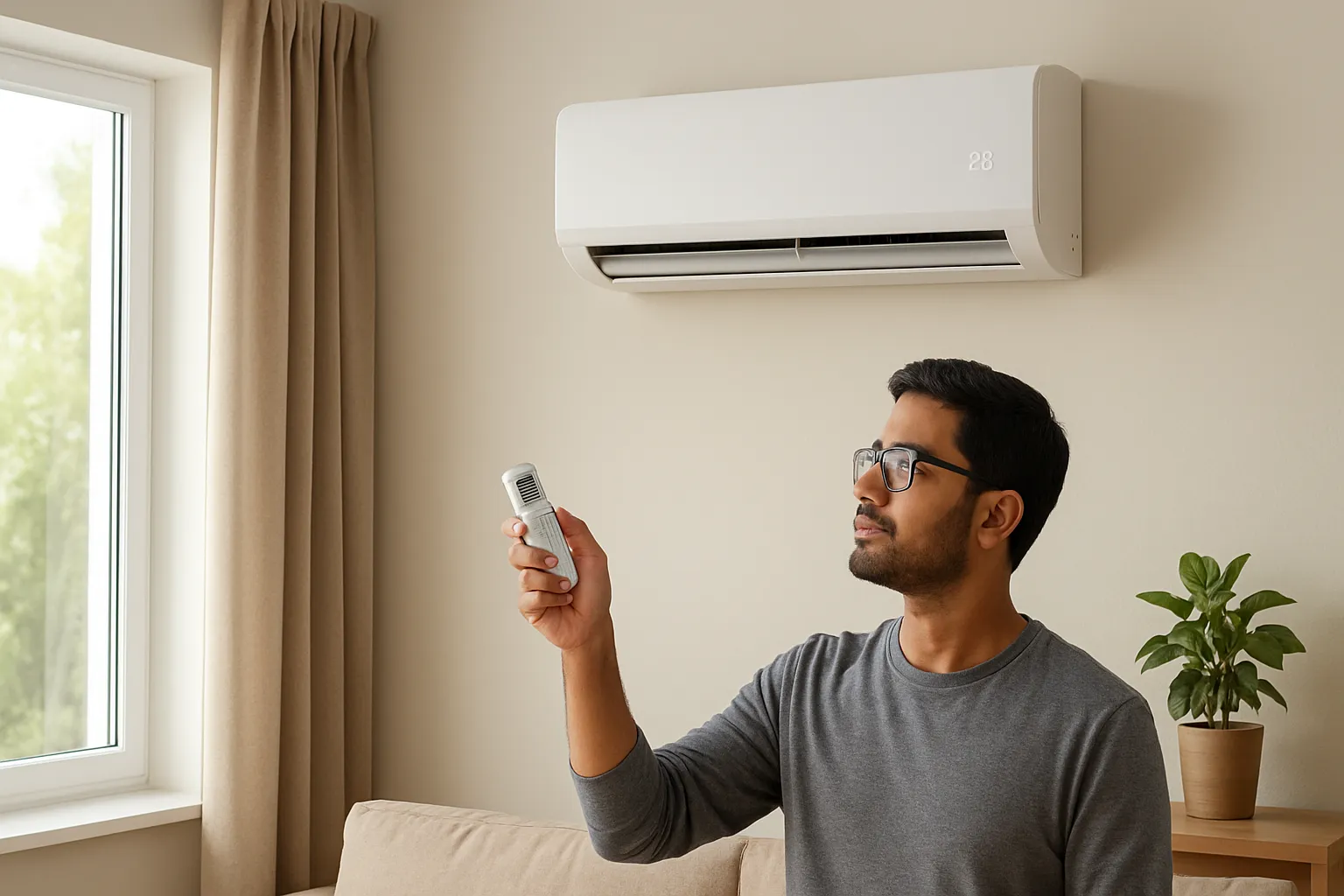
Voltas AI Energy Manager: can it cap AC units?
TL;DR: If you are checking the voltas ai energy manager ac units cap, the most important point is this: the practical limit depends on the exact Voltas smart ecosystem, app account, compatible AC models, Wi-Fi stability, and whether you are managing one home or multiple rooms. For most Indian homes, the real challenge is not hitting a theoretical unit cap; it is choosing compatible ACs, setting up each indoor unit correctly, and using smart scheduling without compromising comfort. Before buying multiple Voltas smart ACs, confirm app compatibility, account/device limits, warranty terms, and local service support with the seller or Voltas support.
Last updated: July 2026
Key takeaways
- The phrase “AC units cap” can mean different things: app device limit, number of ACs per account, number of rooms managed, or load limit on your home electrical supply.
- Voltas smart and connected AC features vary by model; do not assume every Voltas inverter AC supports the same AI Energy Manager functions.
- In Indian homes, managing 2–5 ACs is more about Wi-Fi coverage, electrical load, installation quality, and family usage patterns than only app limits.
- A 1.5 ton inverter AC used for long hours can become a major electricity expense, so scheduling, temperature limits, and BEE star rating matter.
- If you plan ACs for a flat, villa, paying guest property, small office, or rental unit, verify whether the smart platform supports your intended number of devices before purchase.
- Do not ignore MCB rating, wiring gauge, earthing, stabilizer requirement, and outdoor unit placement when installing multiple ACs.
- Smart energy features are useful, but they cannot overcome wrong tonnage, poor insulation, dirty filters, or bad installation.
Table of contents
- What does “Voltas AI Energy Manager AC units cap” mean?
- How Voltas smart AC management works in a home
- Possible unit limits: app, account, Wi-Fi, and electrical load
- Choosing Voltas AC models for multiple rooms
- Electricity bill impact when managing several ACs
- Installation checklist for multi-AC Indian homes
- Smart settings that actually save power
- Common problems and troubleshooting tips
- Practical next steps
- Conclusion
- About the author
What does “Voltas AI Energy Manager AC units cap” mean?
When people search for the voltas ai energy manager ac units cap, they are usually trying to answer one of four questions:
- How many Voltas ACs can be added to one smart app account?
- Can one household manage all bedroom and living room ACs from a single phone?
- Is there a limit to how many ACs the AI Energy Manager can monitor for electricity usage?
- Can the home’s electrical wiring safely support multiple ACs running together?
These are related, but they are not the same question. A smart app may allow several devices, but your Wi-Fi router may struggle in a large flat. Your router may be fine, but your electrical wiring may not be designed for three 1.5 ton ACs starting around the same time. Similarly, the app may show AC controls, but detailed energy tracking may depend on the specific model and feature set.
In 2026, Indian buyers are increasingly looking at connected ACs because electricity bills have become a bigger part of monthly household spending. A family in Delhi NCR, Ahmedabad, Hyderabad, Chennai, Kolkata, Pune, or Bengaluru may run ACs for 6–12 hours during summer nights. If there are two or three bedrooms, smart scheduling can help avoid waste. But before you depend on one “AI” feature, check the basics: capacity, BEE star rating, ISEER, installation quality, and warranty support.
The safest approach is to treat any stated device cap as model- and app-version-specific. If you are buying four or more Voltas smart ACs for a home or rental property, ask the dealer or official support to confirm the current app limit in writing or through the latest product documentation.
How Voltas smart AC management works in a home
A connected Voltas AC typically depends on three layers:
- The AC hardware, including the indoor PCB, sensors, remote receiver, and Wi-Fi module if supported.
- The mobile app or connected control platform used to add and operate the AC.
- Your home internet network, usually a 2.4 GHz Wi-Fi connection for smart appliances.
Once the AC is paired, you may be able to turn it on or off, change temperature, select mode, adjust fan speed, create schedules, or check basic usage information depending on the model. Some smart systems also attempt to optimise cooling based on usage patterns, room conditions, or preferred temperature ranges.
However, “AI Energy Manager” should not be read as a guarantee of a fixed percentage saving. Savings depend heavily on behaviour. If the AC was earlier set at 18°C all night and the smart manager helps maintain 24–26°C with scheduling, you may see a meaningful reduction. If you already use the AC carefully, the extra saving may be modest.
For Indian homes, the best use cases are:
- Parents controlling kids’ room AC temperature from one phone.
- Switching off a living room AC that was left running after everyone moved to bedrooms.
- Creating night schedules so the AC does not overcool after 3–4 a.m.
- Managing ACs in a rented flat where multiple occupants use different rooms.
- Monitoring whether old habits are causing high monthly bills.
Possible unit limits: app, account, Wi-Fi, and electrical load
The “cap” is not only a software issue. You should think about four different limits before installing multiple smart ACs.
| Type of cap | What it means | Why Indian homes should care | What to verify |
|---|---|---|---|
| App/account device cap | Maximum number of ACs or devices linked to one account | Important for 3BHK/4BHK homes, villas, PGs, and small offices | Current app documentation or Voltas support response |
| Model compatibility cap | Not every Voltas AC may support the same smart energy features | Mixing older and newer ACs may create uneven controls | Exact model number and smart feature list |
| Wi-Fi/network cap | Router coverage and stability for each AC location | Thick walls, distance, and 2.4 GHz congestion can cause dropouts | Router location, signal strength, mesh/extender need |
| Electrical load cap | How many ACs your wiring, MCB, and sanctioned load can safely handle | Multiple ACs can overload weak wiring or trip circuits | Electrician inspection, MCB rating, earthing, load sanction |
For example, a 2BHK home with two 1.5 ton inverter ACs and one 1 ton AC may be easy to manage through a smart app if Wi-Fi is good. But if the flat has old wiring, shared sockets, or poor earthing, the electrical side becomes the bigger risk. Always use dedicated AC points and proper MCB protection.
Also remember that inverter ACs do not always draw full rated power continuously, but you should still design wiring and protection for safe operation. During startup, peak heat, or turbo mode, load can rise. In societies with voltage fluctuation, discuss stabilizer or voltage protection needs with the installer.
Choosing Voltas AC models for multiple rooms
If you are planning a multi-AC setup around Voltas smart features, do not buy all units only by tonnage. Match each room separately.
A practical Indian sizing guide is:
| Room type | Approximate size | Typical AC capacity to consider | Notes |
|---|---|---|---|
| Small bedroom | 90–120 sq ft | 1 ton | Works best if not top floor and not heavily sun-facing |
| Medium bedroom | 120–170 sq ft | 1.2–1.5 ton | 1.5 ton is common for Indian bedrooms with heat load |
| Large bedroom / small living room | 170–220 sq ft | 1.5 ton | Check ceiling height, windows, and afternoon sun |
| Larger living area | 220–300 sq ft | 2 ton or two-unit planning | Open layouts may need professional heat-load assessment |
For Voltas, you may see inverter split ACs across 1 ton, 1.2 ton, 1.5 ton, and 2 ton capacities, with 3-star and 5-star BEE ratings depending on the year and model. A 5-star inverter model generally costs more upfront but can be sensible for bedrooms used every night. A 3-star inverter can be reasonable for guest rooms or lower daily usage.
When comparing models, check:
- BEE star label year and ISEER value.
- Whether the model is actually Wi-Fi enabled or only compatible through an optional accessory.
- Compressor warranty and PCB warranty terms.
- Refrigerant type, usually R32 in many current models.
- Copper condenser/coil details if mentioned by the brand.
- Indoor noise level, especially for bedrooms.
- Local service availability in your pin code.
Approximate 2026 retail pricing can vary widely by city, season, online sale, and installation package. As a broad range, a Voltas 1.5 ton inverter split AC may be seen around ₹35,000–₹55,000 depending on star rating and features. Smart or higher-efficiency models can cost more. Treat any price as approximate and verify current offers, installation inclusions, and extended warranty terms before paying.
Electricity bill impact when managing several ACs
The biggest reason to care about an AI energy manager is the electricity bill. But you need realistic math.
Let us assume a 1.5 ton inverter AC consumes an average of 0.8–1.3 kWh per hour depending on temperature setting, heat load, model efficiency, and compressor modulation. This is not a fixed number. A hot top-floor room in Jaipur or Nagpur may consume more than a shaded bedroom in Bengaluru.
Example for one bedroom AC:
- Average consumption: 1.0 kWh per hour
- Daily use: 8 hours
- Monthly use: 30 days
- Monthly units: 1.0 × 8 × 30 = 240 kWh
- Electricity tariff: ₹8 per unit
- Approximate monthly cost: ₹1,920
Now consider three rooms:
| Scenario | ACs running | Approx monthly units | At ₹8/unit | At ₹10/unit |
|---|---|---|---|---|
| One bedroom only | 1 AC, 8 hrs/night | 240 kWh | ₹1,920 | ₹2,400 |
| Two bedrooms | 2 ACs, 8 hrs/night | 480 kWh | ₹3,840 | ₹4,800 |
| Three bedrooms | 3 ACs, 8 hrs/night | 720 kWh | ₹5,760 | ₹7,200 |
Actual bills may be higher because Indian electricity bills often include slabs, fixed charges, fuel adjustment, duty, and taxes. In some states, once you cross higher slabs, each additional unit becomes more expensive. That is why smart control is useful: it reduces forgotten runtime and unnecessary overcooling.
If Voltas AI Energy Manager helps you set sensible schedules, limit extreme temperature settings, and monitor usage, it can support savings. But avoid unrealistic expectations. No smart feature can make a wrongly sized AC behave like a high-efficiency correctly installed unit.
Installation checklist for multi-AC Indian homes
For one AC, installation quality matters. For three or four ACs, it matters even more. Use this checklist before the technician drills the wall.
| Checklist item | What to ask | Why it matters |
|---|---|---|
| Dedicated power point | Is each AC on a suitable dedicated circuit? | Reduces overload and nuisance tripping |
| MCB and wiring | Is the MCB rating and wire gauge appropriate? | Safety and long-term reliability |
| Earthing | Is earthing tested and proper? | Protects electronics and users |
| Outdoor placement | Is there enough airflow around each outdoor unit? | Poor airflow increases power use and faults |
| Copper pipe length | What length is included and what is extra? | Extra piping affects cost and performance |
| Drain slope | Will water drain without backflow? | Prevents leakage inside the room |
| Vacuuming | Will the line be vacuumed before gas release? | Important for cooling performance and compressor health |
| Wi-Fi signal | Is 2.4 GHz signal strong near indoor unit? | Needed for stable smart control |
| App setup | Who will pair and demonstrate the smart features? | Avoids confusion after installation |
Do not rush installation during peak summer. Many bad AC experiences begin with hurried work: poor flaring, no vacuum pump use, weak brackets, bad drainage, and unclear charges. Ask for a written breakup of standard installation, outdoor stand, extra copper pipe, drain pipe, core cutting, and electrical work.
Smart settings that actually save power
Smart AC features are most useful when combined with disciplined settings. For Indian weather, try these practical rules:
- Set cooling temperature at 24–26°C for regular night use.
- Use ceiling fan at low or medium speed with the AC to improve comfort.
- Avoid 16–18°C unless there is a temporary need; it increases compressor workload.
- Use sleep mode or scheduled temperature rise after midnight.
- Set auto-off schedules for living rooms, study rooms, and guest rooms.
- Keep doors and windows properly closed.
- Use curtains or blinds on west-facing windows.
- Clean filters every 2–4 weeks in dusty cities or during heavy use.
If your Voltas smart system allows usage history, check patterns weekly during the first month. Look for rooms where the AC runs long after occupancy drops. For example, a living room AC may run from 7 p.m. to 12 a.m. even though the family moved to bedrooms at 10 p.m. A simple schedule can cut two hours of avoidable runtime.
For families, temperature limits can prevent bill shock. If children or guests keep lowering the AC to 18°C, set a household rule: 24°C for quick cooling, then 25–26°C for steady use. Comfort is not only about the number on the remote; humidity, airflow, bedding, and room sealing also matter.
Common problems and troubleshooting tips
A multi-AC smart setup can fail in small but irritating ways. Here are common issues and practical fixes.
| Problem | Likely reason | What to try |
|---|---|---|
| AC not visible in app | Wi-Fi pairing issue, wrong band, app permission issue | Use 2.4 GHz Wi-Fi, keep phone near AC, restart pairing |
| Device goes offline often | Weak Wi-Fi signal or router congestion | Move router, use mesh/extender, reduce interference |
| Energy data seems unusual | Different runtime, heat load, tariff assumptions | Compare with actual meter units, not only app estimates |
| One room cools poorly | Wrong tonnage, dirty filter, gas leak, sun load | Clean filter, check doors/windows, call service if needed |
| MCB trips when ACs run | Electrical overload or faulty circuit | Stop using and call a qualified electrician |
| App controls work but AC ignores command | Sync delay, PCB/module issue, remote mode conflict | Restart AC, update app, contact service if repeated |
Do not attempt gas charging, PCB repair, compressor work, or internal electrical repair yourself. For safety-critical work, use authorised service or a qualified technician. Basic user maintenance should be limited to filter cleaning, keeping the area around the indoor and outdoor unit clear, and checking obvious drainage issues.
Practical next steps
- List every room where you plan to install a Voltas AC, including room size, floor level, sun exposure, and daily usage hours.
- Decide whether each room really needs smart control. Bedrooms used daily benefit more than rarely used guest rooms.
- Shortlist exact Voltas model numbers and confirm whether each supports the same AI Energy Manager or smart app functions.
- Ask the seller or Voltas support about the current AC unit cap per account/home, especially if you plan more than three units.
- Check your home’s sanctioned load, MCBs, wiring, earthing, and dedicated AC points with a qualified electrician.
- Estimate electricity cost using your local tariff, not only the star rating. Higher slabs can change the final bill.
- During installation, insist on proper vacuuming, correct drainage, stable outdoor mounting, and app pairing demonstration.
- After setup, use schedules and 24–26°C settings for two weeks, then compare meter readings and comfort.
Conclusion
The voltas ai energy manager ac units cap is not just a number hidden inside an app. For Indian homes in 2026, it is a planning question: how many ACs can you manage comfortably, safely, and economically? The answer depends on compatible Voltas models, app/account limits, Wi-Fi coverage, room-wise cooling needs, and your electrical infrastructure.
If you are installing one or two ACs, the unit cap may never matter. If you are planning a 3BHK, 4BHK, villa, PG, or small office setup, verify the current device limit before buying. More importantly, choose the right tonnage, prefer suitable BEE star ratings for high-use rooms, invest in proper installation, and use smart schedules sensibly. That combination will do more for comfort and electricity control than any single marketing feature.
About the author
AC Kharcha Team — research-focused AC guides for India. We study air conditioner specifications, electricity cost patterns, installation practices, and maintenance issues so Indian households can make clearer cooling decisions.
Frequently asked questions
What is the Voltas AI Energy Manager AC units cap?
It refers to the possible limit on how many compatible Voltas ACs can be managed through the smart energy platform or app. The exact cap can vary by app version, account type, and model compatibility, so confirm it with Voltas support or the latest product documentation before buying multiple units.
Can I control all Voltas ACs in a 3BHK from one phone?
In many smart AC setups, multiple units can be added to one account, but you should verify the current limit for your exact Voltas app and models. Also ensure strong 2.4 GHz Wi-Fi coverage in every room where an AC is installed.
Does AI Energy Manager guarantee lower electricity bills?
No feature can guarantee a fixed saving. It can help reduce waste through scheduling, monitoring, and better temperature habits, but actual savings depend on tonnage, BEE star rating, room heat load, runtime, tariff, filter condition, and installation quality.
What should I check before installing three or more ACs at home?
Check sanctioned electrical load, dedicated AC wiring, MCB rating, earthing, outdoor unit space, drain routing, Wi-Fi signal, and app compatibility. For electrical checks and installation, use a qualified technician.
Is a 5-star Voltas inverter AC better for smart energy management?
A 5-star inverter AC is usually more efficient than a lower star model of similar capacity, especially for long daily use. Smart management helps with control, while the star rating and ISEER affect base efficiency. For rarely used rooms, a 3-star inverter may still be practical.
Why does one smart AC show higher consumption than another?
Different rooms have different heat loads. A top-floor or west-facing room, larger windows, poor sealing, dirty filters, or lower temperature settings can increase consumption even if both ACs are the same tonnage.
Do I need a separate Wi-Fi router for multiple Voltas smart ACs?
Usually not for a normal flat, but weak signal can cause ACs to go offline. If rooms are far from the router or walls are thick, a mesh router or Wi-Fi extender may improve reliability.
Should I buy all ACs from the same Voltas smart series?
If centralised app control and energy management are important, buying compatible models from the same smart series can reduce confusion. Still, compare tonnage, BEE stars, warranty, price, and service support for each room separately.
Last updated: 06 Sep, 2026 · Verified by editorial team
About the author
AC Kharcha Editorial Team
AC research & buying guides · India · We research air conditioners, electricity costs, and home cooling practices across Indian climates, then publish practical guides so households can buy and run ACs more confidently.
View all articles →Share this guide
Was this article helpful?
Related posts
 AC electricity bill in India: city DISCOM cost and savings
Dry mode vs cool mode AC: Kolkata monsoon bill guide | AC Kharcha
For Kolkata’s monsoon, Dry Mode helps when the room feels sticky, while Cool Mode is better when the room is truly hot. Choose by room condition, not habit.
 AC electricity bill in India: city DISCOM cost and savings
MP AC Bill 2026: Indore/Bhopal 1.5 Ton AC Running Cost
MP AC bill 2026 for Indore and Bhopal homes: estimate 1.5 ton AC electricity cost, compare star ratings, and learn practical ways to reduce summer khoroch.
 AC electricity bill in India: city DISCOM cost and savings
Punjab PSPCL AC Bill 2026: 1.5 Ton Cost After 300 Free Units
Punjab PSPCL AC Bill 2026: 1.5 Ton Cost After 300 Free Units — a clear guide to estimating monthly AC electricity cost, understanding free-unit impact, and reducing summer bills.