
Blue Star ISEER 6.25 AC 2026: 5-Star Bill Saving Comparison
Blue Star ISEER 6.25 AC 2026: 5-star bill saving comparison for Indian homes, with practical electricity cost examples, buying checks and usage tips.
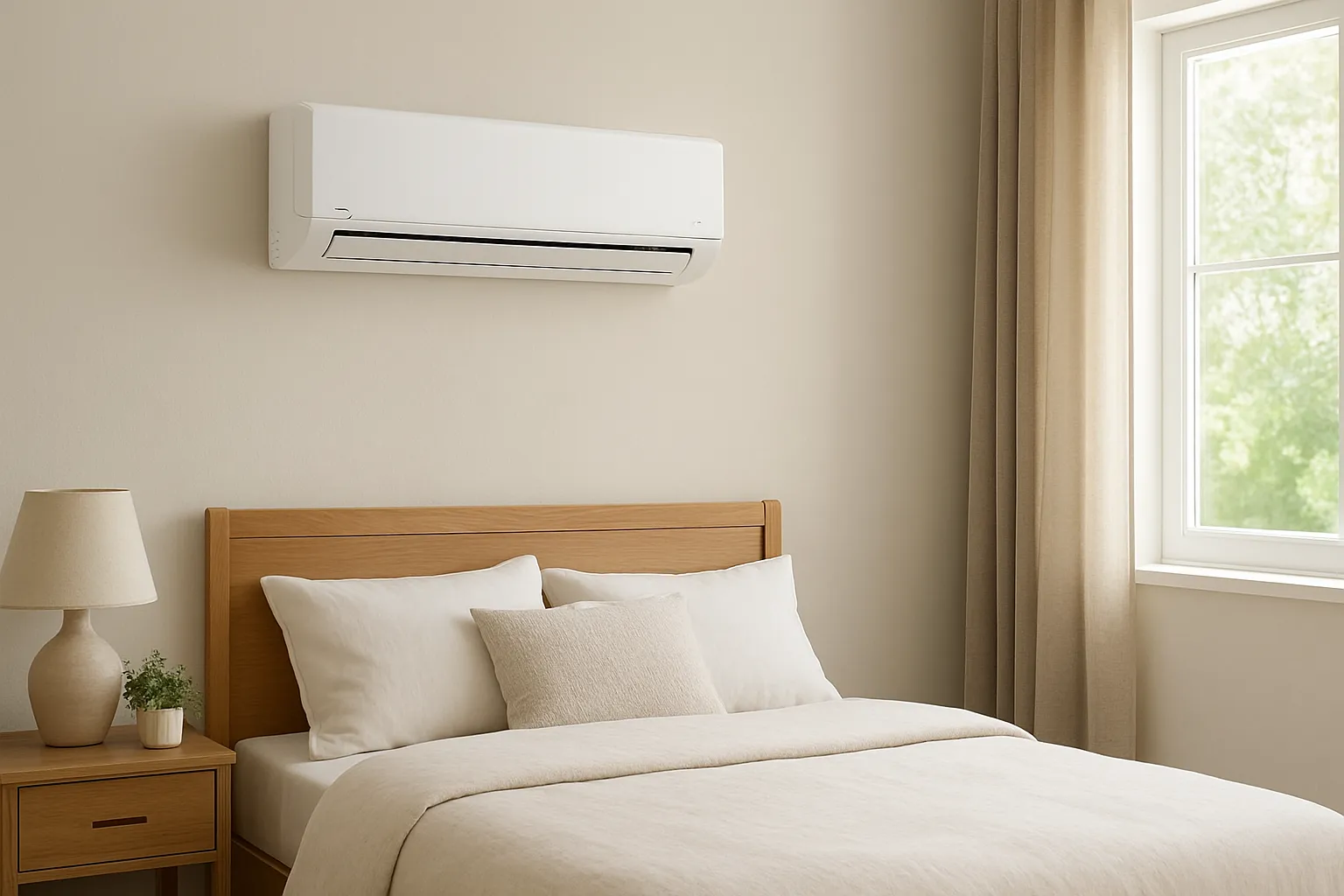
Blue Star ISEER 6.25 AC 2026: 5-Star Bill Saving Comparison
TL;DR: A Blue Star AC with ISEER around 6.25 is a high-efficiency 5-star inverter choice in 2026, and it can reduce electricity use compared with lower ISEER 3-star or older fixed-speed ACs. The real saving depends on your city tariff, daily running hours, room heat load, installation quality and thermostat setting. For homes using AC 6–10 hours daily in summer, the higher upfront price may be easier to justify; for occasional use, a cheaper 3-star inverter can still make sense.
Last updated: July 2026
Key takeaways
- ISEER 6.25 is a strong efficiency number for Indian split AC buyers, especially if the unit is a 5-star inverter model under the current BEE rating table.
- Bill saving is not a fixed rupee amount. A family paying ₹8 per unit and using the AC every night will save more than a family using it only on weekends.
- Compare ISEER, annual energy consumption on the BEE label, cooling capacity, warranty and installation cost together; do not compare only star stickers.
- A high ISEER AC gives best results when the room is correctly sized, doors are sealed, filters are clean and the set temperature is kept around 24–26°C.
- For Indian homes with voltage fluctuation, ask about stabilizer requirement, PCB warranty and local Blue Star service availability before purchase.
- If your room is heavily sun-facing or top-floor, correct tonnage matters as much as the star rating.
Table of contents
- What ISEER 6.25 Means On A Blue Star AC
- Is ISEER 6.25 Automatically A 5-Star AC In 2026?
- Bill Saving Tulna: ISEER 6.25 vs Lower Efficiency ACs
- Example Monthly Electricity Cost For Indian Homes
- When Paying Extra For ISEER 6.25 Makes Sense
- Model And Specification Checks Before Buying
- Installation Factors That Can Reduce Real Savings
- Usage Habits To Get The Best Bill Saving
- Quick Comparison Checklist
- Practical Next Steps
What ISEER 6.25 Means On A Blue Star AC
ISEER stands for Indian Seasonal Energy Efficiency Ratio. It is a seasonal efficiency number used on BEE labels for air conditioners sold in India. In simple terms, a higher ISEER means the AC can deliver more cooling for each unit of electricity under the defined test conditions. So, when buyers search for blue star iseer 6 25 ac bill saving tulna, they are usually trying to understand whether a premium 5-star Blue Star inverter AC will actually reduce the electricity bill enough to justify its price.
An ISEER value of 6.25 is considered high for a room AC. It usually appears on premium inverter split ACs, commonly in 1 ton, 1.2 ton, 1.5 ton or selected high-efficiency ranges depending on the model year. The exact Blue Star model name, capacity and BEE label year should be checked on the product page and the physical label because brands update line-ups regularly.
The important point is this: ISEER is not the same as power consumption at every moment. An inverter AC changes compressor speed based on cooling demand. During initial pull-down cooling, it may consume higher power. Once the room approaches the set temperature, it can slow down and run more efficiently. This is why inverter models often perform best during longer continuous usage rather than short 20–30 minute bursts.
Is ISEER 6.25 Automatically A 5-Star AC In 2026?
For most practical buyer comparisons in 2026, an AC with ISEER around 6.25 should fall in the 5-star efficiency class for the applicable BEE label period, but you should still verify the official BEE star label for the exact model. BEE rating tables can be revised over time, and old-stock listings sometimes show labels from earlier periods.
Before paying, check these details:
- BEE star rating on the listing and the product box
- ISEER value printed on the BEE label
- Annual energy consumption figure in kWh/year
- Label validity period
- Cooling capacity in watts, not just “1.5 ton” wording
- Model number, because similar-looking Blue Star models can have different ISEER values
This matters because a retailer may advertise a broad series name, while the variant delivered may have a different efficiency rating. If you are buying online, match the model number on the invoice, outdoor unit, indoor unit and product listing.
Bill Saving Tulna: ISEER 6.25 vs Lower Efficiency ACs
The easiest way to compare bill savings is to look at annual energy consumption on the BEE label. This number is not your guaranteed annual bill, but it is useful for comparing models under the same standard. If one AC shows 750 kWh/year and another shows 950 kWh/year for similar capacity, the difference is 200 units per year under the label assumptions.
At a residential tariff of ₹7 per unit, 200 units equals about ₹1,400 per year. At ₹9 per unit, it becomes about ₹1,800 per year. In many Indian cities, the effective unit rate changes by slab, fixed charges and taxes, so use your actual bill to calculate a more realistic number.
Here is a simple comparison approach:
| AC type for same room | Typical efficiency position | Approx running-cost expectation | Best suited for |
|---|---|---|---|
| Older fixed-speed 2-star or 3-star AC | Low to moderate | Highest monthly bill among these options | Very limited use, temporary setup, low purchase budget |
| Modern 3-star inverter AC | Moderate | Balanced bill and purchase cost | Bedrooms used 3–6 hours daily |
| 5-star inverter AC around ISEER 5.0–5.5 | High | Lower bill than 3-star in regular use | Night use, family bedrooms, rented homes with permission |
| Premium 5-star inverter around ISEER 6.25 | Very high | Lowest running cost in this comparison when sized and installed correctly | Long daily use, hot cities, high tariff slabs |
The higher ISEER option usually costs more upfront. The payback depends on the price gap. If the ISEER 6.25 Blue Star model costs ₹8,000–₹12,000 more than a decent 3-star inverter, a heavy user may recover the difference over a few summers. A light user may not recover it quickly, but may still prefer it for lower load, quieter operation or premium features.
Example Monthly Electricity Cost For Indian Homes
Let us use a realistic Indian example without claiming exact bills. Suppose you are comparing a 1.5 ton inverter AC for a 130–160 sq ft bedroom. Your local electricity rate including taxes is roughly ₹8 per unit. You run the AC for 8 hours per night during peak summer.
A 3-star inverter may average around 0.8–1.1 units per hour depending on heat load, set temperature and cycling. A very efficient 5-star inverter may average around 0.6–0.9 units per hour in similar conditions. These are broad practical ranges, not a lab promise.
Example calculation:
- 3-star inverter: 0.95 units/hour × 8 hours × 30 days = 228 units/month
- ISEER 6.25 inverter: 0.75 units/hour × 8 hours × 30 days = 180 units/month
- Difference: 48 units/month
- At ₹8 per unit: 48 × ₹8 = ₹384/month saving
If your tariff is ₹10 per unit, the same 48 units becomes ₹480/month. If you run the AC for 4 hours instead of 8, the monthly saving may be almost half. If your room is top-floor, west-facing, poorly sealed or the outdoor unit is installed in a hot enclosed balcony, both ACs may consume more power.
For a summer season of four heavy-use months, the above example gives around ₹1,500–₹2,000 saving. For eight months of regular use in cities like Chennai, Mumbai, Hyderabad, Kolkata or parts of Gujarat, the annual saving can be more meaningful. In hill cities or homes that use AC only during May–June, the payback will be slower.
When Paying Extra For ISEER 6.25 Makes Sense
A Blue Star ISEER 6.25 AC is more likely to make sense if your usage pattern is heavy and predictable. It is not only for luxury homes; it can be a sensible choice for middle-class homes where one bedroom AC runs every night during long summers.
Consider paying extra for the higher ISEER model if:
- You use the AC 6–10 hours daily for several months.
- Your electricity slab crosses into expensive rates in summer.
- The AC is for a bedroom where inverter modulation will run for long hours.
- You plan to keep the unit for 7–10 years with regular servicing.
- You value lower noise and smoother temperature control.
- The price gap compared with a lower model is reasonable after offers.
A lower-cost 3-star inverter may be enough if:
- The AC is for a guest room or occasional daytime use.
- You are in a rented flat and may shift soon.
- Your daily runtime is only 1–3 hours.
- The 5-star model price is much higher in your city.
- Local service support for the exact premium model is unclear.
The correct answer is not always “buy the highest star rating”. The best choice is the one that gives comfortable cooling at the lowest total cost over your expected usage period.
Model And Specification Checks Before Buying
Blue Star sells multiple split AC variants across budgets. Some models focus on value, some on heavy-duty cooling, and some on high efficiency. Before buying any ISEER 6.25 listing, inspect the details carefully.
Important checks include:
-
Capacity: A 1.5 ton AC is common for Indian bedrooms, but room size, ceiling height, sunlight and occupancy can change the requirement. A 1 ton AC may suit a small shaded room, while a 1.5 ton or larger capacity may be needed for a hot top-floor room.
-
Cooling capacity in watts: Two ACs marketed as 1.5 ton may not have identical cooling capacity. Compare the actual watt number.
-
Annual energy consumption: This is one of the most useful BEE label numbers for bill comparison.
-
Warranty terms: Check compressor warranty, PCB warranty, standard product warranty and what is excluded. Inverter PCB repairs can be costly after warranty.
-
Condenser material: Many buyers prefer copper condenser coils for serviceability and heat transfer. Confirm coil type in the official specification.
-
Operating voltage range: In areas with voltage fluctuation, ask whether a separate stabilizer is recommended. “Stabilizer-free operation” has limits; it does not mean protection against every electrical issue.
-
Noise level: For bedrooms, indoor unit noise at low fan speed matters. Check dB figures if available.
-
Smart features: Wi-Fi and app control are useful for some households, but they should not be the main reason to pay more unless you will actually use them.
Prices vary by city, season, installation offer and online sale. As of typical 2026 market conditions, premium 5-star inverter split ACs are often priced above entry-level 3-star models by several thousand rupees. Treat all prices as approximate and verify current quotes before purchase.
Installation Factors That Can Reduce Real Savings
Even a high ISEER AC can waste electricity if installed badly. Many bill complaints are not caused by the star rating; they are caused by poor installation, wrong placement or neglected maintenance.
Pay attention to these installation points:
- Outdoor unit airflow: The outdoor unit needs open space to reject heat. Avoid cramped shafts or enclosed balconies without ventilation.
- Copper pipe length: Extra pipe length increases cost and can affect performance if not installed as per brand guidance.
- Vacuuming: Proper vacuuming of the copper line before gas release is important. Skipping it can affect long-term performance.
- Drain slope: Poor drain routing causes leakage and repeated service calls.
- Wall sealing: Gaps around the pipe hole allow hot air and insects into the room.
- Electrical wiring: Use correct wire size, MCB and earthing. Do not run a high-capacity AC from weak extension boards.
- Sun protection: If the outdoor unit is directly exposed to harsh afternoon sun, performance may suffer. A ventilated shade can help, but it should not block airflow.
Ask for a clear installation estimate before delivery. Standard installation often excludes extra copper pipe, drain pipe, outdoor stand, core cutting, stabilizer and electrical work. Knowing this in advance prevents surprise expenses.
Usage Habits To Get The Best Bill Saving
An ISEER 6.25 AC gives the best bill-saving result when the user also runs it sensibly. The AC cannot compensate fully for an open door, dirty filter or very low temperature setting.
Use these habits:
- Set the temperature around 24–26°C for regular comfort. Each degree lower can increase power use.
- Use ceiling fan at low or medium speed to spread cool air faster.
- Close curtains on west-facing windows before the room heats up.
- Clean filters every 2–4 weeks in dusty areas or during heavy use.
- Do not switch the AC off and on every few minutes. Let the inverter settle.
- Use sleep mode or timer if the room becomes too cold after midnight.
- Keep heat sources like gaming PCs, halogen lights and open kitchen heat away from the cooled room when possible.
For many Indian homes, the biggest hidden saving comes from reducing heat entry. Door gaps, unshaded glass windows, thin curtains and roof heat can make even a premium AC work harder. Simple curtains, door sealing strips and roof insulation measures may improve comfort without touching the AC settings.
Quick Comparison Checklist
Use this checklist when comparing a Blue Star ISEER 6.25 AC with another 3-star or 5-star option.
| Factor | What to check | Why it matters for bill saving |
|---|---|---|
| ISEER value | Confirm 6.25 or exact number on BEE label | Higher number indicates better seasonal efficiency |
| BEE star label | Check year, validity and model number | Prevents confusion with old or different variants |
| Annual energy consumption | Compare kWh/year between same-capacity models | Helps estimate rupee difference at your tariff |
| Tonnage | Match room size, sunlight and top-floor heat | Wrong size can waste electricity or reduce comfort |
| Inverter range | Look for stable low-load operation | Better for long night use |
| Installation quality | Vacuuming, airflow, wiring, drain and sealing | Poor installation can reduce real efficiency |
| Warranty | Compressor, PCB and product warranty | Protects against expensive repairs |
| Local service | Blue Star service reach in your city or town | Faster support during summer breakdowns |
| Final cost | AC price plus installation and accessories | Real comparison is total cost, not only online price |
Practical Next Steps
- Measure your room and note whether it is top-floor, west-facing or shaded.
- Check your last summer electricity bill and estimate your effective unit rate, such as ₹7, ₹8, ₹9 or more per unit.
- Shortlist the exact Blue Star ISEER 6.25 model and at least one 3-star inverter alternative of similar capacity.
- Compare BEE annual energy consumption, warranty, installation cost and final delivered price.
- Ask the seller whether copper pipe, outdoor stand, drain pipe, stabilizer and electrical work are included.
- Confirm local service availability before buying, especially outside major metro cities.
- After installation, use 24–26°C, keep filters clean and ensure the outdoor unit has proper airflow.
Conclusion
A Blue Star ISEER 6.25 AC can be a strong 2026 choice for Indian homes that run the AC for long hours and pay moderate to high electricity tariffs. It is not magic, and it will not cut bills by an identical amount for every household. The saving comes from the combination of high efficiency, correct tonnage, proper installation and sensible daily use.
If your bedroom AC runs every night in summer, the higher upfront cost of an ISEER 6.25 5-star inverter model may be justified. If your usage is occasional, compare the price gap carefully with a good 3-star inverter. For the best decision, use the BEE label, your own tariff and your expected running hours instead of relying only on star-rating claims.
About the author
AC Kharcha Team — research-focused AC guides for India. We study air conditioner specifications, BEE labels, electricity cost patterns, installation practices and practical home cooling habits to help Indian buyers make clearer AC decisions.
Frequently asked questions
Is a Blue Star ISEER 6.25 AC a 5-star model in 2026?
An ISEER value around 6.25 is generally in the high-efficiency 5-star range for current Indian AC comparisons, but always verify the official BEE label, model number and label validity before buying.
How much bill saving can I expect from a Blue Star ISEER 6.25 AC?
Savings depend on your running hours, tariff, room heat load and the AC you are comparing against. In a regular bedroom running 8 hours daily, savings versus a lower-efficiency inverter model may be a few hundred rupees per month, but it is not a fixed guarantee.
Is ISEER 6.25 worth paying extra for?
It is more likely to be worth it if you use the AC 6–10 hours daily for several summer months and your electricity tariff is high. For occasional use, a lower-priced 3-star inverter may be more economical.
Should I compare star rating or annual energy consumption?
Compare both, but the annual energy consumption figure on the BEE label is especially useful for estimating rupee savings. Use it with your local per-unit electricity rate.
Will a high ISEER AC save electricity if my room is top-floor and very hot?
It can still be efficient, but room heat load may increase consumption. Correct tonnage, curtains, roof heat control, sealed doors and good outdoor unit airflow become very important in top-floor rooms.
Does a Blue Star ISEER 6.25 AC need a stabilizer?
Check the operating voltage range mentioned by Blue Star for the exact model. In areas with frequent voltage fluctuation, a suitable stabilizer or proper electrical protection may still be recommended by the installer.
What should I check during installation to protect efficiency?
Ensure proper copper pipe installation, vacuuming, drain slope, outdoor unit clearance, correct wiring, earthing and sealing of wall gaps. Poor installation can reduce comfort and increase power use.
Last updated: 02 Sep, 2026 · Verified by editorial team
About the author
AC Kharcha Editorial Team
AC research & buying guides · India · We research air conditioners, electricity costs, and home cooling practices across Indian climates, then publish practical guides so households can buy and run ACs more confidently.
View all articles →Share this guide
Was this article helpful?
Related posts
 AC electricity bill in India: city DISCOM cost and savings
Dry mode vs cool mode AC: Kolkata monsoon bill guide | AC Kharcha
For Kolkata’s monsoon, Dry Mode helps when the room feels sticky, while Cool Mode is better when the room is truly hot. Choose by room condition, not habit.
 AC electricity bill in India: city DISCOM cost and savings
MP AC Bill 2026: Indore/Bhopal 1.5 Ton AC Running Cost
MP AC bill 2026 for Indore and Bhopal homes: estimate 1.5 ton AC electricity cost, compare star ratings, and learn practical ways to reduce summer khoroch.
 AC electricity bill in India: city DISCOM cost and savings
Punjab PSPCL AC Bill 2026: 1.5 Ton Cost After 300 Free Units
Punjab PSPCL AC Bill 2026: 1.5 Ton Cost After 300 Free Units — a clear guide to estimating monthly AC electricity cost, understanding free-unit impact, and reducing summer bills.