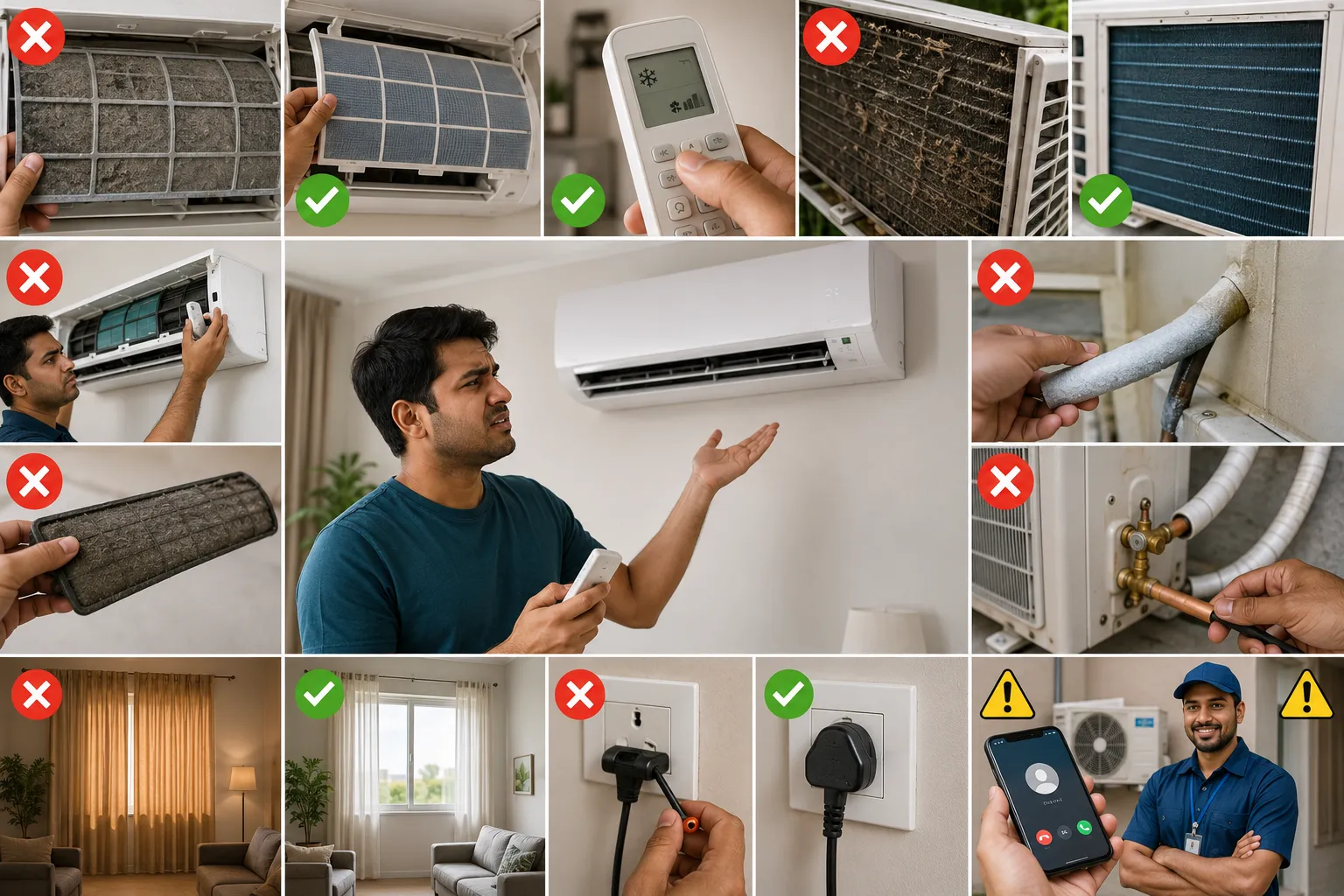
AC Water Leak in Kolkata Monsoon: 2026 Checklist
AC water leaking during Kolkata monsoon? Use this 2026 checklist to identify common causes, safe DIY checks, likely service costs, and prevention tips.
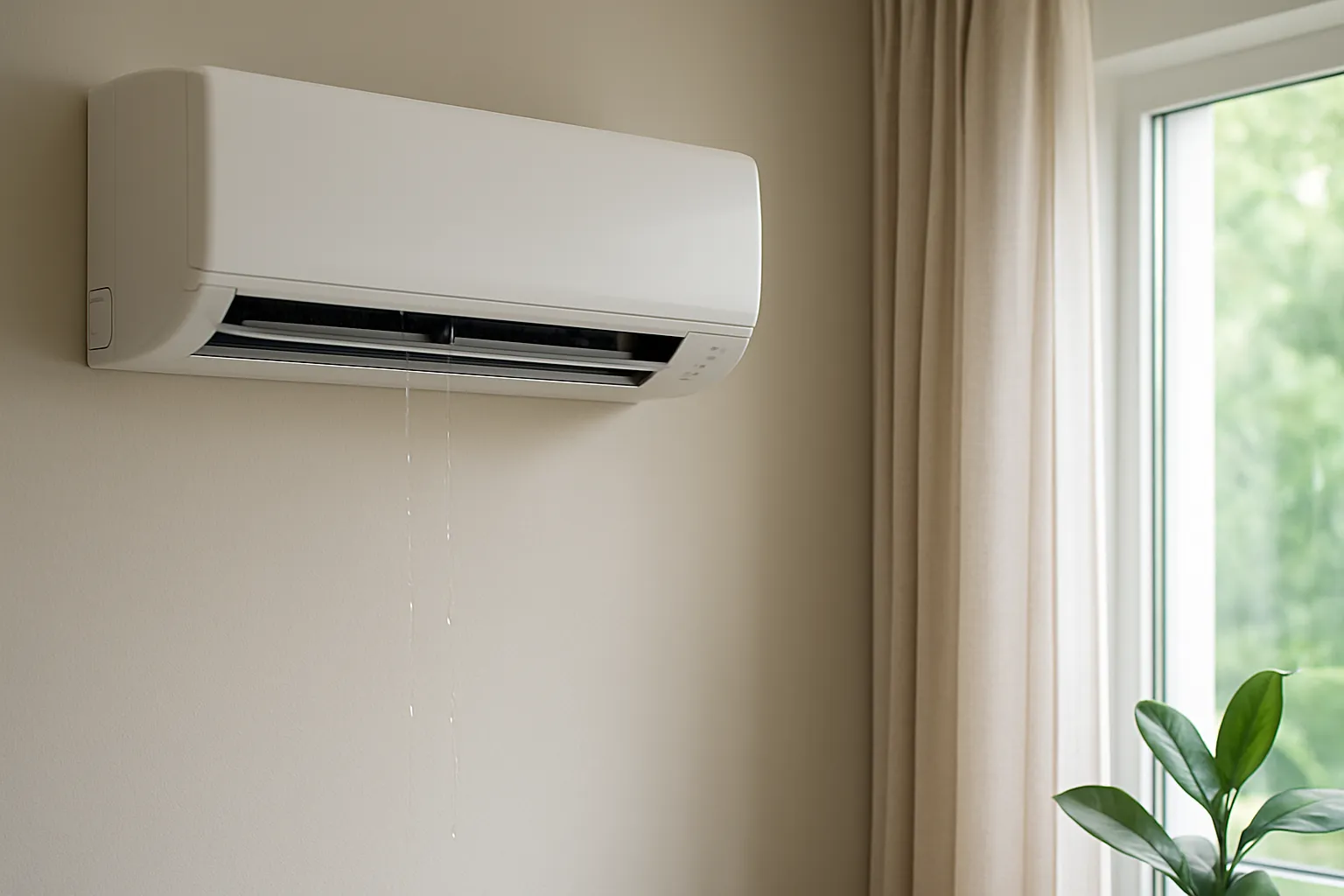
AC Water Leak in Kolkata Monsoon: 2026 Checklist
TL;DR: If your AC is dripping water indoors during Kolkata monsoon, first switch it off, protect nearby wiring and furniture, then check the filter, drain pipe outlet, indoor unit tilt, and ice formation. Most cases are caused by a choked drain line, dirty filter, incorrect installation slope, or excess humidity load. Basic cleaning may help, but persistent leakage, ice, burning smell, or water near electrical points needs a trained AC technician.
Last updated: July 2026
Key takeaways
- In Kolkata’s humid monsoon, a split AC naturally removes a lot of moisture; water should exit through the drain pipe, not drip from the indoor unit.
- The most common leak reason is a blocked drain pipe or algae/slime build-up in the drain tray, especially after long summer use.
- Dirty filters can reduce airflow, freeze the cooling coil, and later cause water overflow when the ice melts.
- Incorrect indoor unit slope is common in rented flats and hurried installations; even a small tilt away from the drain side can cause dripping.
- Do not keep running the AC if water is falling near sockets, extension boards, TV units, router plugs, or false ceiling wiring.
- Approximate Kolkata service visits in 2026 may range from ₹400–₹900 for inspection/basic service, while drain cleaning, wet servicing, or part replacement can cost more depending on access and brand.
- Prevent repeat leakage by cleaning filters every 2–4 weeks in monsoon, keeping the drain outlet open, and booking pre-monsoon service before peak humidity.
Table of contents
- Why ACs Leak More During Kolkata Monsoon
- First 10-Minute Safety Checklist
- Common Causes of Indoor AC Water Leakage
- Room-by-Room Kolkata Monsoon Checklist
- DIY Checks You Can Safely Try
- When to Call an AC Technician
- Approximate Repair and Service Costs in Kolkata
- Prevention Tips for Split and Window ACs
- Electricity, Humidity, and AC Settings
- Practical Next Steps
Why ACs Leak More During Kolkata Monsoon
Kolkata’s monsoon is not just rainy; it is sticky, humid, and often windless. Even when the temperature is around 28–32°C, the relative humidity can stay very high. Your AC does two jobs in this weather: it cools the air and removes moisture. That removed moisture collects on the evaporator coil inside the indoor unit, drops into the drain tray, and flows out through a drain pipe.
So, water from an AC is normal. The problem starts when the water does not follow the correct path. If the drain tray is dirty, the drain pipe is blocked, or the indoor unit is not sloped correctly, the collected water spills into the room. This is why many Kolkata homes search for an ac theke pani porche kolkata monsoon checklist during July, August, and September.
Older flats in areas like Behala, Dum Dum, Garia, Salt Lake, Tollygunge, Howrah, and North Kolkata often have long drain pipe runs, pipes passing through balcony grills, or drain outlets placed into narrow building shafts. During monsoon, these outlets can get blocked by mud, moss, insects, paint flakes, or construction dust. In high-rise apartments, wind pressure and backflow from drainage points may also disturb smooth water flow.
A new AC can leak too. Leakage is not only an “old machine” issue. If a 1 ton, 1.5 ton, or 2 ton split AC is installed without proper level checking, or if the drain pipe has an upward bend, water can return to the indoor unit. This is more visible in monsoon because moisture collection is higher.
First 10-Minute Safety Checklist
Before opening panels or calling anyone, handle the immediate risk. Water and electricity must be treated carefully.
| Step | What to do | Why it matters |
|---|---|---|
| 1 | Switch off the AC from the remote and main switch if safe to access | Stops further condensation and reduces electrical risk |
| 2 | Move laptop, TV, router, books, mattress, and wooden furniture away | Prevents water damage while you inspect |
| 3 | Check if water is near plug points, extension boards, or inverter wiring | Water near wiring needs urgent attention |
| 4 | Place a bucket or towel below the drip point temporarily | Controls mess but does not solve the cause |
| 5 | Do not insert metal wires or screwdrivers into the indoor unit | Can damage coil fins, fan blades, sensors, or wiring |
| 6 | Take a photo/video of the leak location | Helps technician identify whether it is tray, coil, pipe, or installation related |
If you live in a rented flat, inform the landlord or property manager early, especially if the AC is part of the furnished property. Water stains on walls, false ceiling gypsum boards, or laminate furniture can become a dispute later.
Common Causes of Indoor AC Water Leakage
1. Blocked drain pipe
This is the most common reason. Dust, algae, fungus-like slime, insects, and dirt can clog the pipe. In Kolkata monsoon, the drain outlet may also be blocked from outside by wet leaves or mud. The indoor tray fills up and overflows.
Signs include water dripping from one side of the indoor unit, gurgling sounds, or no water coming out of the outdoor drain outlet while the AC is running.
2. Dirty air filter
A clogged filter reduces airflow over the cooling coil. The coil can become too cold and may develop ice. When the AC is switched off or the ice melts, water can overflow suddenly. This often happens in homes near main roads, construction sites, kitchens, or dusty balconies.
For Indian homes, filter cleaning every month is a common recommendation. In Kolkata monsoon, if the AC runs daily, clean it every 2–4 weeks.
3. Incorrect indoor unit tilt
A split AC indoor unit should be installed so that condensed water naturally moves toward the drain side. If the unit is tilted in the wrong direction, water collects and spills. This can happen after wall drilling, repainting, bracket loosening, or poor installation.
Even premium inverter models from brands like LG, Daikin, Voltas, Blue Star, Panasonic, Samsung, Hitachi, Carrier, Lloyd, Whirlpool, or Godrej can leak if installation slope is wrong.
4. Drain pipe bend or upward loop
The drain pipe should slope downward without sharp upward bends. In many Kolkata flats, technicians route the pipe around window frames, balcony grills, or wardrobe panels. If the pipe rises before exiting, water stagnates and returns.
5. Low refrigerant or coil icing
Gas leakage or low refrigerant can cause uneven cooling and ice formation on the evaporator coil. When the ice melts, it appears as water leakage. This should not be treated as a simple drain issue. Refrigerant work requires trained service because it involves pressure testing, leak detection, and correct gas charging.
6. Cracked drain tray or damaged insulation
Older ACs may have a cracked tray, brittle plastic, or damaged insulation around copper pipes. Water may appear from behind the unit or along the wall. This is more common in units above 6–8 years old, but rough servicing can also damage parts.
7. Window AC drainage issue
Window ACs also produce water. If the unit is not tilted slightly outward, water can enter the room. A blocked base tray or rusted drain hole can also cause leakage. In monsoon, rainwater entering from the outside side of a window AC may be mistaken for AC condensate.
Room-by-Room Kolkata Monsoon Checklist
Different rooms create different leak patterns. Use this table before deciding whether it is a minor blockage or a larger installation issue.
| Location | Typical leak pattern | Likely reason | What to check first |
|---|---|---|---|
| Bedroom split AC above bed | Drops from front flap or left/right corner | Choked drain, dirty filter, wrong tilt | Filter, drain outlet, water flow outside |
| Living room AC above TV unit | Water line down wall | Drain tray overflow or pipe joint leak | Pipe connection behind indoor unit |
| AC installed on false ceiling wall | Damp patch near ceiling | Concealed drain issue or insulation failure | Call technician; avoid DIY opening |
| Window AC in old wooden frame | Water entering from front or side | Wrong outward slope, rain entry, blocked base tray | Outdoor tilt and frame sealing |
| Rented flat with long drain pipe | Leak after 20–40 minutes running | Pipe sag, upward bend, partial blockage | Full pipe route to balcony/outlet |
| High-rise balcony drain | AC drains sometimes, sometimes leaks | Wind/backflow/outlet blockage | Outlet position and pipe end clearance |
DIY Checks You Can Safely Try
You can do a few basic checks without opening the sealed electrical parts of the AC.
Clean the filters
Switch off the AC. Open the front panel gently. Remove the mesh filters and wash them with normal water. Avoid harsh brushing that tears the mesh. Let them dry in shade before reinstalling. Do not run the AC without filters.
Check the outdoor drain outlet
Locate the white/grey drain pipe outlet. During cooling mode, after 10–20 minutes, water should drip or flow outside depending on humidity. If no water comes out but water is dripping inside, the drain path may be blocked.
Do not blow into a dirty drain pipe with your mouth. It is unhygienic and may splash dirty water back. Some people use a small hand pump or wet vacuum, but if you are unsure, call a technician.
Look for ice
Open the front panel and check if you see ice on the coil area or frost around copper pipe connections. If yes, switch off cooling and let the ice melt naturally. Do not chip ice with a knife or screwdriver. Ice may indicate airflow restriction, low refrigerant, sensor fault, or coil dirt.
Check room conditions
If windows are slightly open, kitchen steam is entering, or wet clothes are drying inside the room, the AC has to remove extra moisture. This may not cause leakage by itself, but it increases water load and exposes small drain problems faster.
Inspect the drain pipe path
If visible, check whether the pipe is crushed by a window, bent sharply, lifted upward, tied too tightly, or dipped into standing water. The pipe end should not be submerged in a bucket or drain water because back pressure can disturb flow.
When to Call an AC Technician
Call a technician if the leak continues after filter cleaning, if water falls from behind the indoor unit, if the AC trips MCB, or if you see ice repeatedly. Also call for any issue involving gas charging, PCB, motor, coil deep cleaning, or concealed piping.
A proper technician visit should include more than wiping the front panel. Ask them to check:
- Drain tray condition and water flow test
- Drain pipe blockage and pipe slope
- Indoor unit level with a spirit level
- Filter and evaporator coil dust build-up
- Blower wheel dirt, especially if airflow is weak
- Copper pipe insulation condition
- Refrigerant pressure only if symptoms suggest gas issue
- Outdoor unit airflow and coil cleanliness
For a split inverter AC, do not allow random wire cutting or PCB bypass shortcuts. Inverter ACs have sensitive electronics, and wrong repair can become expensive. If your AC is under brand warranty or extended warranty, prefer authorised service, particularly for compressor, PCB, sensors, and motor issues.
Approximate Repair and Service Costs in Kolkata
Costs vary by area, brand, floor height, service provider, and whether parts are required. Treat these as approximate 2026 ranges, not fixed quotes.
| Service item | Approximate Kolkata range | Notes |
|---|---|---|
| Basic inspection visit | ₹400–₹900 | May be adjusted if repair is done |
| Filter cleaning/basic indoor cleaning | ₹500–₹1,000 | Often part of routine service |
| Drain pipe cleaning | ₹500–₹1,500 | Higher if pipe is concealed or hard to access |
| Wet servicing of split indoor unit | ₹800–₹1,800 | Useful for dirty coil/blower; protect wall and electronics |
| Full split AC service indoor + outdoor | ₹1,200–₹2,500 | Depends on tonnage and access |
| Drain pipe replacement | ₹300–₹1,200 plus labour | Length and routing matter |
| Reinstallation/tilt correction | ₹1,000–₹3,000 | May need bracket, drilling, piping adjustment |
| Gas leak detection and charging | ₹2,500–₹6,000+ | Depends on gas type, leak repair, tonnage |
| Drain tray or plastic part replacement | ₹800–₹3,000+ | Brand and availability affect price |
For context, a 1.5 ton 3-star inverter split AC bought in 2026 may cost roughly ₹32,000–₹45,000 depending on brand, copper pipe inclusion, installation offers, and season. A 5-star inverter model may cost more upfront, often ₹40,000–₹58,000 or higher for premium features. Even if your current issue is only leakage, poor maintenance can reduce efficiency and increase running cost, so timely service is not just about stopping water.
Prevention Tips for Split and Window ACs
For split ACs
Clean filters regularly and do not wait for weak cooling. Keep the indoor unit front clear; curtains, wardrobes, or decorative panels can block airflow. Ensure the drain outlet remains visible and open. If the pipe drains into a balcony, do not leave the pipe end inside a dirty bucket for days.
Book a pre-monsoon service in May or June if possible. By July, technician demand rises in Kolkata, and urgent visits can cost more or take longer. During service, ask for a drain flow test: the technician pours a small amount of water into the tray area and confirms it exits smoothly outside.
For window ACs
Make sure the unit slopes slightly outward. The outside section should not be blocked by grills, plastic sheets, or plants. Clean the front filter frequently. If rainwater enters during storms, check external sealing and the shade above the unit. Do not seal the unit so tightly that ventilation is blocked.
For newly installed ACs
Before the installer leaves, run the AC in cool mode and confirm water is coming from the drain outlet. Check that the indoor unit does not vibrate, the drain pipe has no upward loop, and the outdoor unit has proper clearance. Ask for installation invoice details because warranty disputes often depend on installation records.
Electricity, Humidity, and AC Settings
A leaking AC may tempt you to run at 18°C thinking it will “dry the room faster”. That can make things worse if airflow or drainage is already poor. Very low temperature settings increase coil load and may encourage icing when filters are dirty or gas pressure is not correct.
For most Kolkata homes, 24–26°C with fan speed set to auto or medium is a sensible starting point. If your AC has a dry mode, it can help on humid but not extremely hot days. Dry mode reduces moisture removal load differently from full cooling mode, but its effectiveness depends on the model and room conditions.
Electricity tariffs vary by connection type and slab. As a simple example, if a 1.5 ton inverter AC averages around 1.0 kW over several hours and runs 8 hours a day, it may consume about 8 kWh daily. At an approximate effective rate of ₹8 per kWh, that is around ₹64 per day, or about ₹1,920 for 30 days. Real consumption can be lower or higher depending on BEE star rating, ISEER, outdoor temperature, room size, insulation, set temperature, and compressor behaviour.
A water leak itself may not directly double your bill, but the causes behind it can waste power. Dirty filters, iced coils, blocked airflow, and neglected outdoor units force the AC to run poorly. For long daily use, a higher BEE star inverter AC can reduce running cost compared with an older fixed-speed unit, but maintenance still matters.
Practical Next Steps
- Switch off the AC if water is dripping indoors, especially near electrical points.
- Take photos of the leak point, wall stain, and drain outlet for reference.
- Clean and dry the filters before restarting.
- Check whether water is coming from the outdoor drain pipe after 10–20 minutes of cooling.
- Inspect visible drain pipe bends, crushing, upward loops, or submerged pipe ends.
- If leakage continues, book a technician and specifically ask for drain tray and drain pipe cleaning, not only general servicing.
- If there is ice, repeated tripping, burning smell, or water from behind the unit, stop using the AC until checked.
- After repair, run the AC for at least 20–30 minutes and confirm there is no indoor dripping.
- Set a reminder for filter cleaning every 2–4 weeks during monsoon.
- Plan annual servicing before peak summer or before heavy monsoon humidity begins.
Conclusion
AC water leakage in Kolkata monsoon is usually fixable, but it should not be ignored. The most likely culprits are blocked drainage, dirty filters, wrong installation slope, or ice formation. Start with safe checks, avoid risky DIY work near electrical parts, and call a technician when the leak persists or involves concealed piping, refrigerant, or wiring.
A good ac theke pani porche kolkata monsoon checklist is not only about stopping today’s dripping. It protects your wall paint, furniture, electronics, comfort, and electricity spending through the most humid months of the year.
About the author
AC Kharcha Team — research-focused AC guides for India. We study Indian cooling needs, AC running costs, service issues, BEE star ratings, and practical maintenance habits so households can make better air-conditioner decisions.
Frequently asked questions
Why is my AC leaking water inside during Kolkata monsoon?
The most common reasons are a blocked drain pipe, dirty filters, wrong indoor unit slope, ice formation on the coil, or a cracked drain tray. Kolkata’s high humidity increases the amount of water your AC removes from the air, so small drainage problems become visible faster.
Can I keep using the AC if water is dripping inside?
It is safer to switch it off, especially if water is near plug points, extension boards, TV units, router wiring, or false ceiling electrical lines. After basic filter and drain outlet checks, call a technician if the leakage continues.
How much does AC water leak repair cost in Kolkata in 2026?
Approximate costs vary. A basic inspection may cost around ₹400–₹900, drain cleaning may be around ₹500–₹1,500, and full split AC servicing may be around ₹1,200–₹2,500. Costs can rise if parts, gas leak repair, or reinstallation are needed.
Does low gas cause AC water leakage?
Low refrigerant can cause coil icing in some cases. When the ice melts, water may overflow or drip indoors. However, not every water leak is a gas problem. A technician should first check drainage, airflow, filters, coil condition, and then refrigerant if symptoms match.
How often should I clean AC filters in Kolkata monsoon?
For daily use during monsoon, clean the filters every 2–4 weeks. Homes near busy roads, construction dust, kitchens, or pet hair may need more frequent cleaning. Always dry filters in shade before reinstalling.
Is water dripping from the outdoor drain pipe normal?
Yes. Water dripping from the drain pipe outside is normal because the AC removes moisture from indoor air. The problem is when water drips from the indoor unit, wall, front flap, or behind the AC.
Can dry mode stop AC leakage in humid weather?
Dry mode may reduce humidity and improve comfort on sticky days, but it will not fix a blocked drain pipe, dirty filter, wrong slope, or cracked tray. If the AC is already leaking indoors, solve the drainage or service issue first.
Should tenants or landlords pay for AC leakage repair in Kolkata flats?
It depends on the rental agreement and whether the AC belongs to the landlord or tenant. Routine cleaning may be treated differently from part failure or faulty installation. Document the leak with photos and inform the owner or property manager early.
Last updated: 06 Sep, 2026 · Verified by editorial team
About the author
AC Kharcha Editorial Team
AC research & buying guides · India · We research air conditioners, electricity costs, and home cooling practices across Indian climates, then publish practical guides so households can buy and run ACs more confidently.
View all articles →Share this guide
Was this article helpful?