
Guwahati AC bill 2026: APDCL 1.5 Ton AC Cost Under Assam Slabs
Guwahati AC bill 2026 guide for 1.5 ton AC users under APDCL: estimate monthly units, understand Assam tariff slabs, and reduce cooling cost safely.
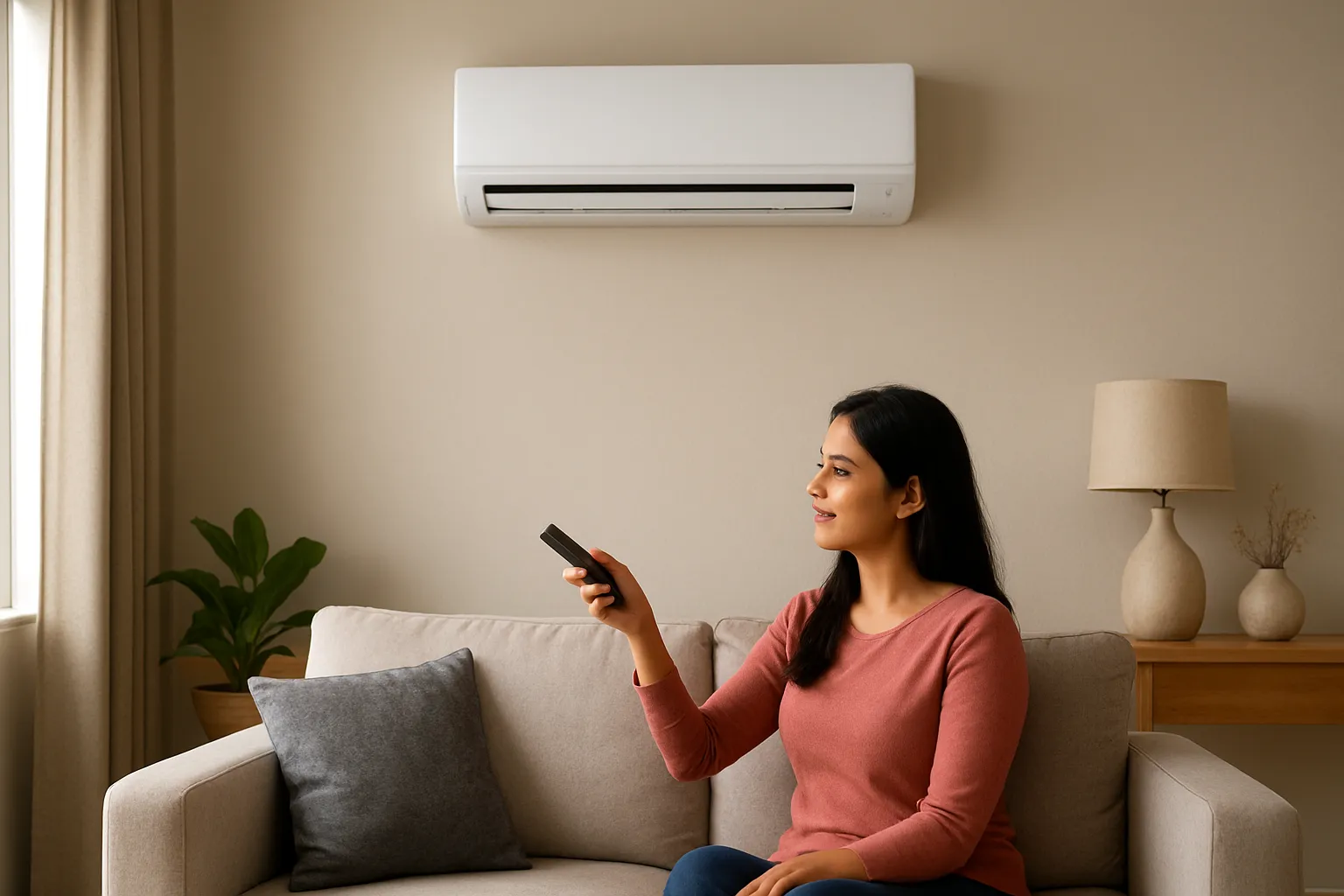
Guwahati AC bill 2026: APDCL 1.5 Ton AC Cost Under Assam Slabs
TL;DR: In Guwahati, a 1.5 ton split AC can add roughly ₹900 to ₹3,500+ per month to your APDCL electricity bill depending on hours of use, BEE star rating, room heat load, and your total household slab. A 5-star inverter AC used carefully at 24–26°C may consume far less than an older fixed-speed unit, but the final bill depends on APDCL’s latest tariff order, fixed charges, fuel adjustment, taxes, and your total monthly units.
Last updated: July 2026
Key takeaways
- A 1.5 ton AC in Guwahati usually suits many 120–180 sq ft bedrooms, but top-floor rooms, west-facing walls, and large windows may need a more careful heat-load check.
- APDCL bills are slab-based, so your AC does not have one single “unit rate”; it pushes your total household consumption into higher slabs when usage is heavy.
- For 6–8 hours of nightly use, a 1.5 ton inverter 5-star AC can be meaningfully cheaper to run than an old non-inverter AC, especially in humid pre-monsoon and summer months.
- Guwahati’s humidity makes dry mode, clean filters, correct drain slope, and indoor coil cleaning important for comfort and electricity use.
- Do not estimate only from the AC’s rated wattage. Real consumption changes with set temperature, outdoor temperature, room leakage, stabilisation, and compressor cycling.
- Always verify the latest APDCL tariff, connected load, meter category, and bill components before treating any calculation as final.
Table of contents
- How APDCL billing affects AC users in Guwahati
- How many units does a 1.5 ton AC consume?
- Guwahati AC bill examples for 2026
- Assam slab logic: why your final bill may jump
- 1.5 ton AC choice for Guwahati homes
- Inverter vs fixed-speed AC under APDCL bills
- Room and installation factors that change your bill
- Practical saving tips for Guwahati weather
- Monthly bill estimation table
- Practical next steps
How APDCL billing affects AC users in Guwahati
Guwahati households generally receive electricity supply through APDCL, and domestic electricity bills are not just “units multiplied by one flat rate”. A typical bill may include energy charges based on consumption slabs, fixed charges, meter rent where applicable, electricity duty or taxes, fuel and power purchase adjustment if notified, and other approved charges.
This matters because a 1.5 ton AC can change your household from a moderate-consumption home to a high-consumption home during hot months. For example, a family that normally uses 160 units per month for fans, lights, refrigerator, washing machine, TV, router, and kitchen appliances may cross 300 or 400 units after adding one AC used every night. The extra units may fall partly into higher slabs.
So when you search for guwahati ac bill apdcl 1 5 ton cost assam slabs, the honest answer is: estimate AC units first, then apply them to your total bill pattern. The AC’s running cost is not isolated from the rest of the house.
APDCL tariffs can be revised through regulatory orders. The exact slab rates in 2026 should be checked from your latest bill or APDCL’s official tariff schedule. For planning, many households use a blended domestic rate assumption such as ₹7–₹10 per unit after considering slab effect and other variable charges. This is only an approximation, not a substitute for the current APDCL bill.
How many units does a 1.5 ton AC consume?
A 1.5 ton AC does not consume the same electricity every hour. A non-inverter AC may draw high power when the compressor runs and then cut off after reaching temperature. An inverter AC changes compressor speed and may run steadily at lower power after the room cools.
Approximate consumption ranges for a modern 1.5 ton split AC in Indian conditions:
| AC type | Typical hourly consumption after stabilisation | Notes |
|---|---|---|
| Older 1.5 ton fixed-speed AC | 1.3–1.8 units/hour | Can be higher in hot rooms or poor maintenance |
| Newer 1.5 ton 3-star inverter AC | 0.8–1.3 units/hour | Depends strongly on room load and set temperature |
| Newer 1.5 ton 5-star inverter AC | 0.6–1.1 units/hour | Best results in sealed rooms with correct sizing |
| Poorly installed or under-serviced AC | 10–30% higher than expected | Dirty coils, low gas, blocked airflow increase cost |
These are practical household ranges, not guaranteed laboratory numbers. For a more model-specific estimate, check the BEE label. It usually shows annual electricity consumption under standard test conditions. A 1.5 ton 5-star inverter AC may show a lower annual unit figure than a 3-star model, but your real Guwahati usage can differ because of humidity, room leakage, summer heat, and operating habits.
A simple formula is:
Monthly AC units = average hourly units × hours per day × days used
If your 1.5 ton AC averages 1.0 unit/hour and you use it for 8 hours daily:
1.0 × 8 × 30 = 240 units/month
If your blended APDCL cost works out to around ₹8 per unit, the AC portion is about:
240 × ₹8 = ₹1,920, before considering any change in fixed charges or slab movement in the full household bill.
Guwahati AC bill examples for 2026
Below are practical examples for a 1.5 ton AC in Guwahati. Use them as planning sketches, not exact APDCL bills.
Example 1: Bedroom AC, careful night use
- AC: 1.5 ton inverter 5-star split AC
- Use: 6 hours/night
- Average consumption: 0.75 units/hour
- Monthly AC units: 0.75 × 6 × 30 = 135 units
- Approximate variable cost at ₹8/unit: ₹1,080
- Approximate variable cost at ₹10/unit: ₹1,350
This is possible when the room is reasonably sealed, filters are clean, set temperature is 25–26°C, and the AC is not fighting direct afternoon heat stored in walls.
Example 2: Regular family use during humid months
- AC: 1.5 ton 3-star inverter split AC
- Use: 8 hours/night
- Average consumption: 1.05 units/hour
- Monthly AC units: 1.05 × 8 × 30 = 252 units
- Approximate variable cost at ₹8/unit: ₹2,016
- Approximate variable cost at ₹10/unit: ₹2,520
This is a common estimate for Guwahati bedrooms where the AC runs through the night in April, May, June, July, or humid September periods.
Example 3: Old AC or high heat-load room
- AC: older 1.5 ton fixed-speed or poorly maintained unit
- Use: 10 hours/day
- Average consumption: 1.6 units/hour
- Monthly AC units: 1.6 × 10 × 30 = 480 units
- Approximate variable cost at ₹8/unit: ₹3,840
- Approximate variable cost at ₹10/unit: ₹4,800
If the home already consumes 200+ units without AC, this can push the APDCL bill into higher slabs. The final bill increase may feel larger than expected.
Assam slab logic: why your final bill may jump
Domestic electricity slabs are designed so higher consumption is charged at different rates. The important point for AC users is that the AC’s extra units are usually added on top of your existing household consumption.
Imagine your normal non-AC consumption is 180 units/month. You add a 1.5 ton AC that consumes 220 units in a hot month. Your new total is 400 units. The AC units do not all get charged at the lowest slab. Some of the added usage may fall into higher slabs depending on the current APDCL tariff structure.
That is why two Guwahati homes using the same AC for the same hours can see different bill increases:
- Home A uses fewer appliances and starts from 90 units/month.
- Home B already uses 280 units/month because of multiple refrigerators, water pump, geyser, desktop computers, and long lighting hours.
- The same 200 AC units may have a lower blended cost in Home A and a higher blended cost in Home B.
To estimate more accurately, take your last non-AC bill and note:
- Total monthly units.
- Energy charge breakup by slabs, if shown.
- Fixed charge and connected load.
- Any fuel adjustment or additional charge.
- Taxes and duty.
Then add expected AC units and compare the new total with the slab chart applicable to your domestic category.
1.5 ton AC choice for Guwahati homes
A 1.5 ton AC is popular in Guwahati because many city bedrooms and small living rooms fall in the medium-size range. Still, tonnage should be chosen from heat load, not only square feet.
A 1.5 ton AC is commonly considered for:
- Around 120–180 sq ft bedrooms with normal ceiling height.
- Rooms with one or two occupants most of the time.
- Homes where doors and windows can be sealed during cooling.
- Rooms not heavily exposed to west sun or top-floor heat.
You may need a different decision if:
- The room is on the top floor under a hot roof.
- It has large glass windows facing west or south-west.
- The ceiling height is much above normal.
- The room is used by 4–5 people at once.
- The AC is for a living room with frequent door opening.
Oversizing and undersizing both affect bills. An undersized AC runs continuously and struggles to reduce humidity. An oversized fixed-speed AC may short-cycle, cool unevenly, and remove less moisture. In Guwahati’s humid climate, moisture removal is a major comfort factor, not a luxury.
Inverter vs fixed-speed AC under APDCL bills
For Guwahati households using ACs for several hours daily, inverter ACs usually make more sense. They are not magic, but they can reduce waste after the room reaches the set temperature.
| Factor | Inverter AC | Fixed-speed AC |
|---|---|---|
| Best for | Long nightly use, daily summer use | Short occasional use, lower upfront budget |
| Power behaviour | Varies compressor speed | Compressor switches on/off at fixed speed |
| Comfort | More stable temperature | More noticeable temperature swings |
| Electricity bill | Usually lower for long use | Can be higher for long use |
| Repair cost | PCB repairs can be costlier | Simpler design in some models |
| Purchase price | Usually higher | Usually lower |
If you use the AC only for 1–2 hours occasionally, a lower-priced model may still be reasonable. But if you run a 1.5 ton AC every night for 6–9 hours in Guwahati, a 4-star or 5-star inverter model deserves serious consideration.
When comparing models, look for:
- BEE star rating valid for the current rating period.
- ISEER value, not just star count.
- Annual energy consumption on the label.
- Copper condenser and coil details where available.
- Warranty on compressor and PCB.
- Local service network in Guwahati, not only online discount.
- Noise levels for bedroom use.
Approximate 2026 market pricing can vary widely. A 1.5 ton 3-star inverter split AC may often be seen in the ₹32,000–₹42,000 range, while 5-star inverter models may be around ₹40,000–₹55,000 or more depending on brand, features, copper length, installation offers, and season. Treat these as broad retail ranges and check current prices before buying.
Room and installation factors that change your bill
Many Guwahati AC bills are high not because the AC model is bad, but because the room or installation forces the unit to work harder.
Important checks:
- Outdoor unit airflow: The outdoor unit needs open space to reject heat. A cramped balcony corner can raise consumption.
- Indoor unit placement: Air should travel across the room, not directly into curtains or a wardrobe.
- Drain slope: Poor drainage causes water leakage and humidity issues.
- Copper pipe length: Extra length can reduce efficiency if not installed correctly. Follow brand limits.
- Vacuuming during installation: Proper vacuuming of refrigerant lines is important for long-term performance.
- Sun control: Thick curtains or blinds on west-facing windows can reduce heat gain.
- Door gaps: Warm, humid air entering continuously increases compressor load.
- Filter cleaning: Dusty filters reduce airflow and make the AC run longer.
Guwahati also faces heavy monsoon humidity. If your AC cools but the room still feels sticky, the issue may be oversizing, wrong mode, clogged filters, low fan setting misuse, or poor drainage. Humidity discomfort often makes people reduce the set temperature to 20–22°C, which increases APDCL units sharply.
Practical saving tips for Guwahati weather
You do not need extreme habits to reduce your AC bill. The biggest savings usually come from steady, repeatable actions.
- Set 24–26°C for regular use. Each degree lower can increase energy use, especially when outdoor humidity is high.
- Use ceiling fan at low or medium speed. It helps distribute cool air, so you can keep the AC temperature higher.
- Pre-cool sensibly. If the room has stored heat, run AC at a comfortable setting before sleep, then use sleep mode or timer.
- Clean filters every 2–4 weeks in dusty months. Near busy roads, construction areas, or open balconies, filters clog faster.
- Avoid repeated door opening. Warm humid air entering the room makes the AC work again.
- Use dry mode carefully. During humid but not very hot evenings, dry mode may improve comfort with lower compressor load, depending on the model.
- Service before peak season. Coil cleaning, drain check, electrical inspection, and gas pressure diagnosis help avoid inefficient operation.
- Do not overuse turbo mode. It is useful for quick cooling, but not for continuous running.
- Shade the outdoor unit without blocking airflow. A proper shade can help if the unit gets direct sun, but never cover it tightly.
- Check your bill after AC installation. Compare units, not only rupees, because tariffs and adjustments can change.
Monthly bill estimation table
Use this table for a quick planning estimate. The “cost” column uses an approximate blended range of ₹8–₹10 per unit. Your actual APDCL bill may be different because of slabs and other charges.
| Usage pattern | Assumed average consumption | Monthly units | Approx monthly AC cost |
|---|---|---|---|
| 5-star inverter, 6 hrs/day | 0.75 unit/hr | 135 units | ₹1,080–₹1,350 |
| 5-star inverter, 8 hrs/day | 0.85 unit/hr | 204 units | ₹1,632–₹2,040 |
| 3-star inverter, 8 hrs/day | 1.05 units/hr | 252 units | ₹2,016–₹2,520 |
| Fixed-speed, 8 hrs/day | 1.45 units/hr | 348 units | ₹2,784–₹3,480 |
| Old/poorly maintained AC, 10 hrs/day | 1.60 units/hr | 480 units | ₹3,840–₹4,800 |
This table is intentionally approximate. If your room is top-floor, west-facing, poorly sealed, or used at 20–22°C, consumption can be higher. If the room is shaded, well sealed, and cooled at 25–26°C with a good inverter AC, consumption may be lower.
Practical next steps
- Check your last APDCL bill. Note monthly units, sanctioned load, fixed charge, and slab breakup if available.
- Estimate your AC hours honestly. Night-only use and afternoon-plus-night use create very different bills.
- Shortlist by BEE label. Compare annual energy consumption and ISEER for 1.5 ton models.
- Match tonnage to the actual room. Measure room size, window direction, floor level, and expected occupancy.
- Ask installation questions before payment. Confirm copper pipe length, drain routing, outdoor bracket, vacuuming, stabilizer need, and installation charges.
- Run a 30-day test. After installation, compare APDCL units with your previous months, allowing for seasonal changes.
- Maintain the AC. Clean filters regularly and schedule professional service before heavy summer use.
Conclusion
A Guwahati AC bill under APDCL for a 1.5 ton AC depends on more than tonnage. Your final cost is shaped by star rating, inverter technology, set temperature, humidity, room heat load, maintenance, and Assam’s slab-based electricity billing. For many homes, a modern 1.5 ton inverter AC used at 24–26°C for 6–8 hours can be manageable, while an old or poorly maintained unit used for long hours can push the bill sharply upward.
The safest approach is to calculate expected units first, then apply them to your latest APDCL bill pattern. Buy for the full-season cost, not only the lowest purchase price.
About the author
AC Kharcha Team — research-focused AC guides for India. We study Indian cooling needs, electricity costs, BEE ratings, installation practices, and maintenance habits to help households make practical AC decisions.
Frequently asked questions
How much bill does a 1.5 ton AC add in Guwahati?
A 1.5 ton AC may add roughly ₹900 to ₹3,500+ per month depending on hours, star rating, room heat load, and APDCL slab impact. Heavy use of an old fixed-speed AC can cost even more.
Is APDCL electricity charged at one fixed rate for AC use?
No. Domestic bills are generally slab-based and include other approved charges. Your AC units are added to total household consumption, so some usage may fall into higher slabs.
How many units does a 1.5 ton inverter AC use per hour?
A modern 1.5 ton inverter AC may use around 0.6 to 1.3 units per hour in real home conditions. The exact figure depends on set temperature, insulation, humidity, outdoor heat, and maintenance.
Is a 5-star AC worth it in Guwahati?
A 5-star inverter AC can be worth it if you use the AC for long nightly or daily hours. For very occasional use, the higher upfront cost may take longer to recover through electricity savings.
What temperature is best to reduce AC bill in Guwahati?
For most homes, 24–26°C with a ceiling fan at low or medium speed gives a good balance of comfort and electricity saving. Very low settings like 18–21°C usually increase consumption.
Why did my APDCL bill jump after installing an AC?
The AC may have added 150–400+ units in the month, and those units can push your total household usage into higher slabs. Fixed charges, adjustments, and taxes can also affect the final bill.
Does dry mode save electricity in Guwahati humidity?
Dry mode can help during humid but not extremely hot weather, depending on the AC model and room condition. It is not always a replacement for cooling mode, but it may improve comfort without lowering the temperature too much.
Should I use a stabilizer for a 1.5 ton AC in Guwahati?
Check the AC’s voltage operating range and your local voltage stability. Many modern inverter ACs have wide voltage operation, but a qualified technician can advise if a stabilizer or proper electrical protection is needed.
Last updated: 02 Sep, 2026 · Verified by editorial team
About the author
AC Kharcha Editorial Team
AC research & buying guides · India · We research air conditioners, electricity costs, and home cooling practices across Indian climates, then publish practical guides so households can buy and run ACs more confidently.
View all articles →Share this guide
Was this article helpful?
Related posts
 AC electricity bill in India: city DISCOM cost and savings
Dry mode vs cool mode AC: Kolkata monsoon bill guide | AC Kharcha
For Kolkata’s monsoon, Dry Mode helps when the room feels sticky, while Cool Mode is better when the room is truly hot. Choose by room condition, not habit.
 AC electricity bill in India: city DISCOM cost and savings
MP AC Bill 2026: Indore/Bhopal 1.5 Ton AC Running Cost
MP AC bill 2026 for Indore and Bhopal homes: estimate 1.5 ton AC electricity cost, compare star ratings, and learn practical ways to reduce summer khoroch.
 AC electricity bill in India: city DISCOM cost and savings
Punjab PSPCL AC Bill 2026: 1.5 Ton Cost After 300 Free Units
Punjab PSPCL AC Bill 2026: 1.5 Ton Cost After 300 Free Units — a clear guide to estimating monthly AC electricity cost, understanding free-unit impact, and reducing summer bills.