
Blue Star Window AC 2026: Bharabarir Guide for Indian Homes
A practical 2026 guide to choosing, installing and running a Blue Star window AC in Indian homes, with cost examples, sizing tips and maintenance advice.
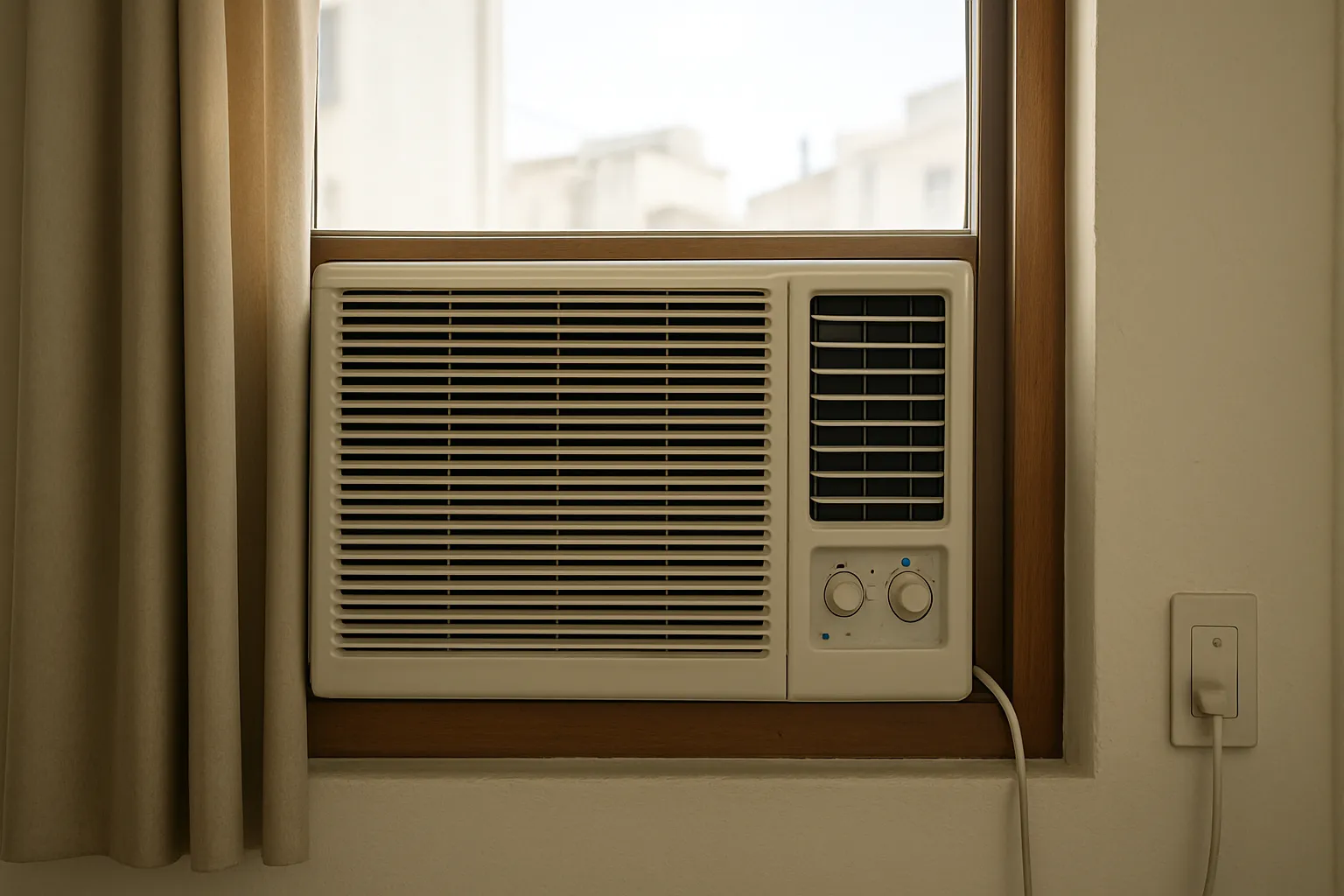
Blue Star Window AC 2026: Bharabarir Guide for Indian Homes
TL;DR: If you want a Blue Star window AC in 2026, choose it for a room where a window or wall opening already exists, installation space is simple, and you want a sturdy cooling machine without the higher installation complexity of a split AC. For most Indian bedrooms, a 1 ton or 1.5 ton Blue Star window AC is the realistic shortlist. Check BEE star rating, rated cooling capacity, approximate power input, noise level, warranty, stabilizer requirement, and local service availability before paying.
Last updated: July 2026
Key takeaways
- Blue Star window ACs suit Indian homes where the room has a strong window frame or wall cut-out and the family wants faster, simpler installation than a split AC.
- For a typical 100–120 sq ft bedroom, 1 ton may work if the room is not very sunny; for 130–170 sq ft, 1.5 ton is usually the safer choice in hot cities.
- A 5-star window AC costs more upfront than a 3-star model, but the extra amount can make sense if you run the AC for 6–10 hours daily in summer.
- Window ACs are easier to remove during shifting, which matters for renters, but they are usually louder than split ACs because the compressor sits in the same box.
- Installation quality matters: wrong tilt, poor sealing around the frame, weak support brackets, and drainage mistakes can reduce comfort and create water leakage.
- Use 24–26°C, clean filters regularly, seal air gaps, and avoid direct sunlight on the AC side to control electricity bills.
Table of contents
- Who should consider a Blue Star window AC in 2026?
- Blue Star window AC types and capacities commonly available
- Room size and tonnage guide for Indian conditions
- BEE star rating, ISEER and monthly bill estimate
- Approximate Blue Star window AC price range in India
- Installation checklist before you buy
- Features that matter and features you can ignore
- Blue Star window AC vs split AC: which is better for your room?
- Maintenance, service and lifespan tips
- Practical next steps
- Conclusion
- About the author
Who should consider a Blue Star window AC in 2026?
A Blue Star window AC is worth considering if your priority is strong cooling, straightforward installation, and lower setup complexity. In many Indian homes, especially older flats, hostels, staff quarters, rented apartments, and independent houses, there is already a window AC opening. In such rooms, a window unit can be installed without long copper piping, separate outdoor unit placement, wall chasing, or balcony space planning.
Blue Star is a long-running cooling brand in India, known across residential and commercial air-conditioning. For buyers, that does not mean every model is automatically the right choice. You still need to match the AC to your room size, electricity usage, and service support in your city. A Blue Star window AC can be a good option for:
- Bedrooms where night cooling is the main use.
- Study rooms or small home offices used for fixed hours.
- Rented homes where a split AC installation may not be allowed.
- Rooms with an existing window AC cavity.
- Families who prefer an all-in-one unit that can be removed during shifting.
It may not be ideal if you are highly sensitive to noise, want a very clean wall look, or do not have a safe installation opening. Window ACs also need a strong support structure because the entire machine sits in one frame. If the frame is weak or exposed to heavy rain without proper protection, installation becomes more important than the brand name.
Blue Star window AC types and capacities commonly available
In 2026, Indian buyers usually see Blue Star window ACs in capacities around 0.8 ton, 1 ton, 1.5 ton and sometimes 2 ton, depending on stock, region and seasonal availability. The most common household choices are 1 ton and 1.5 ton. Star ratings vary by model year and BEE label period, so always check the latest label on the product page or box.
Window ACs are mostly fixed-speed in many retail listings, though the market changes every season. Some listings may highlight energy-saving modes, sleep mode, turbo cooling, anti-dust filters, copper condenser and self-diagnosis. Treat these as useful supporting features, not the main buying reason. The main numbers remain capacity, star rating, power consumption, rated voltage range, warranty and noise.
| Blue Star window AC choice | Best suited for | What to check before buying |
|---|---|---|
| 0.8 ton window AC | Very small rooms, compact study, low heat load | May struggle in top-floor or west-facing rooms |
| 1 ton window AC | Small bedroom around 90–120 sq ft | Works best with good insulation and limited afternoon sun |
| 1.5 ton window AC | Medium bedroom around 130–170 sq ft | Most practical choice for hotter Indian cities |
| 2 ton window AC | Large room or high heat load | Needs strong frame, higher power supply readiness and more space |
A common mistake is buying a smaller AC to save money. If the room is hot, sunny, crowded, or on the top floor, an undersized AC runs continuously and still may not cool properly. That can increase discomfort and electricity use. On the other side, oversizing too much can lead to frequent on-off cycling, uneven cooling and extra upfront cost.
Room size and tonnage guide for Indian conditions
Room size is only the starting point. In India, heat load changes sharply with city, floor level, sun direction, window size, roof exposure and number of people. A 120 sq ft room in Bengaluru may behave differently from a 120 sq ft room in Jaipur, Nagpur, Delhi NCR or Kolkata.
Use this as a practical first filter:
| Room condition | Approx room size | Suggested capacity |
|---|---|---|
| Small shaded bedroom, normal ceiling | 80–110 sq ft | 0.8–1 ton |
| Small room with afternoon sun | 90–120 sq ft | 1 ton, or 1.5 ton if very hot |
| Regular Indian bedroom | 120–160 sq ft | 1.5 ton |
| Top-floor room or west-facing room | 120–160 sq ft | 1.5 ton strongly preferred |
| Large room with more people | 170–220 sq ft | 1.5–2 ton, depending on heat load |
Also check ceiling height. Many sizing charts assume around 9–10 feet. If your room has a higher ceiling, more hot air volume has to be cooled. Similarly, large glass windows, poor curtains, gaps below doors and uninsulated roofs increase AC load.
For a bharabarir-style family home where one room may be used by several people in the evening, add a safety margin. A room occupied by four people, with a television, laptop and lights, produces more heat than a single-person bedroom. If the room is on the top floor under a concrete roof, consider roof heat as a major factor.
BEE star rating, ISEER and monthly bill estimate
The real cost of a Blue Star window AC is not only the purchase price. Electricity becomes a major part of ownership, especially in cities where summer lasts from March to October. BEE star ratings help compare efficiency, but you should look at the label period, annual electricity consumption figure and ISEER value where available.
A higher star rating usually means better efficiency, but prices also rise. The right decision depends on daily runtime. If you use the AC only for 2–3 hours occasionally, a 3-star model may be acceptable. If you use it every night for 7–9 hours, a 5-star model can be worth considering.
Here is a simple bill estimate method:
Monthly AC electricity cost = approximate kWh used per day × days used × your unit rate
Example for understanding only:
- Suppose a 1.5 ton window AC averages around 1.2 kW to 1.6 kW during operation, depending on model, thermostat cycling, temperature and room heat.
- If used for 8 hours daily, daily usage may be roughly 9.6–12.8 kWh.
- At ₹8 per unit, monthly cost for 30 days may be about ₹2,300–₹3,100.
This is not a fixed bill promise. Actual consumption changes with set temperature, compressor cycling, outdoor temperature, filter condition, room sealing and tariff slab. In many Indian states, once total household units cross a higher slab, the effective rate can be more than the simple average. Always check your electricity bill for the real per-unit cost including fixed charges, fuel adjustment and taxes.
To reduce consumption:
- Set temperature at 24–26°C instead of 18–20°C.
- Use ceiling fan at low or medium speed to distribute cool air.
- Close curtains before afternoon heat enters.
- Seal gaps around window AC frame.
- Clean filters every 2–4 weeks in dusty months.
- Do not block the front airflow with curtains or furniture.
Approximate Blue Star window AC price range in India
Prices change by city, season, online offers, card discounts, installation bundle and model year. Treat the following as approximate 2026 market guidance, not guaranteed pricing.
| Capacity and rating | Approximate price range | Typical buyer profile |
|---|---|---|
| 0.8–1 ton, 3-star | ₹22,000–₹32,000 | Small room, limited budget, moderate use |
| 1 ton, 5-star | ₹30,000–₹40,000 | Small bedroom, regular night use |
| 1.5 ton, 3-star | ₹30,000–₹42,000 | Medium room, balanced budget |
| 1.5 ton, 5-star | ₹38,000–₹52,000 | Long summer use, higher bill sensitivity |
| 2 ton window AC | ₹45,000–₹60,000+ | Large room or heavy heat load |
Before buying, compare the final cart price after delivery, standard installation, extra bracket cost, old AC exchange, stabilizer and extended warranty. Sometimes a low online price becomes less attractive after adding installation and accessories. At local dealers, you may get faster installation or easier service follow-up, but online platforms may offer stronger card discounts. The best option is the one with clear invoice, warranty registration and reliable after-sales support.
Also check whether the listing is for the latest BEE label year. Older stock is not always bad if the warranty is valid and price is attractive, but you should know what you are buying. Avoid open-box or heavily discounted units unless return terms are clear.
Installation checklist before you buy
Window AC installation looks simple, but small mistakes can create noise, vibration, leakage and poor cooling. Before ordering a Blue Star window AC, inspect the installation location.
| Installation point | What to verify | Why it matters |
|---|---|---|
| Window or wall opening | Correct dimensions for the model | Avoids cutting, gaps and unsafe fitting |
| Frame strength | Metal/wood support is firm | Prevents vibration and accident risk |
| Rear clearance | Hot air can exit freely | Poor exhaust clearance reduces cooling |
| Slight outward tilt | Water drains outside | Wrong tilt can cause indoor leakage |
| Electrical socket | Proper rating, earthing and MCB | Prevents overheating and tripping |
| Stabilizer need | Check voltage fluctuation in area | Protects compressor and PCB if supply is unstable |
| Weather protection | Rain exposure and drainage path | Reduces rusting and water damage risk |
Do not rely on a weak aluminium sliding window without reinforcement. A loaded window AC is heavy, and vibration over time can loosen poor fittings. If you live in a high-rise building, confirm society rules before installation. Some societies restrict external projections or require specific brackets.
For electrical safety, use a qualified electrician where wiring is doubtful. The AC should not run from a loose multi-plug or thin extension cord. A dedicated socket with proper earthing and suitable MCB is safer. If your area has frequent voltage drops, ask the installer or brand technician whether a stabilizer is recommended for your specific model.
Features that matter and features you can ignore
Blue Star window AC listings may mention many features. Some are genuinely useful; others are mainly marketing words. Focus first on measurable specifications.
Important features to check:
- Cooling capacity: Usually shown in watts or tonnage. This determines whether the AC can handle your room heat.
- BEE star rating: Helps estimate efficiency compared with similar models.
- Annual energy consumption: Useful for comparing two models of similar capacity.
- Copper condenser: Generally preferred in India for durability and repairability, but still needs maintenance.
- Noise level: Window ACs are naturally louder than split ACs. Check decibel figures if available.
- Warranty: Check comprehensive warranty and compressor warranty separately.
- Service availability: A good model is less useful if service response is weak in your area.
- Filter access: Easy filter removal encourages regular cleaning.
Features that are useful but should not decide the purchase alone:
- Turbo cool mode.
- Sleep mode.
- Auto restart.
- Dehumidification or dry mode.
- Anti-dust or PM filters.
- Self-diagnosis codes.
Sleep mode can be helpful at night because it adjusts cooling gradually and may reduce compressor running. Auto restart is useful in areas with power cuts. However, none of these can compensate for wrong tonnage, poor installation or a badly sealed room.
Blue Star window AC vs split AC: which is better for your room?
Many buyers compare Blue Star window ACs with split ACs from Blue Star, LG, Voltas, Daikin, Panasonic, Carrier, Lloyd and other brands. The right answer depends on your room and ownership situation.
| Factor | Blue Star window AC | Split AC |
|---|---|---|
| Installation complexity | Usually simpler if opening exists | Needs indoor unit, outdoor unit and copper piping |
| Noise | Higher, compressor is in same box | Usually quieter indoors |
| Shifting home | Easier to remove and reinstall | More complex and costlier to shift |
| Looks | Occupies window/wall space | Cleaner indoor appearance |
| Initial setup cost | Often lower | Often higher after installation extras |
| Outdoor space need | Rear exhaust space only | Outdoor unit space required |
| Service access | Single box access | Indoor and outdoor unit access needed |
Choose a window AC if you have a suitable opening, budget is controlled, and noise is acceptable. Choose a split AC if you want quieter operation, better aesthetics, flexible indoor placement and do not mind higher installation complexity. For renters, the decision often depends on the landlord’s permission and whether the existing room already has a window AC slot.
Maintenance, service and lifespan tips
A well-maintained Blue Star window AC can serve for many years, but Indian dust, humidity, voltage fluctuation and long summer runtime can shorten performance if ignored. Maintenance is not only about repair; it directly affects cooling and electricity consumption.
Basic care you can do:
- Clean the front air filter every 2–4 weeks during heavy use.
- Keep curtains away from the front grille.
- Ensure the rear side has airflow and is not blocked by mesh, plants or stored items.
- Listen for new vibration sounds after installation or service.
- Use dry mode during humid weather if the room feels sticky.
- Keep the remote batteries fresh and avoid liquid spills.
Professional service is useful before peak summer. A technician can clean coils, check fan operation, inspect wiring, check drainage and identify gas leakage symptoms. Do not allow unnecessary gas filling without diagnosis. Low gas usually indicates leakage; simply topping up without finding the leak can become a repeated expense.
If cooling drops, first check simple causes: dirty filter, open door, blocked airflow, very low voltage, direct sunlight, wrong mode or high heat load. If the compressor does not start, trips repeatedly, or there is burning smell, switch off the AC and call a professional.
Practical next steps
- Measure the room length, width and ceiling height.
- Note heat factors: top floor, west-facing wall, large window, number of users and city climate.
- Decide likely capacity: 1 ton for small shaded rooms, 1.5 ton for most medium bedrooms.
- Shortlist Blue Star window AC models by BEE star rating, annual energy consumption, warranty and final installed price.
- Compare 3-star and 5-star models based on your daily runtime, not only purchase price.
- Inspect the window or wall opening before placing the order.
- Confirm installation charges, bracket cost, stabilizer requirement and warranty registration.
- After installation, test cooling, drainage, remote functions, noise and air leakage around the frame.
- Run the AC at 24–26°C with a fan for better comfort per rupee.
- Schedule filter cleaning and pre-summer service instead of waiting for a breakdown.
Conclusion
A Blue Star window AC can be a sensible 2026 purchase for Indian homes that have the right installation space and want dependable room cooling without the extra layout work of a split AC. The best choice is not simply the cheapest model or the highest star label. It is the model that matches your room size, heat load, daily usage, local tariff and service access.
For most buyers, the key decision is between 1 ton and 1.5 ton, then between 3-star and 5-star. Get these two decisions right, and the rest becomes easier. Verify current prices, check the latest BEE label, insist on safe installation, and maintain the filters. That is the practical way to get better cooling and lower running stress from a Blue Star window AC.
About the author
AC Kharcha Team — research-focused AC guides for India. We study air-conditioner specifications, electricity cost patterns, installation issues and everyday cooling habits so Indian households can make more confident AC decisions.
Frequently asked questions
Is a Blue Star window AC good for a rented house?
Yes, it can be a good option if the rented room already has a window AC opening and the landlord permits installation. Window ACs are generally easier to remove and shift than split ACs, but you should still confirm frame strength, wiring safety and society rules before buying.
Which Blue Star window AC capacity is best for a normal bedroom?
For a small shaded bedroom around 90–120 sq ft, 1 ton may be enough. For many Indian bedrooms around 120–160 sq ft, especially in hot cities or top-floor rooms, 1.5 ton is usually the safer choice.
Should I buy a 3-star or 5-star Blue Star window AC?
Choose based on usage hours. A 3-star model may be fine for occasional use, while a 5-star model is more sensible if you run the AC for many hours daily during summer. Compare the price difference with expected electricity savings using your local unit rate.
How much electricity does a 1.5 ton Blue Star window AC use?
Actual use depends on model, star rating, temperature setting, room heat and maintenance. As a rough estimate, many 1.5 ton window ACs may average around 1.2–1.6 kW during operation, but compressor cycling changes the final monthly units. Check the BEE label for annual consumption.
Does a Blue Star window AC need a stabilizer?
It depends on your model and local voltage condition. Some modern ACs can handle a wider voltage range, but areas with frequent low voltage or fluctuation may still need a stabilizer. Follow the product manual and ask the authorised installer.
Is a window AC louder than a split AC?
Usually yes. In a window AC, the compressor and fan are in the same box installed in the room opening, so indoor noise is higher than most split ACs. If silent operation is a top priority, compare noise figures and consider a split AC.
What installation mistakes should I avoid with a Blue Star window AC?
Avoid weak frames, poor sealing around the unit, wrong outward tilt, blocked rear airflow, loose electrical sockets and running the AC on thin extension cords. These mistakes can cause leakage, vibration, poor cooling and safety risks.
How often should I service a Blue Star window AC?
Clean the filter every 2–4 weeks during heavy use. A professional service before peak summer is advisable, especially in dusty cities or if cooling has dropped. Call a technician immediately for tripping, burning smell, unusual noise or water leakage.
Last updated: 06 Sep, 2026 · Verified by editorial team
About the author
AC Kharcha Editorial Team
AC research & buying guides · India · We research air conditioners, electricity costs, and home cooling practices across Indian climates, then publish practical guides so households can buy and run ACs more confidently.
View all articles →Share this guide
Was this article helpful?
Related posts
 How to buy an AC in India: tonnage, BEE stars, inverter
4-Star Inverter ACs 2026: Panasonic vs Samsung under ₹45k
4-Star Inverter ACs 2026: Panasonic vs Samsung under ₹45k — a practical India-focused guide to features, running costs, installation, and buying decisions.
 How to buy an AC in India: tonnage, BEE stars, inverter
BIS IS 1391:2023 AC Rule 2026: June Checklist
BIS IS 1391:2023 AC Rule 2026: June checklist — what Indian buyers should verify on room AC labels, star ratings, model details, installation, and running costs before purchase.
 How to buy an AC in India: tonnage, BEE stars, inverter
Stabilizer-Free AC in India: Do You Still Need a Stabilizer in 2026?
Buying a stabilizer-free AC in 2026? Here is a practical India-focused guide to when the built-in voltage protection is enough and when a separate stabilizer is still safer.