
BIS IS 1391:2023 AC Rule 2026: June Checklist
BIS IS 1391:2023 AC Rule 2026: June checklist — what Indian buyers should verify on room AC labels, star ratings, model details, installation, and running costs before purchase.
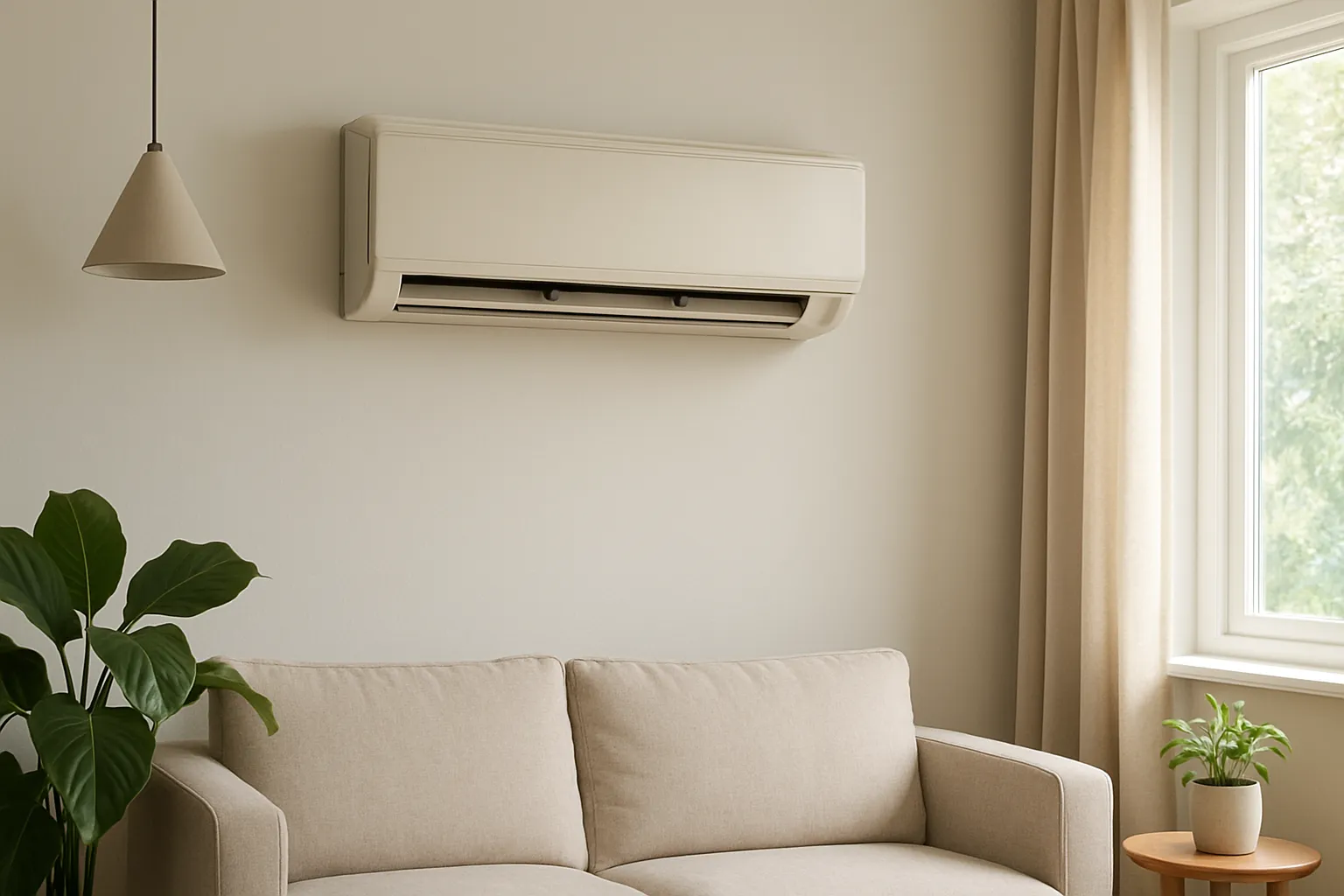
BIS IS 1391:2023 AC Rule 2026: June Checklist
TL;DR: The BIS IS 1391:2023 AC rule matters because it sets updated Indian Standard requirements for room air conditioners sold in India. In June 2026, buyers should check the BIS Standard Mark, model details, BEE star label, ISEER value, refrigerant type, manufacturing/import details, warranty terms, and installation scope before paying. Do not buy an AC only because it is discounted; verify compliance, correct tonnage, energy efficiency, and local service support.
Last updated: July 2026
Key takeaways
- BIS IS 1391:2023 relates to Indian Standard requirements for room air conditioners; it is not the same thing as the BEE star rating, but both matter when buying.
- For June 2026 purchases, check the physical unit, box label, invoice, and online listing for matching model numbers and compliance details.
- The BEE star label and ISEER value still decide a large part of your electricity cost, especially if you run the AC 6–10 hours daily.
- Avoid very old stock unless the dealer clearly confirms applicable compliance, warranty start date, and installation support in writing.
- Correct tonnage, copper installation quality, drainage, earthing, and outdoor unit placement can affect comfort as much as the AC model itself.
- Approximate prices vary widely: a 1.5 ton inverter split AC may cost around ₹32,000–₹55,000 depending on brand, star rating, season, and offers.
Table of contents
- What BIS IS 1391:2023 Means for an AC Buyer
- June 2026 Buyer Checklist Before You Pay
- How BIS, BEE Stars, ISEER, and Labels Differ
- Room Size, Tonnage, and Indian Summer Heat Load
- Running Cost Math: What the Label Means for Your Bill
- Old Stock, Online Deals, and Dealer Questions
- Installation and Safety Checks Often Missed
- Comparison Checklist: What to Verify on Each AC
- Practical Next Steps
- Conclusion
What BIS IS 1391:2023 Means for an AC Buyer
BIS stands for the Bureau of Indian Standards. IS 1391 is the Indian Standard associated with room air conditioners. The 2023 version is relevant because Indian AC rules and standards keep getting updated as technology, refrigerants, safety requirements, and efficiency expectations change. For a normal home buyer, the important point is simple: the AC you buy should be from a genuine supply chain and should carry the required marking and product information for the Indian market.
This does not mean you need to read the full technical standard before buying a split AC. But you should not ignore compliance details either. In Indian retail, especially during summer sale months, buyers may see old stock, imported-looking listings, unclear model codes, or unusually cheap units. A proper bis is 1391 ac rule buyer checklist helps you separate a genuine current-market AC from a risky purchase.
The standard is about product requirements. It is different from comfort claims such as “turbo cool”, “AI mode”, “4-way swing”, or “convertible 6-in-1”. Those features may be useful, but they are not substitutes for product compliance, a valid invoice, correct warranty, and safe installation.
For June 2026, buyers should be extra careful because summer demand is high and many families buy quickly due to heat. Retailers may push whichever unit is available. A rushed decision can lead to wrong tonnage, high electricity bills, noisy operation, denied warranty, or extra installation costs.
June 2026 Buyer Checklist Before You Pay
Use this checklist whether you are buying from a local dealer, brand store, large electronics chain, or online marketplace.
-
Check the BIS Standard Mark and product details
Look for proper product marking on the AC packaging and nameplate. The model number on the indoor unit, outdoor unit, box, invoice, and warranty registration should match. -
Confirm the exact model code
AC brands often sell similar-looking models with small differences in star rating, coil material, Wi-Fi, warranty, and year of launch. For example, a 1.5 ton 3-star inverter split AC and a 1.5 ton 5-star inverter split AC may look almost identical online but have different ISEER values and running costs. -
Check the BEE label validity
The BEE label shows star rating, annual energy consumption estimate, cooling capacity, ISEER, and label period. The star rating table is periodically revised, so compare the label period and ISEER rather than trusting only the number of stars. -
Ask whether it is current stock or older stock
Old stock is not automatically bad, but you should know what you are buying. Ask for the manufacturing month/year or import date. Also confirm warranty starts from invoice date, not from an earlier dealer stock date. -
Verify refrigerant type
Many current Indian room ACs use R32, while some models may use other refrigerants. R32 is common and efficient, but installation and service should be handled by trained technicians. Avoid unknown or unsupported refrigerant types that local service technicians may struggle with. -
Check warranty details in writing
Common warranty structures may include 1 year comprehensive warranty, longer compressor warranty, and sometimes PCB warranty on inverter models. Exact terms vary by brand and model, so do not assume. -
Confirm installation inclusions
Standard installation often does not include everything. Extra copper pipe, drain pipe, outdoor stand, core cutting, electrical point, stabilizer, or bracket work may cost more. Ask for a written estimate. -
Check local service support
A good AC on paper can become frustrating if service in your city is weak. Before buying lesser-known brands, check whether the brand has service coverage in your PIN code.
How BIS, BEE Stars, ISEER, and Labels Differ
Many buyers mix up BIS and BEE, but they are not the same.
BIS is connected to Indian Standards and product conformity. BEE, the Bureau of Energy Efficiency, handles star labelling and energy efficiency information for appliances. IS 1391 tells you the AC should meet the applicable Indian Standard requirements. The BEE label tells you how energy-efficient the AC is within the relevant rating schedule.
ISEER stands for Indian Seasonal Energy Efficiency Ratio. It is more useful than vague “power saving” claims because it is a measurable efficiency number. A higher ISEER generally means better cooling output per unit of electricity, within the test conditions and rating category.
When comparing two 1.5 ton inverter split ACs, do not compare only the star rating. Compare:
- Rated cooling capacity in watts
- ISEER value
- Annual energy consumption estimate on the BEE label
- Label period
- Compressor type
- Warranty on compressor and PCB
- Noise rating if bedroom use is important
- Copper condenser and serviceability
A 5-star inverter AC usually costs more upfront than a 3-star inverter AC. But if your family runs the AC every night for several months, the energy saving may justify the higher price. If you use the AC only occasionally, the payback may be slower.
Room Size, Tonnage, and Indian Summer Heat Load
Compliance labels are important, but the AC must also match your room. Buying the wrong tonnage is one of the most common reasons for poor cooling and high bills.
For many Indian homes, broad guidance looks like this:
| Room condition | Approximate room size | Common capacity to consider |
|---|---|---|
| Small bedroom, limited sun | 90–120 sq ft | 1.0 ton to 1.2 ton |
| Average bedroom | 120–160 sq ft | 1.5 ton |
| Larger room or high heat load | 160–220 sq ft | 1.5 ton high-capacity or 2.0 ton |
| Top floor, west-facing, poor insulation | Add heat-load margin | Consider professional sizing |
These are not fixed rules. A 130 sq ft bedroom on the top floor in Jaipur or Nagpur may need more cooling effort than a similar room shaded by trees in Bengaluru. A west-facing room with a large glass window, dark exterior wall, or poor roof insulation can feel much hotter in May and June.
Oversizing also has problems. A much larger AC may cool quickly but cycle poorly, feel less comfortable, and cost more upfront. Inverter ACs handle part-load conditions better than fixed-speed units, but correct sizing still matters.
Before choosing tonnage, measure the room, note ceiling height, count major heat sources, and check sun exposure. If the room has an open kitchen, staircase, or frequently opened door, treat it as a higher load space.
Running Cost Math: What the Label Means for Your Bill
The BEE label gives an annual energy consumption estimate under standard test assumptions. Your real bill depends on temperature setting, outdoor heat, insulation, runtime, maintenance, tariff slab, and usage habits.
Here is a simple example for understanding cost, not a guaranteed bill figure.
Assume a 1.5 ton inverter AC consumes an average of about 0.9 kWh per hour over the evening and night after the room stabilises. If you run it 8 hours a day:
- Daily use: 0.9 kWh × 8 = 7.2 kWh
- Monthly use: 7.2 × 30 = 216 kWh
- If your effective electricity rate is ₹8 per kWh: 216 × ₹8 = ₹1,728 per month
If another less efficient setup averages 1.15 kWh per hour:
- Daily use: 1.15 × 8 = 9.2 kWh
- Monthly use: 276 kWh
- At ₹8 per kWh: ₹2,208 per month
Approximate difference: ₹480 per month during heavy-use months.
In cities with higher slab tariffs or long daily use, the difference can be bigger. In homes with limited AC use, the difference may be smaller. This is why a 5-star AC is attractive for bedrooms used every night, while a 3-star inverter may be reasonable for guest rooms or short use.
Do not expect magic savings from setting the AC at 18°C. A practical setting of 24–26°C with ceiling fan support, curtains, sealed gaps, and clean filters usually gives better comfort per rupee. In humid coastal cities, dry mode may help in some weather conditions, but it is not a replacement for correct cooling capacity.
Old Stock, Online Deals, and Dealer Questions
June is a peak month for AC sales in many parts of India. Discounts may look attractive, but the buyer should slow down before paying. A low price can be genuine, or it can be a sign of old stock, missing installation support, limited warranty clarity, or a model with weaker efficiency.
Ask the seller these questions:
- What is the full model number?
- What is the manufacturing or import month and year?
- Is the BEE label valid for the current rating period?
- Does the unit carry the required BIS-related marking for India?
- Is installation handled by brand-authorised technicians?
- What exactly is included in standard installation?
- Are copper pipes included? If yes, how many metres?
- What are the extra charges for stand, drain pipe, core cutting, wiring, and stabilizer?
- When does the warranty start?
- Will the invoice show the same model number as the box and unit?
For online purchases, inspect the package on delivery. If the box is heavily damaged, model number does not match, or the BEE label looks different from the listing, raise the issue immediately through the platform. Do not allow installation if you suspect the wrong product has been delivered.
Installation and Safety Checks Often Missed
A compliant and efficient AC can perform badly if installation is poor. In India, installation quality varies a lot, especially during peak season when technicians are overloaded.
Important installation checks include:
- Copper pipe length and quality: Excessively long or badly bent piping can affect performance. Follow brand limits.
- Vacuuming the line: Proper evacuation before gas release is important for long-term health of the system. Ask whether the technician will use a vacuum pump.
- Outdoor unit airflow: The outdoor unit needs space to reject heat. A cramped balcony corner with hot air recirculation can reduce cooling and increase electricity use.
- Drain slope: Poor drainage causes water leakage from the indoor unit.
- Wall strength and bracket quality: Outdoor units are heavy and vibrate. Weak brackets are unsafe.
- Electrical point and earthing: A dedicated power point, correct MCB, and proper earthing are important. Use a qualified electrician for wiring work.
- Stabilizer requirement: Many inverter ACs advertise wide voltage operation, but local voltage conditions differ. Ask the brand technician or a qualified electrician, especially in areas with frequent voltage fluctuation.
- Commissioning report: Keep installation documents, invoice, warranty card, and service request number.
Avoid shortcuts such as using old damaged copper lines without pressure testing, placing the outdoor unit in a closed shaft, or connecting the AC to overloaded extension boards. These decisions can reduce efficiency and may create safety risks.
Comparison Checklist: What to Verify on Each AC
Use this table when comparing 2–4 shortlisted models. It is more useful than comparing only price.
| Checkpoint | What to verify | Why it matters in June 2026 buying |
|---|---|---|
| BIS/standard marking | Product marking, nameplate details, model identity | Helps avoid unclear or non-genuine stock |
| BEE label | Star rating, ISEER, annual units, label period | Directly affects electricity cost comparison |
| Exact model number | Same on listing, box, invoice, indoor/outdoor units | Prevents wrong-model delivery and warranty confusion |
| Capacity | Cooling capacity and tonnage suited to room | Wrong sizing causes discomfort and waste |
| Compressor type | Inverter or fixed-speed | Inverter usually suits long daily runtime better |
| Warranty | Comprehensive, compressor, PCB terms | Inverter PCB repairs can be expensive outside warranty |
| Installation scope | Included pipe length, brackets, drain, labour | Prevents surprise charges after delivery |
| Service network | Brand support in your city/PIN code | Faster repairs during peak summer |
| Noise level | Indoor dB rating and user mode options | Important for bedrooms and study rooms |
| Total cost | Price + installation + accessories + estimated power | Shows real ownership cost, not just sale price |
Approximate 2026 price ranges can vary by season and city. As a broad market view, 1 ton inverter split ACs may often appear around ₹28,000–₹42,000, 1.5 ton 3-star inverter models around ₹32,000–₹45,000, and 1.5 ton 5-star inverter models around ₹40,000–₹60,000. Premium models, designer series, heavy-duty cooling units, and Wi-Fi variants can cost more. Always verify current pricing, delivery charges, installation charges, and warranty terms before purchase.
Practical Next Steps
- Measure your room in square feet and note whether it is top-floor, west-facing, or poorly insulated.
- Decide your realistic runtime: occasional use, evening use, or full-night summer use.
- Shortlist models by tonnage first, then compare BEE label, ISEER, warranty, and service network.
- Use the bis is 1391 ac rule buyer checklist to verify model number, product marking, invoice details, and label information.
- Ask the seller for installation charges in writing, including copper pipe, outdoor stand, core cutting, drain pipe, and electrical work.
- On delivery, check the box condition, model code, manufacturing/import details, and label before installation.
- During installation, ask for proper outdoor clearance, safe wiring, correct drain slope, and vacuum pump use where applicable.
- After installation, register warranty, save the invoice, and run the AC at 24–26°C with clean filters for efficient use.
Conclusion
The BIS IS 1391:2023 AC rule is not just a technical phrase for manufacturers. For Indian buyers in June 2026, it is a reminder to check whether the AC is properly marked, correctly labelled, genuinely invoiced, and suitable for Indian home conditions. Combine that with BEE star rating, ISEER, correct tonnage, and careful installation, and you will make a much better purchase decision.
The smartest AC buy is rarely the cheapest box on sale. It is the model that cools your room properly, has transparent compliance and energy labels, can be serviced locally, and does not surprise you with avoidable electricity or installation costs.
About the author
AC Kharcha Team — research-focused AC guides for India. We study room cooling choices, electricity costs, installation practices, and maintenance issues so Indian households can buy and run air conditioners with more confidence.
Frequently asked questions
What is BIS IS 1391:2023 for air conditioners?
BIS IS 1391:2023 is an Indian Standard related to room air conditioners. For buyers, the practical point is to check that the AC is meant for the Indian market, carries proper product marking, and has matching model details on the unit, box, invoice, and warranty documents.
Is BIS IS 1391 the same as the BEE star rating?
No. BIS relates to Indian Standard conformity, while BEE star rating relates to energy efficiency. When buying an AC, check both: product compliance and the BEE label with star rating, ISEER, annual energy consumption, and label period.
What should I check before buying an AC in June 2026?
Check the exact model number, BIS-related marking, BEE star label, ISEER value, manufacturing or import date, warranty terms, installation inclusions, refrigerant type, and service support in your city. Also confirm that the invoice matches the delivered model.
Can I buy old AC stock if it is cheaper?
Old stock is not automatically a bad purchase, but you should verify compliance, BEE label details, warranty start date, model number, and availability of service parts. If the seller cannot give clear answers, avoid the deal.
How do I estimate AC electricity cost before buying?
Estimate average kWh consumption per hour, multiply by daily usage hours, then multiply by your electricity tariff. For example, 0.9 kWh per hour for 8 hours daily is about 216 kWh per month. At ₹8 per unit, that is roughly ₹1,728 per month.
Does a 5-star AC always save money?
A 5-star AC usually uses less electricity than a comparable lower-star model, but it also costs more upfront. It makes the most sense for rooms where the AC runs for long hours, such as bedrooms used every night in summer.
Should I rely on the dealer for tonnage selection?
Take the dealer’s suggestion, but verify it yourself. Measure room size, sun exposure, floor level, insulation, window area, and occupancy. A wrong tonnage choice can cause poor cooling, short cycling, or higher electricity use.
Who should handle AC installation and electrical work?
Use brand-authorised or trained AC technicians for installation and a qualified electrician for wiring, earthing, MCB, and voltage-related work. Avoid DIY installation, gas work, or unsafe extension-board connections.
Last updated: 05 Sep, 2026 · Verified by editorial team
About the author
AC Kharcha Editorial Team
AC research & buying guides · India · We research air conditioners, electricity costs, and home cooling practices across Indian climates, then publish practical guides so households can buy and run ACs more confidently.
View all articles →Share this guide
Was this article helpful?
Related posts
 How to buy an AC in India: tonnage, BEE stars, inverter
Blue Star Window AC 2026: Bharabarir Guide for Indian Homes
A practical 2026 guide to choosing, installing and running a Blue Star window AC in Indian homes, with cost examples, sizing tips and maintenance advice.
 How to buy an AC in India: tonnage, BEE stars, inverter
4-Star Inverter ACs 2026: Panasonic vs Samsung under ₹45k
4-Star Inverter ACs 2026: Panasonic vs Samsung under ₹45k — a practical India-focused guide to features, running costs, installation, and buying decisions.
 How to buy an AC in India: tonnage, BEE stars, inverter
Stabilizer-Free AC in India: Do You Still Need a Stabilizer in 2026?
Buying a stabilizer-free AC in 2026? Here is a practical India-focused guide to when the built-in voltage protection is enough and when a separate stabilizer is still safer.