
Panasonic DustBuster AC 2026 India: worth it?
Panasonic DustBuster AC 2026 India: worth it? A practical India-focused review covering features, electricity cost, installation, maintenance, and buying checks.
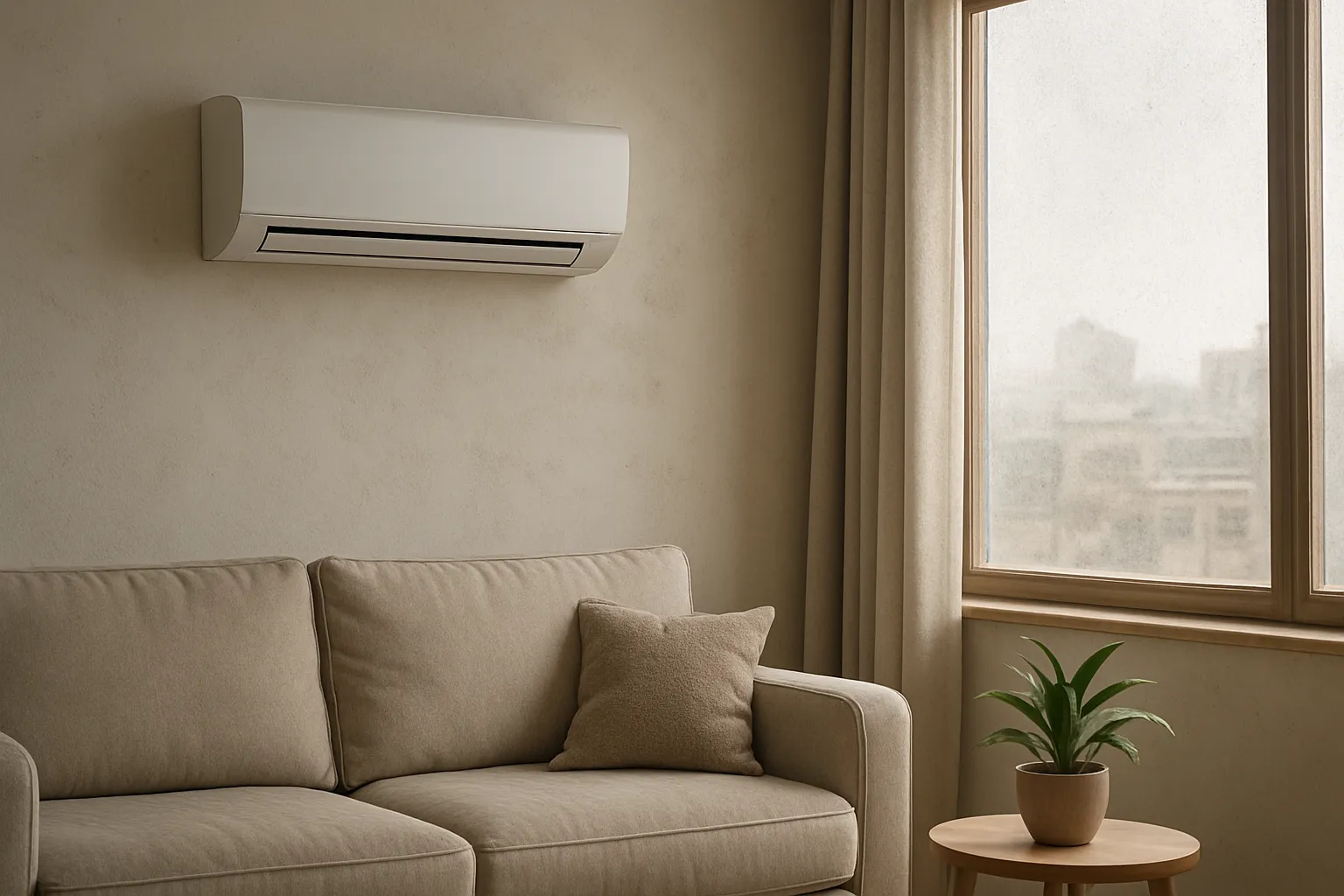
Panasonic DustBuster AC 2026 India: worth it?
TL;DR: Panasonic DustBuster ACs are worth considering in India if you want a split inverter AC with strong dust-control features, connected controls on select models, and decent energy efficiency. The “DustBuster” angle should not be the only reason to buy, though. Check the exact model’s BEE star rating, ISEER, copper installation cost, local Panasonic service support, and whether the filtration system is easy to clean. For most Indian homes, a 1.5-ton 3-star or 5-star inverter model makes more sense than paying extra only for a marketing name.
Last updated: July 2026
Key takeaways
- Panasonic’s DustBuster positioning is most relevant for dusty Indian cities, roadside homes, ground-floor flats, and homes where filters clog quickly.
- Do not assume every Panasonic AC has the same filter system; compare the exact model number, not just the brand name.
- For a typical 120–170 sq ft bedroom in India, a 1.5-ton inverter split AC is usually the main shortlist size, but heat load can change the answer.
- A 5-star inverter AC can reduce running cost for heavy users, while a 3-star inverter AC may be better value for moderate use.
- Installation quality matters as much as the AC: vacuuming, proper flare joints, drain slope, outdoor unit clearance, and correct copper length affect cooling and warranty.
- Panasonic’s smart features are useful only if your home Wi-Fi is stable and everyone using the AC is comfortable with app control.
- Treat online prices as approximate; summer, city, stock, copper pipe length, and installation offers can change the final bill.
Table of contents
- What is Panasonic DustBuster AC in India?
- Who should consider it in 2026?
- Model choices, tonnage and BEE star rating
- DustBuster feature: useful or marketing?
- Electricity bill estimate for Indian homes
- Installation and service checks before buying
- Panasonic DustBuster AC vs regular inverter AC
- Maintenance tips for dusty Indian conditions
- Practical next steps
- Conclusion
What is Panasonic DustBuster AC in India?
The term “Panasonic DustBuster AC” is commonly used by buyers to refer to Panasonic air conditioners promoted with dust-control or dust-reduction features. In Indian retail listings, Panasonic split ACs may be described with features such as PM 0.1 filtration, anti-dust filters, shield protection, self-cleaning functions, MirAie app support, inverter compressor, copper condenser, and convertible cooling modes. The exact features depend on the model, tonnage, and year of manufacture.
This matters because many Indian buyers search by feature name, while retailers list products by model number. A Panasonic 1.5-ton 3-star inverter AC and a Panasonic 1.5-ton 5-star inverter AC may both look similar on the product page, but they can differ in ISEER, annual energy consumption, warranty terms, indoor noise, filter type, and smart-control support.
For a useful panasonic dustbuster ac india review, the correct way to judge the product is not simply “Does it remove dust?” but:
- Does the filter system suit your room and city conditions?
- Is the cooling capacity right for your room?
- Is the BEE star rating suitable for your daily runtime?
- Is Panasonic service dependable in your area?
- Is the final installed price competitive against LG, Daikin, Hitachi, Voltas, Blue Star, Lloyd, Samsung, and Carrier options?
Panasonic has a strong presence in Indian consumer electronics, and its inverter split AC range is usually positioned in the mid-to-premium segment. The DustBuster or anti-dust appeal is especially aimed at Indian homes where ceiling fans, open windows, construction dust, traffic pollution, and frequent filter clogging are common.
Who should consider it in 2026?
A Panasonic DustBuster AC is most suitable for buyers who face regular dust accumulation and want easier filter upkeep along with reliable cooling. It can be a practical choice for bedrooms, home offices, small living rooms, and rented flats where a split AC is allowed.
You should consider it if:
- Your room collects visible dust within a few days of cleaning.
- You live near a main road, construction area, dry open plot, market street, or industrial zone.
- You already clean your fan blades and furniture often because dust settles quickly.
- You run the AC for long hours and want filters that are easier to access and maintain.
- You value smart controls, scheduling, and remote operation if the selected Panasonic model supports them.
- You want a copper condenser and inverter compressor from a mainstream brand.
You may not need to pay extra for this positioning if:
- Your room is already well-sealed and relatively dust-free.
- You use the AC only occasionally for short afternoon cooling.
- A competing 5-star model offers better ISEER and stronger local service at a lower final price.
- You are buying for a shop, clinic, or office where cassette or commercial cooling may be more suitable.
- You expect the AC to work like an air purifier. An AC filter helps with dust inside the cooling system, but it is not a full replacement for a dedicated air purifier designed for room air cleaning.
For most households, the sensible approach is to shortlist Panasonic only if the exact model meets your tonnage, efficiency, service, and budget needs. The dust feature is a bonus, not the foundation of the buying decision.
Model choices, tonnage and BEE star rating
Panasonic India typically sells split inverter ACs across common capacities such as 1 ton, 1.5 ton, and 2 ton, with 3-star and 5-star options depending on the year and availability. Retail listings may also show convertible modes such as 7-in-1 or 4-in-1 cooling, Wi-Fi support, PM 0.1 filtration, copper condenser, and stabilizer-free operation within a specified voltage range. Always verify on the current Panasonic India product page or the BEE label because older stock may remain available online.
A quick room-size guide for Indian homes:
| Room type | Approx room size | Common AC capacity | Notes for India |
|---|---|---|---|
| Small bedroom | 90–120 sq ft | 1 ton | Works if ceiling is normal and sun exposure is low |
| Standard bedroom | 120–170 sq ft | 1.5 ton | Most common choice for Indian flats and houses |
| Large bedroom / small hall | 170–220 sq ft | 1.5 ton heavy-duty or 2 ton | Choose based on heat load, top floor, and sunlight |
| Living room | 220–300 sq ft | 2 ton or more | Open layouts may need professional sizing |
Heat load can change the answer. A 130 sq ft west-facing top-floor room in Jaipur, Nagpur, Delhi NCR, Ahmedabad, or Hyderabad can need stronger cooling than a 160 sq ft shaded bedroom in Bengaluru or Pune. Similarly, a room with large glass windows, poor curtains, many appliances, or four occupants can need higher capacity.
For BEE star rating, think in terms of usage:
| Daily summer usage | Better value choice | Why |
|---|---|---|
| 1–3 hours | 3-star inverter may be enough | Lower purchase price can matter more |
| 4–8 hours | 3-star or 5-star inverter | Compare price gap and ISEER carefully |
| 8+ hours / work from home / night use | 5-star inverter often makes sense | Energy savings compound over seasons |
| Rental flat with uncertain stay | 3-star inverter may be practical | Lower upfront cost and easier decision |
Do not buy purely by star rating. A 5-star AC that is poorly installed, oversized, or rarely serviced may not feel efficient in real life. Also compare annual energy consumption printed on the BEE label for the exact capacity and model year.
DustBuster feature: useful or marketing?
The DustBuster idea is useful when it results in cleaner filters, less dust accumulation inside the indoor unit, and easier maintenance. Indian ACs often lose performance not because the compressor is weak, but because filters and coils gradually collect dust. A dusty indoor filter reduces airflow, increases cooling time, and can make the AC feel underpowered.
However, buyers should understand the limits. An AC filter mainly protects the AC and improves air passing through it. It cannot clean the entire room like a dedicated air purifier with a high-grade filter and continuous air circulation. If your main concern is severe outdoor pollution, smoke, or fine particles, compare air purifier specifications separately.
When checking Panasonic DustBuster or dust-focused models, look for these details:
- What type of filter is included: anti-dust, PM 0.1, nanoe-related technology, or basic mesh filter?
- Is the filter washable, replaceable, or both?
- How often does Panasonic recommend cleaning it?
- Are replacement filters easily available in your city or online?
- Does the indoor unit have self-clean or dry mode to reduce moisture after use?
- Does the model mention an anti-corrosion coating for the outdoor unit?
The feature is not useless, especially in Indian conditions. But it should be judged as part of the full AC package. If another model cools better, has a higher ISEER, costs less to run, and has stronger service in your city, do not ignore that just because the Panasonic listing highlights dust control.
Electricity bill estimate for Indian homes
Electricity cost is where AC ownership becomes serious. A discount of ₹2,000 at purchase is not important if the AC uses much more electricity over five summers. To estimate running cost, you need three things: approximate power consumption, daily usage hours, and your local electricity tariff.
Indian domestic tariffs vary widely by state, slab, and monthly consumption. A practical range for many urban households is roughly ₹6–₹10 per unit, where one unit means 1 kWh. Some users pay more in higher slabs, especially when AC use pushes the bill upward.
Example 1: Moderate bedroom use
- AC type: 1.5-ton inverter, 3-star or 5-star depending on model
- Average running draw after stabilising: assume 0.8–1.2 kW depending on heat load
- Use: 6 hours per night
- Tariff: ₹8 per unit
Estimated monthly cost:
- Low estimate: 0.8 × 6 × 30 × ₹8 = ₹1,152
- Higher estimate: 1.2 × 6 × 30 × ₹8 = ₹1,728
Example 2: Work-from-home summer use
- Use: 10 hours per day
- Average draw: 0.9–1.3 kW
- Tariff: ₹9 per unit
Estimated monthly cost:
- Low estimate: 0.9 × 10 × 30 × ₹9 = ₹2,430
- Higher estimate: 1.3 × 10 × 30 × ₹9 = ₹3,510
Real consumption will vary. Inverter ACs do not run at full rated power all the time. They reduce compressor speed after the room reaches the set temperature. But if your room has heat leakage, direct sun, an open door, clogged filters, or a very low temperature setting like 18°C, the AC will work harder.
To reduce electricity cost with a Panasonic DustBuster AC:
- Set the temperature around 24–26°C for regular use.
- Use ceiling fan at low or medium speed to improve comfort.
- Close gaps around doors and windows.
- Use curtains or blinds on west-facing windows.
- Clean filters every 2–4 weeks in dusty months.
- Avoid switching the AC on and off every few minutes.
- Use sleep mode or timers for night use.
The best energy-saving feature is still correct sizing plus disciplined use. No brand can overcome a badly heated room or careless settings.
Installation and service checks before buying
A good Panasonic AC can perform badly if installed carelessly. Many early complaints about split ACs in India come from installation issues: gas leaks at flare joints, poor drain slope, outdoor unit overheating, loose electrical work, or skipping vacuuming before gas release.
Before buying, ask the retailer or brand installation team these questions:
| Installation item | What to confirm | Why it matters |
|---|---|---|
| Copper pipe length | Free length included and extra per-foot rate | Final bill can rise quickly |
| Vacuuming | Whether vacuum pump will be used | Removes air and moisture from the line |
| Outdoor unit location | Shade, airflow, and service access | Poor airflow reduces cooling and efficiency |
| Drain pipe route | Continuous slope and no backflow | Prevents indoor water leakage |
| Electrical point | Dedicated socket/MCB and proper earthing | Safety and stable operation |
| Wall strength | Indoor and outdoor mounting support | Reduces vibration and risk |
| Stabilizer | Needed or not based on voltage range and locality | Protects electronics in unstable areas |
| Invoice and job sheet | Written installation details | Helps during warranty claims |
Panasonic ACs often mention stabilizer-free operation within a voltage range, but that does not mean every Indian home can skip a stabilizer. If your locality has frequent low voltage, voltage spikes, or generator changeover issues, ask a qualified electrician and the brand technician.
Also check service availability. Panasonic service is usually present in major cities, but response time can vary by locality. Before purchasing, search for nearby authorised service support, ask neighbours, and check whether your retailer handles escalation. In smaller towns, service network quality can be more important than a small difference in product features.
Warranty terms also need attention. Many ACs offer a comprehensive warranty for a shorter period and longer warranty on compressor or PCB. Read what is covered, what is excluded, and whether improper installation can void claims. Keep the purchase invoice, installation report, and service records.
Panasonic DustBuster AC vs regular inverter AC
Here is a practical comparison for Indian buyers:
| Factor | Panasonic DustBuster-type AC | Regular inverter AC from any good brand | What to choose |
|---|---|---|---|
| Dust handling | May offer enhanced filter or dust-focused design depending on model | Usually has basic mesh/anti-dust filter | Panasonic has an edge if dust is a daily issue |
| Energy efficiency | Depends on BEE star and ISEER | Depends on exact model | Compare label values, not brand name |
| Smart features | Many Panasonic models offer MirAie/app features | Varies by brand and model | Useful for scheduling and remote control |
| Cooling performance | Good if tonnage is correct | Good if tonnage is correct | Installation and sizing matter most |
| Service cost | Brand and city dependent | Brand and city dependent | Check local technician support |
| Price | Often mid-to-premium | Wide range from budget to premium | Compare final installed cost |
| Filter maintenance | Can be a selling point | Usually simple washable filters | Choose what you will actually clean |
A Panasonic DustBuster AC is not automatically better than every regular inverter AC. It is better only when its exact model offers the right mix of cooling, efficiency, durability, service, and price for your room.
For example, if you are comparing a Panasonic 1.5-ton 5-star inverter model with dust-control features against a lower-priced 1.5-ton 3-star model from another brand, your decision should depend on daily use. Heavy users may recover part of the price difference through electricity savings over time. Light users may prefer the cheaper model if service support is equally good.
Approximate 2026 market pricing can vary widely, but many 1.5-ton inverter split ACs in India sit roughly in these ranges:
- 1.5-ton 3-star inverter split AC: around ₹32,000–₹45,000 before extra installation items
- 1.5-ton 5-star inverter split AC: around ₹40,000–₹58,000 before extra installation items
- Extra copper, stand, drain pipe, electrical work, and stabilizer if needed: can add ₹1,500–₹6,000 or more depending on site
These are broad estimates, not fixed prices. Festival sales, summer demand, credit card offers, and old-stock clearance can change the effective price.
Maintenance tips for dusty Indian conditions
If you buy a Panasonic DustBuster AC and then ignore filter cleaning, you will not get the full benefit. Dust-focused features work best with regular maintenance.
A practical maintenance schedule:
| Task | Suggested frequency | Can you do it yourself? |
|---|---|---|
| Clean indoor mesh filters | Every 2–4 weeks in summer | Yes, if manual allows |
| Wipe indoor unit exterior | Monthly | Yes |
| Check drain water flow | Monthly during heavy use | Basic visual check only |
| Clear leaves/dust near outdoor unit | Monthly | Yes, without opening unit |
| Professional wet service | Before peak summer or once/twice a year | Hire technician |
| Deep coil cleaning | When cooling drops or during annual service | Hire technician |
| Gas pressure/leak check | Only if cooling problem is suspected | Hire technician |
Basic filter cleaning usually involves switching off power, opening the front panel, removing filters gently, washing with normal water, drying completely in shade, and reinstalling. Do not use harsh chemicals unless the manual allows it. Never open electrical panels or refrigerant lines yourself.
Outdoor unit care is equally important. Many Indian homes place outdoor units in balconies, shafts, terraces, and narrow ledges. The unit needs airflow. If hot air from the outdoor unit is trapped in a closed shaft, cooling efficiency drops. Avoid covering the outdoor unit tightly while it is running. A shade can help if it does not block airflow.
If you live in coastal cities such as Mumbai, Chennai, Kochi, Mangaluru, Visakhapatnam, or Goa, corrosion protection becomes more important. Check whether the model mentions anti-corrosion coating on condenser fins and outdoor unit components. Even then, service and cleaning remain necessary.
Practical next steps
- Measure your room length, width, ceiling height, and note whether it is top-floor or west-facing.
- Decide your likely daily usage: occasional, nightly, or long work-from-home operation.
- Shortlist the exact Panasonic model number, not just “DustBuster AC”.
- Compare BEE star rating, ISEER, annual energy consumption, warranty, noise level, and filter details.
- Check competing models from two or three brands at the same tonnage and star rating.
- Ask for the final installed cost, including copper pipe, stand, drain pipe, core cutting, electrical work, and GST if applicable.
- Confirm Panasonic authorised service availability in your city or pin code.
- During installation, ensure proper vacuuming, drain slope, outdoor airflow, and safe wiring.
- After installation, test cooling, swing, remote/app control, drainage, and unusual noise before signing off.
- Set a reminder to clean filters regularly during dusty months.
Conclusion
Panasonic DustBuster ACs can be worth it in India in 2026, especially for homes that struggle with dust and want an inverter split AC from a mainstream brand. The best use case is a bedroom or home office where the AC runs for several hours and filter maintenance is taken seriously.
Still, the DustBuster label should not override the basics. Buy the right tonnage, compare the exact BEE label, calculate likely electricity cost, and verify local service. A well-installed 3-star or 5-star Panasonic inverter AC can be a sensible purchase; a wrongly sized or poorly installed unit will disappoint regardless of features.
If the price gap is reasonable and the model’s efficiency, warranty, and service support are strong in your city, Panasonic deserves a place on your shortlist. If a competitor offers better ISEER, stronger local service, or a lower final cost for the same room requirement, compare carefully before paying.
About the author
AC Kharcha Team — research-focused AC guides for India. We study air conditioner specifications, Indian electricity costs, installation practices, and real home-use factors to help readers make practical cooling decisions.
Frequently asked questions
Is Panasonic DustBuster AC good for Indian homes?
It can be a good choice for Indian homes with regular dust, long summer use, and a need for inverter cooling. The final decision should depend on the exact model’s tonnage, BEE star rating, ISEER, price, warranty, and Panasonic service support in your city.
Does Panasonic DustBuster AC work like an air purifier?
No. Dust-focused AC filters can help reduce dust entering the indoor unit and may improve air passing through the AC, but they are not a complete replacement for a dedicated air purifier. If pollution filtration is your main need, compare separate air purifiers.
Which Panasonic DustBuster AC size is best for a bedroom?
For many Indian bedrooms of about 120–170 sq ft, a 1.5-ton inverter split AC is commonly suitable. Smaller shaded rooms may use 1 ton, while top-floor, west-facing, or larger rooms may need stronger capacity. Always consider heat load, not only room area.
Should I buy a 3-star or 5-star Panasonic inverter AC?
Choose 5-star if you use the AC for long hours daily, such as overnight plus work-from-home use. A 3-star inverter AC may be better value for moderate or occasional use. Compare the price gap with the BEE annual energy consumption figure.
How much electricity can a 1.5-ton Panasonic inverter AC use?
Actual use depends on model, room heat, temperature setting, and maintenance. As a rough example, if average draw is 0.8–1.2 kW and you use it 6 hours daily at ₹8 per unit, monthly cost may be around ₹1,150–₹1,730.
Do I need a stabilizer for Panasonic AC in India?
Some Panasonic ACs mention stabilizer-free operation within a specified voltage range, but areas with frequent voltage fluctuation may still need protection. Check the model manual and ask a qualified electrician or authorised technician before deciding.
What should I check during Panasonic AC installation?
Confirm proper copper pipe installation, vacuuming, drain slope, outdoor unit airflow, safe earthing, dedicated electrical point, and written installation details. Many cooling and leakage problems come from poor installation rather than the AC itself.
Are Panasonic DustBuster AC prices fixed across India?
No. Prices vary by city, season, online sale, dealer margin, old or new stock, and installation requirements. Treat quoted prices as approximate and verify the final installed cost before buying.
Last updated: 08 Sep, 2026 · Verified by editorial team
About the author
AC Kharcha Editorial Team
AC research & buying guides · India · We research air conditioners, electricity costs, and home cooling practices across Indian climates, then publish practical guides so households can buy and run ACs more confidently.
View all articles →Share this guide
Was this article helpful?
Related posts
 AC model reviews for Indian heat and tariffs
Whirlpool SAI17P56DET0 2026 Review: 5-Star AC for Dusty Tier-2 Homes?
A practical India-focused review of Whirlpool SAI17P56DET0 2026 for dusty Tier-2 and Tier-3 homes. See specs, likely bills, installation costs, and service fit.
 AC model reviews for Indian heat and tariffs
Samsung AR60H18D15W review: WindFree 5-star for Delhi heat
A practical 2026 review of Samsung AR60H18D15W for Delhi NCR homes, with verified specs, price context, bill math, and buying advice.
 AC model reviews for Indian heat and tariffs
Lloyd Stunnair GLS19V5ASOQZ 2026 Review: Is This ₹69k Air-Purifier AC Worth It?
A practical 2026 buyer guide to the Lloyd Stunnair GLS19V5ASOQZ 1.5 ton 5-star smart AC with built-in air purifier, Wi-Fi, voice control and premium pricing.