
O General ASGG18CPWA-B 2026 Review: Premium 3-Star AC for 55°C Heat?
A 2026 review of the O General ASGG18CPWA-B 1.5-ton 3-star inverter split AC for buyers who want strong cooling in extreme heat and honest running-cost expectations.
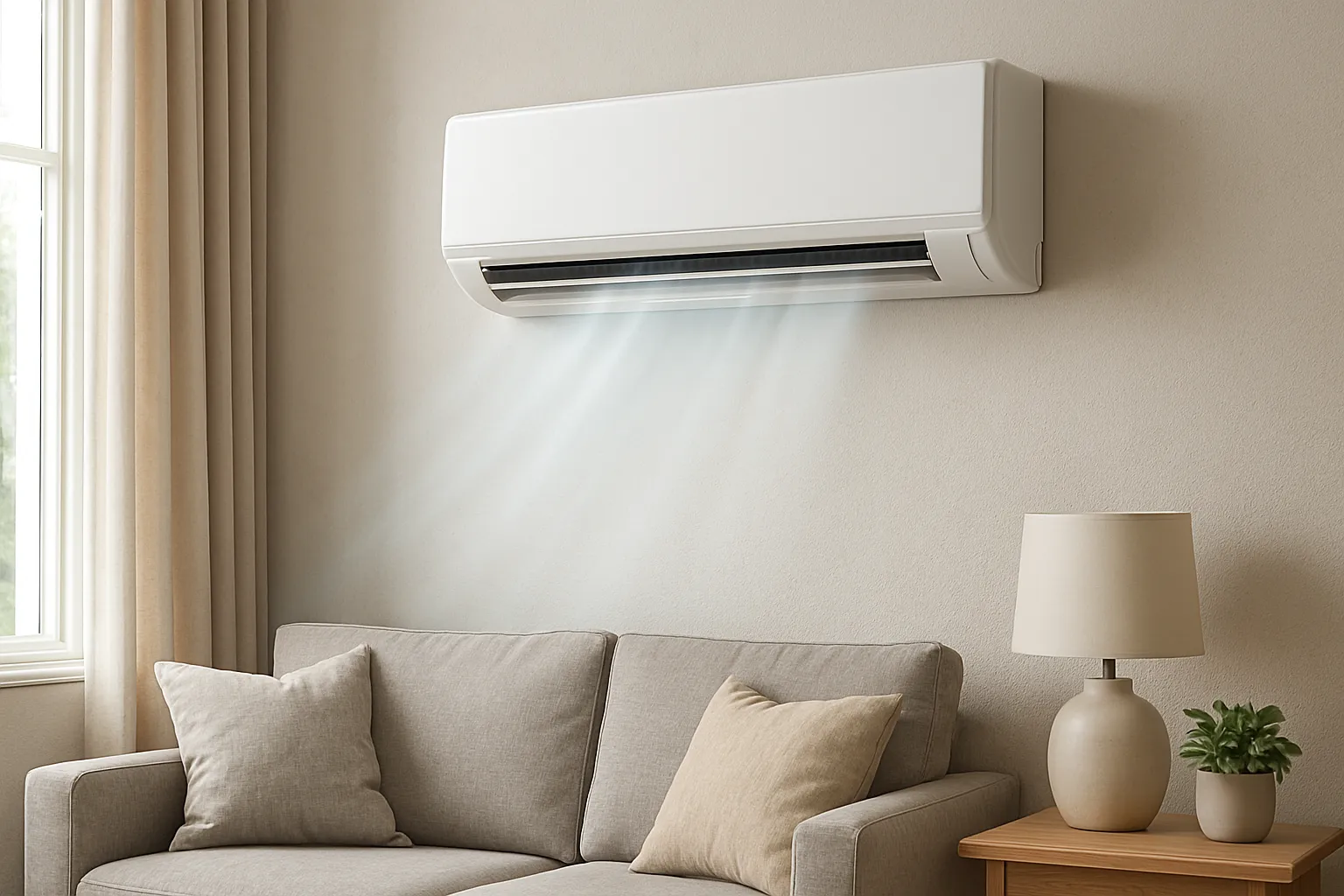
O General ASGG18CPWA-B 2026 Review: Premium 3-Star AC for 55°C Heat?
TL;DR: The O General ASGG18CPWA-B 2026 is a premium 1.5-ton 3-star inverter split AC for hot homes that need strong cooling first and low bills second. It delivers 5,300 W cooling, 4.60 ISEER, a 55°C outdoor operating claim, and a wide 145V–285V range.
Last updated: July 2026
Key takeaways
- The ASGG18CPWA-B is a 2026 O General 1.5-ton inverter split AC with 1.51 TR cooling capacity and a 3-star BEE label.
- It is built for harsh summer conditions, with a published 55°C maximum ambient operating claim.
- The catalogue lists 5,300 W rated cooling, 4.60 ISEER, 891.95 kWh annual electricity consumption, and 33 dB indoor quiet operation.
- It is priced in the premium bracket, with July 2026 listings around ₹49,000 to ₹55,000 (approx.).
- This model makes sense in hot cities, top-floor flats and west-facing rooms where cooling strength matters more than the star label.
- If your main goal is the lowest running cost, a strong 5-star alternative may suit you better.
Table of contents
- What the O General ASGG18CPWA-B 2026 actually is
- Why a premium AC can still be only 3-star
- Cooling performance in real Indian summer conditions
- Electricity bill estimate and running cost logic
- Room size, load and where this AC fits best
- Features that matter beyond the brochure
- How it compares with 5-star alternatives
- Installation, voltage and stabilizer checklist
- Who should buy it and who should skip it
- Conclusion
- About the author
What the O General ASGG18CPWA-B 2026 actually is
The O General ASGG18CPWA-B 2026 is a premium 1.5-ton inverter split air conditioner built for buyers who want dependable cooling in difficult weather. It is not trying to be a budget pick, and it is not trying to win only on efficiency labels. Its appeal is straightforward: strong cooling, a tough-weather reputation, and confidence in extreme Indian heat.
According to the catalogue details included in the source draft, this model is listed as ASGG18CPWA-B / AOGG18CPWA-B with 1.51 TR tonnage, 5,300 W rated cooling, 4.60 ISEER, R32 refrigerant, tropical rotary compressor design, 15 m airflow distance, and 33 dB indoor noise level. The same information also mentions annual electricity consumption of 891.95 kWh and a 55°C maximum ambient operating claim.
That tells you the target buyer very clearly. You are likely dealing with a hot city, a sun-facing room, or a top-floor apartment that gets cooked in the afternoon. Why should the AC be treated like a delicate appliance when your room behaves like a heat trap? In homes like these, brute cooling can matter more than a few points on the star label.
Why a premium AC can still be only 3-star
A 3-star rating can look underwhelming next to a premium price tag, but the badge does not explain everything. BEE ratings are based on efficiency thresholds, and those thresholds become stricter over time. A model can still be well-built, expensive, and strong in harsh weather while remaining at 3 stars because it prioritises cooling confidence and operating headroom instead of chasing the lowest possible unit consumption. For reference, BEE explains that star labels are tied to rated efficiency conditions, not just brand prestige or price. Source: https://www.beeindia.gov.in/
For the O General ASGG18CPWA-B 2026, the important number is 4.60 ISEER. That is not weak. It simply means this AC is not designed primarily to be the most frugal runner in its class. The trade-off is familiar in premium hot-weather ACs: better tolerance for extreme conditions, slightly higher running cost than a top-tier 5-star model.
So the real question is not, “Why only 3-star?” It is, “What do you need this AC to do?” If you need faster, more dependable cooling in punishing summer heat, the rating matters less than the actual result in your room. Would you rather save a little on paper and suffer in peak afternoon heat, or pay a bit more for comfort that holds up?
Cooling performance in real Indian summer conditions
The strongest part of this model is its heat tolerance. The catalogue lists operation support up to 55°C ambient temperature. That does not mean your room will become comfortable at 55°C indoors. It means the outdoor unit is engineered to keep working when the outside air is brutally hot.
In practical Indian use, that matters in places like Delhi NCR, Jaipur, Ahmedabad, Nagpur, and many top-floor apartments across Tier 1 and Tier 2 cities. It also matters if your room faces west, gets full afternoon sun, or has poor roof insulation. In those situations, weaker ACs often feel strained during the hottest hours. This one is designed to stay more composed.
The 5,300 W cooling capacity is another meaningful number. For a 1.5-ton AC, that is a strong output figure and should feel quick in a medium room. In real homes we see the difference most clearly in rooms that heat up fast: the AC reaches comfort earlier and does not feel as hesitant when the temperature outside is climbing.
The 33 dB indoor noise figure is also worth noticing. That is quiet enough for bedroom use in normal operation, though actual sound depends on fan speed, load, wall vibration, and installation quality. A clean installation can make this feel very calm; a sloppy one can ruin the experience. Why spend on a premium AC and then let poor installation spoil it?
Electricity bill estimate and running cost logic
A premium AC is not automatically expensive to run, but you should check the numbers honestly. The catalogue lists annual electricity consumption at 891.95 kWh. Using a simple tariff model:
| Assumed electricity rate | Approx annual cost | Approx monthly average |
|---|---|---|
| ₹7/unit | ₹6,243 | ₹520 |
| ₹8/unit | ₹7,136 | ₹595 |
| ₹10/unit | ₹8,919 | ₹743 |
These are approximate averages, not guarantees. Your actual bill will depend on room heat, thermostat setting, daily usage hours, outdoor temperature, and how often the compressor works hard.
The catalogue also lists power draw of 1,495 W at 100% load and 525 W at 50% load. That spread matters because inverter ACs do not run at full load all the time. Once the room cools, they often settle into partial load. The first 30–60 minutes can still be power-heavy, especially on a hot afternoon or in a heat-soaked room.
So how should you think about it versus a 5-star model? A good 5-star AC may save money if you use it for many hours every day. But if your room is a furnace, a premium 3-star unit that cools strongly and stays comfortable may feel like better value than a cheaper 5-star AC that struggles during peak summer.
Room size, load and where this AC fits best
This is a 1.5-ton AC, so the most sensible room size is usually in the medium range. In many Indian homes, that means about 150 to 180 sq ft, with the exact fit depending on ceiling height, insulation, and heat gain.
It may be too much for a small 120 sq ft bedroom unless one or more of these conditions apply:
- the room is on the top floor,
- the room gets heavy afternoon sun,
- there are multiple occupants,
- there are appliances or a workstation adding heat,
- the room has poor sealing or thin walls.
For a 150–180 sq ft room, this model looks more natural. In that size band, the O General’s high cooling capacity and hot-weather focus can be genuinely useful.
Do not judge room fit by square feet alone. Room orientation, window size, number of external walls, and whether you use the room only at night or throughout the day can change the answer a lot. A 160 sq ft room in a shaded building is not the same as a 160 sq ft room on the top floor in Ahmedabad.
Features that matter beyond the brochure
The brochure numbers matter, but the practical features deserve attention too.
| Spec / feature | What it means for you |
|---|---|
| 55°C operating claim | Better confidence in severe summer heat |
| 145V–285V voltage range | More tolerance for normal power variation |
| R32 refrigerant | Modern refrigerant choice used widely in newer ACs |
| Copper condenser | Better repairability and long-term service friendliness than aluminium in many Indian homes |
| 15 m airflow distance | Helps distribute cooling in longer rooms |
| 33 dB indoor noise | Good for bedroom comfort if installation is clean |
| 891.95 kWh annual use | A realistic reminder that this is not a low-bill model |
The wide voltage range is especially useful in Indian cities where voltage can dip in the evening. Still, a wide range is not a magic shield. If your locality has frequent low-voltage problems or unstable supply, you should still ask whether extra protection is advisable for your home.
The installation quality matters just as much. A premium AC with poor drainage, weak wall support, or a badly placed outdoor unit can lose much of its comfort advantage. In simple terms: buy well, install better.
How it compares with 5-star alternatives
This is where the purchase decision becomes real.
A good 5-star AC from brands like LG or Daikin may cost less to run over long hours. That is its biggest advantage. If your electricity tariff is high and your daily usage is heavy, a 5-star inverter can be financially smarter over time.
The O General ASGG18CPWA-B 2026 is built around a different priority: strong cooling confidence under heavy load. It is the kind of AC you choose when you expect harsh conditions and want the room to cool without hesitation.
| Buyer priority | Better fit |
|---|---|
| Lowest monthly electricity use | 5-star efficiency-focused AC |
| Strong cooling in extreme heat | O General ASGG18CPWA-B 2026 |
| Top-floor or west-facing room | O General ASGG18CPWA-B 2026 |
| Long daily use in moderate heat | Likely a 5-star alternative |
| Premium brand feel and hot-weather confidence | O General ASGG18CPWA-B 2026 |
Price also matters. July 2026 listings place this model around ₹49,000 to ₹55,000 (approx.) depending on the retailer. That keeps it firmly in the premium bracket. If you can find a 5-star AC with enough cooling at a similar or lower price, compare annual units and not just the badge.
Installation, voltage and stabilizer checklist
Do not buy this AC and then save money by rushing installation. That is a common mistake with premium ACs.
Before installation, check the following:
- Outdoor unit ventilation: Do not place it in a cramped, trapped, heat-soaked corner.
- Wall strength: A heavy-duty AC still needs a stable mounting point.
- Dedicated electrical line: Useful if your electrician recommends it.
- Pipe length: Longer routing can affect cost and, if excessive, performance.
- Drainage path: Ensure water can exit cleanly without dripping into walls.
- Accessory cost: Copper pipe extensions, brackets, drain lines and wiring can raise the final bill.
The 145V–285V operating range gives some confidence, but it does not remove the need for good electrical practice. If your area sees frequent low voltage or unstable supply, ask whether a stabilizer or additional protection is advisable for your specific setup.
Who should buy it and who should skip it
Buy the O General ASGG18CPWA-B 2026 if you:
- live in a hot city or a very warm neighbourhood,
- have a west-facing, top-floor or sun-exposed room,
- want strong cooling more than maximum energy savings,
- prefer a premium brand with a reputation for tough-weather performance,
- are buying for a 150–180 sq ft room that regularly gets hot.
Skip it if you:
- want the lowest possible electricity bill,
- use AC for many long hours every day and can get a better 5-star option,
- have a small 120 sq ft room that is not heat-stressed,
- are on a tight installation-plus-purchase budget,
- do not actually need the extra heat tolerance.
The simplest way to say it: this is a comfort-first premium AC, not a savings-first AC. Is that a bad thing? Not if your room truly needs the extra cooling muscle.
Conclusion
The O General ASGG18CPWA-B 2026 is best understood as a premium hot-weather AC. Its strengths are real: 5,300 W cooling, 4.60 ISEER, a 55°C operating capability, quiet indoor performance, and a wide voltage range. Those are the kinds of features that matter in difficult Indian summer conditions.
It is not the best pick for buyers chasing the lowest monthly bill, and it is not the most sensible choice for a lightly loaded small bedroom. But if you want brute cooling confidence in a heat-heavy room, it earns a place on the shortlist. Check the room load, compare one strong 5-star rival, and insist on proper installation.
About the author
AC Kharcha Team — research-focused AC guides for India, created to help buyers compare tonnage, star ratings, running cost, installation needs and real-world cooling performance with practical local context.
Frequently asked questions
Is the O General ASGG18CPWA-B 2026 worth buying for Indian summers?
Yes, if your priority is strong cooling in harsh heat. It is especially appealing for top-floor, west-facing or very hot rooms. If your top goal is the lowest electricity bill, compare it with a good 5-star 1.5-ton inverter AC before deciding.
How much electricity does the ASGG18CPWA-B use?
O General’s catalogue lists annual electricity consumption at 891.95 kWh. Actual monthly usage depends on hours of use, room heat load, thermostat setting and local temperature, so your bill may differ from the annual average.
What room size is suitable for this AC?
It is best suited to roughly 150–180 sq ft rooms, especially if they are hot, sun-facing or on the top floor. A smaller 120 sq ft bedroom may not need such a strong 1.5-ton premium AC unless heat load is unusually high.
Does the 55°C rating mean it cools a room to 55°C?
No. The 55°C claim refers to the outdoor operating temperature tolerance, not the indoor room temperature target. It means the outdoor unit is designed to keep functioning in very severe heat.
Will I need a stabilizer with this AC?
Maybe. The model has a wide 145V–285V operating range, which helps in normal voltage fluctuation, but a stabilizer may still be useful in areas with frequent low voltage or unstable supply.
Why is this premium O General only 3-star?
Because the model is tuned more for strong high-heat cooling and comfort under stress than for maximum energy efficiency. Its ISEER of 4.60 is decent, but not aimed at the most efficient 5-star bracket.
What is the current price of the ASGG18CPWA-B in India?
As of July 2026, listings are roughly in the ₹49,000 to ₹55,000 range, depending on retailer and offer. Prices can change quickly during sales, so it is best to verify before purchase.
Last updated: 07 Sep, 2026 · Verified by editorial team
About the author
AC Kharcha Editorial Team
AC research & buying guides · India · We research air conditioners, electricity costs, and home cooling practices across Indian climates, then publish practical guides so households can buy and run ACs more confidently.
View all articles →Share this guide
Was this article helpful?
Related posts
 AC model reviews for Indian heat and tariffs
Whirlpool SAI17P56DET0 2026 Review: 5-Star AC for Dusty Tier-2 Homes?
A practical India-focused review of Whirlpool SAI17P56DET0 2026 for dusty Tier-2 and Tier-3 homes. See specs, likely bills, installation costs, and service fit.
 AC model reviews for Indian heat and tariffs
Samsung AR60H18D15W review: WindFree 5-star for Delhi heat
A practical 2026 review of Samsung AR60H18D15W for Delhi NCR homes, with verified specs, price context, bill math, and buying advice.
 AC model reviews for Indian heat and tariffs
Lloyd Stunnair GLS19V5ASOQZ 2026 Review: Is This ₹69k Air-Purifier AC Worth It?
A practical 2026 buyer guide to the Lloyd Stunnair GLS19V5ASOQZ 1.5 ton 5-star smart AC with built-in air purifier, Wi-Fi, voice control and premium pricing.