
IFB CI1834X223GN1 1.5T 3-Star AC Review 2026
IFB CI1834X223GN1 1.5T 3-Star AC Review 2026 — practical buying, cost, installation, and usage guidance for Indian homes.
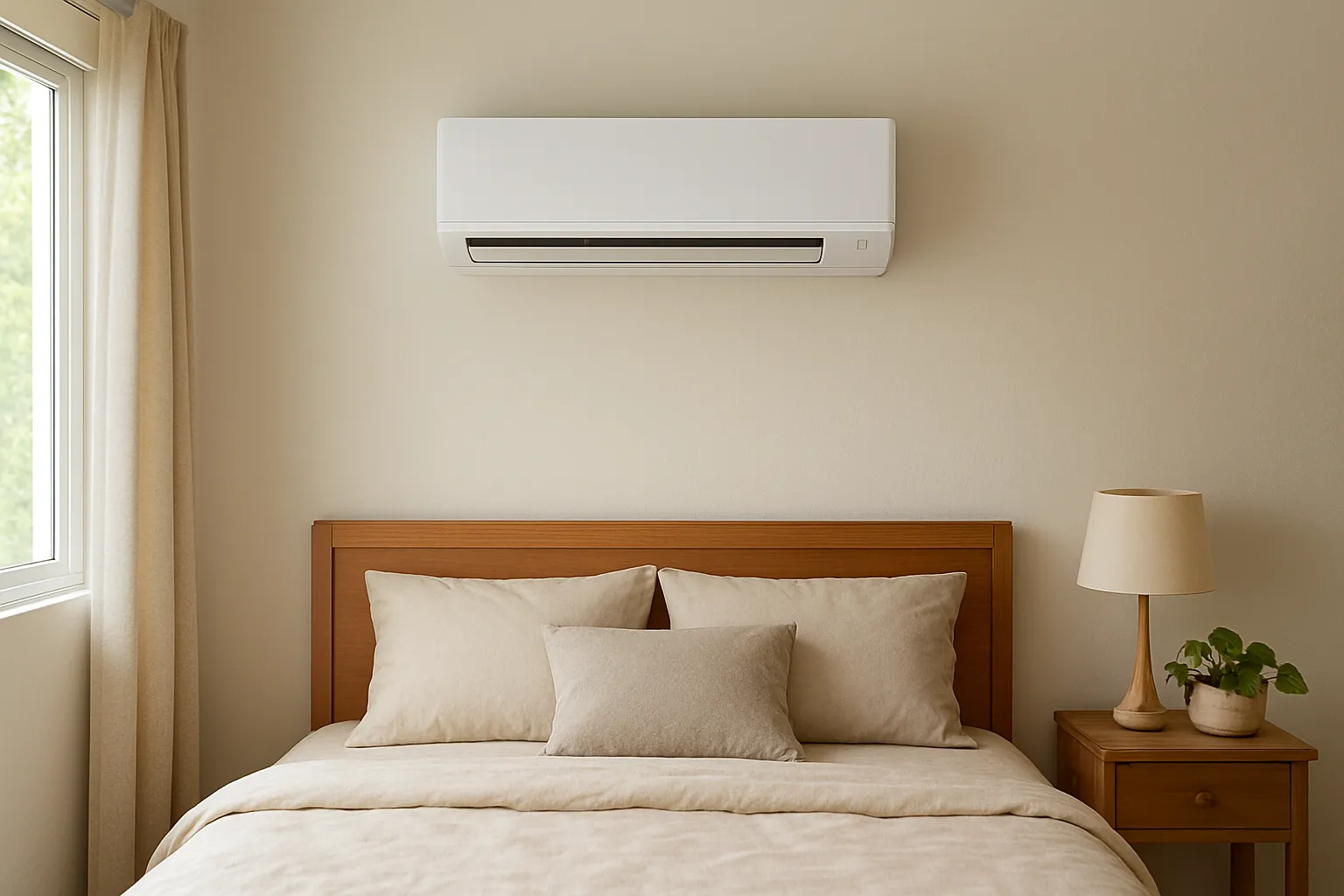
IFB CI1834X223GN1 1.5T 3-Star AC Review 2026
TL;DR: The IFB CI1834X223GN1 1.5T 3-Star AC is worth considering if you need a mid-range 1.5-ton split AC for a typical Indian bedroom or small living room and you do not run the AC all day. Its 3-star positioning should keep the purchase price lower than many 5-star models, but electricity cost depends heavily on your city tariff, room heat load, thermostat setting, and installation quality. Before buying, verify the latest BEE label details, warranty terms, copper pipe charges, PCB protection, and IFB service availability in your area.
Last updated: July 2026
Key takeaways
- The IFB CI1834X223GN1 is a 1.5-ton, 3-star class AC, best suited for many Indian rooms around 120–170 sq ft, depending on heat load and ceiling height.
- A 3-star AC can be a sensible value choice if your daily use is moderate, such as 4–7 hours during summer nights.
- For long daily runtime in hot cities, compare this IFB model against 5-star inverter ACs because the bill difference can grow over multiple seasons.
- Installation quality matters as much as the product: vacuuming, drain slope, copper pipe length, outdoor unit clearance, and proper electrical safety checks should not be ignored.
- Do not judge the AC by online price alone; include installation extras, stabilizer or electrical work, service visits, and expected electricity cost.
- Verify the current BEE star year, ISEER value, warranty coverage, and included accessories from the seller because listings can change.
Table of contents
- Who should consider the IFB CI1834X223GN1?
- Room size and tonnage suitability in Indian homes
- Cooling performance expectations
- 3-star efficiency and electricity bill estimate
- Features that matter in this IFB AC
- Installation checklist before you pay
- IFB service, warranty, and ownership points
- Comparison checklist: should you buy this or a higher star AC?
- Maintenance tips for better cooling and lower bills
- Practical next steps
Who should consider the IFB CI1834X223GN1?
This ifb ci1834x223gn1 1 5t 3 star ac review is for Indian buyers who are looking at a 1.5-ton split AC and want a balanced answer: not just “is it good?”, but “is it good for my room, my usage, and my electricity bill?”
The IFB CI1834X223GN1 makes the most sense for buyers who want a known appliance brand, a practical 1.5-ton capacity, and a 3-star price bracket. In many Indian homes, 1.5 ton is the default choice for bedrooms and compact living rooms because it offers enough cooling headroom for hot afternoons, multiple occupants, and moderate sunlight exposure. However, a 1.5-ton AC is not automatically correct for every room. A small 90 sq ft bedroom may be better served by a 1-ton or 1.2-ton model, while a large top-floor drawing room may need more capacity or better insulation.
You should shortlist this model if your usage is mostly evening and night cooling, your budget does not stretch comfortably to a premium 5-star AC, and IFB service is available in your city or pin code. It may also suit renters who want a decent AC without paying a large premium for maximum efficiency, especially if the expected stay in the home is only two or three summers.
You should be more cautious if you run the AC for 10–14 hours daily, live in very hot regions such as parts of Rajasthan, Telangana, Vidarbha, or North India’s peak summer belt, or have a top-floor sun-facing room. In those cases, a higher efficiency model may recover some extra upfront cost through lower electricity use.
Room size and tonnage suitability in Indian homes
A 1.5-ton AC is commonly recommended for rooms around 120–170 sq ft, but this is only a rough range. Indian room conditions vary widely. A 140 sq ft bedroom in Bengaluru with one shaded wall is not the same as a 140 sq ft top-floor room in Delhi or Jaipur with afternoon sun on two walls.
Use the table below as a starting point, then adjust for heat load.
| Room condition | Approx room size where 1.5T may fit | What to watch |
|---|---|---|
| Shaded bedroom, normal ceiling, 1–2 people | 140–170 sq ft | 1.5T may cool comfortably without much stress |
| Sun-facing room or top floor | 120–150 sq ft | Heat gain can make the AC work harder |
| Small living room with TV and 3–4 people | 120–160 sq ft | Occupancy and appliances add heat |
| Poor insulation, large windows, west-facing wall | 110–140 sq ft | Consider curtains, sealing gaps, or higher capacity after technician assessment |
| Very small room below 100 sq ft | Usually oversized | Short cycling and humidity discomfort can happen |
If your room has large glass windows, a metal roof, poor door sealing, or direct afternoon sun, do not depend only on square footage. A proper site check can prevent wrong sizing. Oversizing is not always a luxury. An oversized AC can cool the air quickly but fail to remove humidity well, leading to a cold yet clammy feeling. Undersizing is also bad because the AC runs continuously and may still fail to reach the set temperature.
Cooling performance expectations
The IFB CI1834X223GN1 should be evaluated as a 1.5-ton family AC, not as a commercial cooling machine. In a suitable room, you can expect it to bring down temperature steadily and maintain comfort when used with closed doors, shaded windows, and clean filters. Like any split AC, its real-world cooling depends on installation and airflow.
For Indian homes, the most common cooling complaints are often not caused by the indoor unit alone. They are caused by one or more of these issues:
- Outdoor unit placed in a cramped balcony without hot air escape
- Indoor unit installed too close to a beam or cupboard, reducing air throw
- Drain pipe slope problems causing water leakage
- Long piping runs without proper gas and installation checks
- Dirty filters during dusty summer months
- Frequent door opening in living rooms
- Thermostat set very low, such as 18°C, causing high load and little extra comfort
A good way to use a 1.5-ton AC is to start at 24°C or 25°C, use ceiling fan support at low speed after the room cools, and keep curtains closed during afternoon heat. Many users set 18°C expecting faster cooling. In most cases, the AC does not cool “faster” simply because you set a much lower temperature; it runs longer and consumes more power.
3-star efficiency and electricity bill estimate
A 3-star AC is usually positioned between low upfront cost and reasonable efficiency. It is not the cheapest to run, and it is not necessarily the most expensive to buy. The correct choice depends on runtime.
For bill calculation, do not rely on one fixed number because actual consumption varies with compressor modulation, outdoor temperature, room insulation, set temperature, and maintenance. Still, a simple estimate helps you compare options.
Let us assume a 1.5-ton 3-star inverter AC consumes an average of around 0.9–1.3 units per hour during mixed real-world use. This is only an approximate working range, not a promised number. In a shaded room at 25°C, consumption may be lower. In a hot top-floor room at 20°C, it may be higher.
| Usage pattern | Assumed average use | Monthly units for 30 days | At ₹7/unit | At ₹9/unit |
|---|---|---|---|---|
| Light use | 4 hours/day × 1.0 unit/hour | 120 units | ₹840 | ₹1,080 |
| Moderate use | 6 hours/day × 1.1 units/hour | 198 units | ₹1,386 | ₹1,782 |
| Heavy use | 10 hours/day × 1.2 units/hour | 360 units | ₹2,520 | ₹3,240 |
Your actual bill can differ because Indian electricity tariffs are slab-based in many states. If AC usage pushes your household into a higher slab, the effective cost per unit may rise. Also include fixed charges, taxes, and local tariff structure. For a fair comparison, check the BEE label’s annual energy consumption figure and ISEER value for the exact model and label year at the time of purchase.
A 5-star model can reduce running cost, but the saving must be compared with the extra purchase price. If the price gap is ₹7,000–₹12,000 and your usage is only 3–4 hours at night for two months, payback may be slow. If you use the AC daily for long hours from March to September, a higher star model can become more attractive.
Features that matter in this IFB AC
When reading the product page for IFB CI1834X223GN1, focus on practical features rather than decorative terms. The most important details are capacity, BEE star rating, ISEER, compressor type, warranty, condenser material, filter access, noise level, and protection features.
IFB often markets its ACs with features around cooling, air filtration, and durability. Some of these can be useful, but they should not replace core checks. For example, a fancy filter name is less important than whether the filter is easy to remove and clean. A cooling mode name is less important than whether the AC is correctly sized and installed.
Important points to verify before buying:
- Exact model number: CI1834X223GN1, because similar-looking IFB models may have different specifications
- BEE label year and ISEER value shown on the unit or official listing
- Whether the condenser is copper and what coating or corrosion protection is offered
- Warranty on compressor, PCB, and complete machine
- Whether standard installation is included or charged separately
- Included copper pipe length, drain pipe, cable, bracket, and remote batteries
- Noise level of indoor unit, especially if the AC is for a bedroom
- Voltage operating range and whether a stabilizer is recommended in your area
For coastal cities such as Mumbai, Chennai, Kochi, Mangaluru, and parts of Goa, corrosion protection for the outdoor unit is worth checking. Salt air can affect outdoor coils and metal parts faster. Even then, periodic cleaning and correct placement remain important.
Installation checklist before you pay
Many AC problems begin on installation day. A good product can perform poorly if the technician rushes the job. Before ordering, ask the seller or IFB support what is included in standard installation and what is chargeable.
| Installation item | What to confirm | Why it matters |
|---|---|---|
| Copper pipe length | Included length and extra per-metre charge | Extra piping can increase final cost |
| Vacuuming | Ask whether vacuum pump will be used | Helps remove air and moisture from lines |
| Outdoor stand/bracket | Included or extra charge | Needed for safe outdoor placement |
| Drain route | Proper slope and outlet location | Prevents indoor water leakage |
| Electrical point | Correct plug, MCB, earthing | Reduces safety and PCB risk |
| Wall drilling | Core cutting charges if needed | Avoids surprise installation cost |
| Outdoor clearance | Space for hot air discharge | Improves cooling and efficiency |
| Demo and test run | Cooling, noise, drainage, remote | Catches early issues before technician leaves |
Do not allow unsafe shortcuts such as weak outdoor mounting, twisted copper lines, poor insulation, or drainage into unsuitable areas. If your building society has rules for outdoor unit placement, confirm them before the technician arrives. For rented homes, take landlord approval before drilling walls or placing outdoor brackets.
IFB service, warranty, and ownership points
IFB is a familiar Indian appliance brand, especially in washing machines and kitchen appliances. For ACs, service experience can vary by city, dealer, and season. During peak summer, all brands can face delays, so local service availability is important.
Before buying the IFB CI1834X223GN1, check:
- Whether IFB has direct or authorised service coverage in your pin code.
- Average response time during summer, if the dealer can honestly share it.
- Warranty registration process after installation.
- What is covered under standard warranty and what is excluded.
- Cost of paid service after warranty.
- Availability of spares such as remote, PCB, fan motor, and sensors.
Read warranty terms carefully. AC warranties often exclude damage due to improper installation, voltage fluctuation, physical damage, unauthorised repair, or lack of maintenance. If your area has voltage fluctuation, ask an electrician to check the supply and earthing. A stabilizer may be needed even if the AC has a wide operating range, depending on local conditions.
Comparison checklist: should you buy this or a higher star AC?
The central question in an ifb ci1834x223gn1 1 5t 3 star ac review is whether a 3-star model is enough. For many homes, yes. For some, no.
| Buyer situation | 3-star IFB CI1834X223GN1 may be suitable | Consider 5-star or premium model |
|---|---|---|
| Daily use | 4–7 hours mainly at night | 8–14 hours daily for many months |
| Budget | Wants lower upfront cost | Can pay more now for lower running cost |
| Room heat load | Shaded or moderate heat | Top floor, west-facing, large windows |
| Ownership period | Rented home or short stay | Own home, long-term use planned |
| City climate | Moderate summer or shorter peak season | Very hot, long summer season |
| Electricity tariff | Lower effective unit rate | High slab rate above ₹8–₹10/unit |
Also compare it with nearby models from LG, Daikin, Panasonic, Blue Star, Voltas, Hitachi, Samsung, Carrier, Lloyd, and Godrej in the same price range. Do not compare only brand names. Compare BEE label, warranty, installation cost, service reach, and actual final price after card offers or seasonal discounts.
Approximate market pricing for 1.5-ton 3-star split ACs in India can vary widely, often around the mid-₹30,000s to mid-₹40,000s depending on sale season, city, platform, and installation bundle. Treat any price as approximate until you check the latest invoice-level cost.
Maintenance tips for better cooling and lower bills
A 3-star AC can become expensive to run if it is poorly maintained. Dust is a major issue in Indian cities, especially near roads, construction areas, and dry regions. Dirty filters reduce airflow, increase runtime, and make the room less comfortable.
Follow these ownership habits:
- Clean indoor filters every 2–4 weeks during heavy summer use.
- Keep the outdoor unit free from leaves, plastic bags, and dust blockage.
- Do not block indoor airflow with curtains, wardrobes, or tall furniture.
- Schedule professional wet service before peak summer if the AC was unused for months.
- Check unusual noises early instead of waiting for a breakdown.
- Use curtains or blinds on sun-facing windows.
- Keep doors closed and seal large gaps where hot air enters.
- Avoid very low thermostat settings for long periods.
If cooling drops suddenly, do not assume gas refill is the solution. Low cooling can come from dirty coils, clogged filters, fan issues, sensor problems, wrong mode, remote setting errors, or outdoor airflow blockage. Gas work should be done only by a qualified technician after leak checks.
Practical next steps
- Measure your room length, width, and ceiling height.
- Note heat factors: top floor, west-facing wall, large window, number of occupants, and appliances.
- Check the latest IFB CI1834X223GN1 BEE label, ISEER, and warranty details from the seller or official source.
- Compare final price with at least two other 1.5-ton 3-star inverter ACs and one 5-star alternative.
- Confirm IFB service support in your pin code before payment.
- Ask for a written installation cost breakup, including copper pipe, bracket, drain pipe, core cutting, and electrical work.
- After installation, test cooling, drainage, noise, remote functions, and outdoor airflow before signing completion.
- Use the AC at 24–26°C with filter cleaning to control running cost.
Conclusion
The IFB CI1834X223GN1 1.5T 3-Star AC is a practical mid-range option for Indian homes where a 1.5-ton capacity is appropriate and daily runtime is moderate. Its biggest advantage is likely to be value: you can get useful cooling capacity without paying the higher upfront price of many 5-star models. Its biggest limitation is also clear: if you run your AC for long hours in a high-tariff city, a more efficient model may be financially smarter over time.
Buy it only after checking the exact BEE label, final installed price, warranty, and local IFB service support. If the room is correctly sized and the installation is done properly, this AC can be a sensible choice for bedrooms and compact living spaces in 2026.
About the author
AC Kharcha Team — research-focused AC guides for India. We study air conditioner specifications, electricity cost patterns, installation practices, and common ownership issues so Indian households can make better cooling decisions.
Frequently asked questions
Is IFB CI1834X223GN1 1.5T 3-Star AC suitable for a 150 sq ft room?
It can be suitable for many 150 sq ft rooms if the room is not heavily sun-facing and has normal ceiling height. If it is a top-floor or west-facing room with large windows, get a heat-load check before buying.
How much electricity can this IFB 1.5-ton 3-star AC consume?
Actual consumption depends on weather, set temperature, insulation, and usage. As a rough estimate, a 1.5-ton 3-star inverter AC may average around 0.9–1.3 units per hour in mixed use, but you should verify the BEE label for the exact model.
Should I buy this 3-star IFB AC or a 5-star AC?
Choose the 3-star model if your usage is moderate and upfront budget matters. Consider a 5-star AC if you run the AC for long hours daily, pay high electricity tariffs, or plan to use it in the same home for many years.
Is a stabilizer required for IFB CI1834X223GN1?
It depends on your local voltage stability and the AC’s specified operating voltage range. Even if the model supports a wide range, areas with frequent voltage fluctuation should be checked by a qualified electrician.
What installation costs should I check before buying?
Confirm charges for extra copper pipe, outdoor bracket, drain pipe, core cutting, electrical wiring, MCB, plug point, and stabilizer if needed. Ask what is included in standard installation before making payment.
Is IFB service good for ACs in India?
Service quality can vary by city and season. Before buying, check IFB authorised service availability in your pin code and ask the dealer about response time during peak summer.
How can I reduce the running cost of this AC?
Use 24–26°C settings, clean filters regularly, keep doors and windows sealed, shade sun-facing windows, maintain outdoor unit clearance, and schedule professional service before peak summer.
Last updated: 31 Aug, 2026 · Verified by editorial team
About the author
AC Kharcha Editorial Team
AC research & buying guides · India · We research air conditioners, electricity costs, and home cooling practices across Indian climates, then publish practical guides so households can buy and run ACs more confidently.
View all articles →Share this guide
Was this article helpful?
Related posts
 AC model reviews for Indian heat and tariffs
Whirlpool SAI17P56DET0 2026 Review: 5-Star AC for Dusty Tier-2 Homes?
A practical India-focused review of Whirlpool SAI17P56DET0 2026 for dusty Tier-2 and Tier-3 homes. See specs, likely bills, installation costs, and service fit.
 AC model reviews for Indian heat and tariffs
Samsung AR60H18D15W review: WindFree 5-star for Delhi heat
A practical 2026 review of Samsung AR60H18D15W for Delhi NCR homes, with verified specs, price context, bill math, and buying advice.
 AC model reviews for Indian heat and tariffs
Lloyd Stunnair GLS19V5ASOQZ 2026 Review: Is This ₹69k Air-Purifier AC Worth It?
A practical 2026 buyer guide to the Lloyd Stunnair GLS19V5ASOQZ 1.5 ton 5-star smart AC with built-in air purifier, Wi-Fi, voice control and premium pricing.