
Daikin MTKM50XV review 2026: 1.5 Ton 5-Star Inverter AC for Indian homes
Daikin MTKM50XV review 2026: a detailed India-focused look at this 1.5 ton 5-star inverter split AC, including room suitability, running cost, installation points and who should buy it.
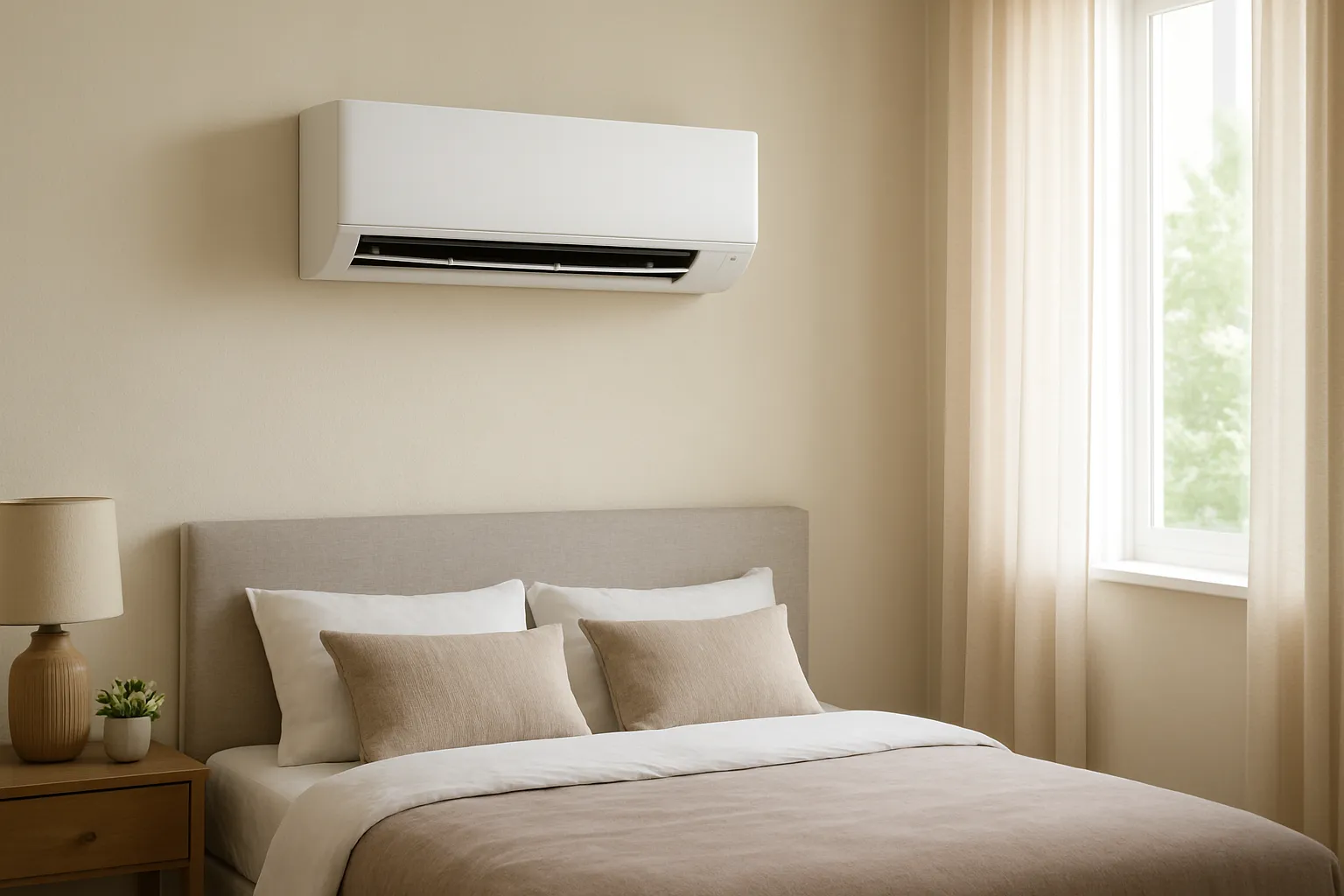
Daikin MTKM50XV review 2026: 1.5 Ton 5-Star Inverter AC for Indian homes
TL;DR: The Daikin MTKM50XV is best suited for Indian buyers who want a premium-leaning 1.5 ton, 5-star inverter split AC for medium-sized bedrooms or home-office rooms where the AC runs for several hours daily. Its main appeal is energy efficiency, Daikin’s cooling reputation, and inverter operation. It is not the cheapest 1.5 ton AC, so it makes the most sense if your room size and usage justify the higher upfront price.
Last updated: July 2026
Key takeaways
- The Daikin MTKM50XV is generally positioned as a 1.5 ton class, 5-star inverter split AC, suitable for many Indian bedrooms and mid-size living spaces, depending on heat load.
- It is worth considering if your AC usage is around 6–10 hours a day in summer, because a higher-efficiency inverter model can reduce running cost over time.
- Check the current BEE label, ISEER value, refrigerant type, warranty terms, and exact model code on the indoor and outdoor unit before paying.
- For west-facing rooms, top-floor flats, large glass windows, or poor insulation, tonnage selection matters more than brand name alone.
- Installation quality is critical: vacuuming, proper copper pipe size, outdoor clearance, drain slope, and dedicated electrical wiring can affect cooling and long-term reliability.
- The MTKM50XV may not be ideal for buyers who use the AC only for 1–2 hours occasionally, because the payback from a 5-star inverter model becomes slower.
Table of contents
- Daikin MTKM50XV at a glance
- Who should consider this AC?
- Cooling performance in Indian room conditions
- Electricity consumption and bill estimate
- Daikin MTKM50XV specifications to verify before buying
- Price, warranty and value in 2026
- Installation checklist for this model
- Daikin MTKM50XV vs typical alternatives
- Maintenance tips for longer life
- Practical next steps
Daikin MTKM50XV at a glance
This daikin mtkm50xv review focuses on the Indian buying situation in 2026: hot summers, rising electricity tariffs, apartment installations, voltage variation, and long daily usage in bedrooms. The MTKM50XV is commonly discussed as a 1.5 ton 5-star inverter split AC from Daikin’s residential split AC range. Exact specifications can vary slightly by batch, seller listing, and BEE rating year, so the first rule is simple: verify the current label on the product page and on the delivered unit.
For most buyers, the important question is not whether the AC has every possible feature. The real question is whether it cools the room comfortably, keeps electricity use reasonable, and can be serviced properly in your city. Daikin has a strong reputation in air-conditioning, especially for cooling performance and compressor technology, but even a good AC can disappoint if the room is wrongly sized or the installation is poor.
A 1.5 ton 5-star inverter AC like this usually targets medium rooms where cooling demand is consistent. Think bedrooms, study rooms, compact living rooms, or rental flats where the user wants a balance of comfort and efficiency. If your room is very small, a 1 ton AC may be more sensible. If your room is large, sun-facing, on the top floor, or has many occupants, 1.5 ton may feel stretched during peak May-June afternoons.
Who should consider this AC?
The Daikin MTKM50XV is a good fit for buyers who use their AC regularly, not just occasionally. Inverter ACs deliver their best value when they run for longer stretches because the compressor can vary speed instead of repeatedly switching fully on and off like older fixed-speed units. If your family runs the AC every night in summer, and perhaps during afternoon work-from-home hours, the 5-star efficiency rating becomes more meaningful.
You should consider this model if:
- Your room is roughly in the medium-size category, commonly around 120–170 sq ft under normal heat-load conditions.
- You live in a city with high summer temperatures such as Delhi NCR, Jaipur, Ahmedabad, Lucknow, Nagpur, Hyderabad, Chennai, Pune, Kolkata, or similar climates.
- Your monthly AC usage is high enough for electricity savings to matter.
- You prefer a known AC specialist brand and are willing to pay more than entry-level models.
- You have reliable Daikin installation and service support in your area.
You may want to reconsider if:
- Your room is under 100 sq ft and does not receive much sun; a smaller AC may be more efficient and cheaper.
- Your usage is only occasional, such as 1–2 hours on a few days per month.
- You want the lowest upfront price and are comfortable with a lower star rating.
- Daikin service availability is weak in your town or your installer is not authorised.
Room sizing should always consider heat load, not just floor area. A 140 sq ft room on a lower floor with shaded walls may cool easily. The same 140 sq ft room on the top floor with west-facing glass may need stronger cooling or better heat control with curtains, roof insulation, or reflective film.
Cooling performance in Indian room conditions
Daikin ACs are usually bought for dependable cooling, and the MTKM50XV is aimed at users who want quick comfort without moving to a commercial-grade solution. In a correctly sized room, a 1.5 ton inverter unit should pull down temperature reasonably well and then reduce compressor speed to maintain comfort. This is where inverter operation helps: after the room reaches the set temperature, the AC can operate at lower output instead of cycling aggressively.
However, cooling performance depends on several practical factors:
- Room size and ceiling height: A standard 10 ft × 12 ft or 11 ft × 13 ft bedroom is easier to cool than a large living room with open passages.
- Sun exposure: West-facing rooms get intense heat in the afternoon. Top-floor rooms absorb roof heat even after sunset.
- Air leakage: Gaps under doors, unsealed windows, and frequently opened balcony doors increase compressor load.
- Indoor unit placement: The airflow should cover the occupied area. If the indoor unit is hidden above a wardrobe or installed too close to a side wall, cooling distribution suffers.
- Outdoor unit ventilation: If the outdoor unit is boxed into a tight balcony corner, heat rejection becomes poor and power use rises.
For Indian bedrooms, many users set the AC too low at 18–20°C and then complain about high bills. A better practical setting is usually 24–26°C with a suitable fan speed. If the room is sealed and the AC is correctly sized, this range can feel comfortable while reducing energy consumption. Ceiling fan use at low speed may also help distribute air, but avoid running it so fast that it pushes warm ceiling air aggressively into the occupied zone.
Electricity consumption and bill estimate
A 5-star inverter AC is not magic; it still consumes electricity. The saving comes from better efficiency and variable compressor operation. The actual bill depends on outdoor temperature, set temperature, room heat load, filter cleanliness, refrigerant condition, and local electricity tariff.
For a simple estimate, do not use only the maximum rated input wattage. Inverter ACs do not run at full load all the time. Over a night, average power may be much lower after the room stabilises. Still, during peak summer afternoons, it can work harder.
Here is a practical bill illustration for a 1.5 ton 5-star inverter AC in India. Treat this as an estimate, not a guarantee.
| Usage pattern | Approx average consumption assumption | Monthly units for 30 days | At ₹7/unit | At ₹9/unit |
|---|---|---|---|---|
| Light use: 4 hours/day | 0.75 kWh per hour | 90 units | ₹630 | ₹810 |
| Regular night use: 8 hours/day | 0.65 kWh per hour | 156 units | ₹1,092 | ₹1,404 |
| Heavy use: 12 hours/day | 0.70 kWh per hour | 252 units | ₹1,764 | ₹2,268 |
| Very hot room: 10 hours/day | 0.90 kWh per hour | 270 units | ₹1,890 | ₹2,430 |
These numbers are only a planning tool. Some homes may see lower consumption in mild weather, while top-floor or poorly sealed rooms may consume more. Also remember that many Indian electricity bills use slab tariffs. If AC usage pushes you into a higher slab, the effective cost per unit can increase.
The payback logic is simple: if a 5-star model costs ₹8,000–₹12,000 more than a comparable 3-star inverter model, you need enough running hours to recover that premium through lower electricity use. A household using the AC every night for 4–5 months can justify a higher-efficiency model more easily than a guest-room AC used once a week.
Daikin MTKM50XV specifications to verify before buying
Online listings can contain mistakes, especially during sale seasons when sellers copy old information. Before placing the order, check the official Daikin listing, the BEE label year, and the model code. The code should match on the invoice, indoor unit, outdoor unit, and warranty registration.
| Item to verify | Why it matters | What to ask/check |
|---|---|---|
| Model code | Avoid receiving a different variant | Confirm “MTKM50XV” on invoice and box |
| Capacity class | Ensures correct room sizing | Usually 1.5 ton class; verify rated capacity |
| BEE star rating | Affects electricity cost | Check current 5-star label and ISEER |
| Refrigerant | Impacts efficiency and service handling | Verify refrigerant type from label/manual |
| Warranty | Repairs can be expensive | Check comprehensive, PCB and compressor coverage |
| Copper pipe inclusion | Installation cost clarity | Ask what length is included and extra per metre rate |
| Noise level | Important for bedrooms | Check indoor unit dB rating in spec sheet |
| Stabilizer requirement | Depends on voltage range | Ask installer based on local voltage conditions |
Do not rely only on star rating. ISEER is the more useful efficiency number for comparing two inverter ACs of the same capacity class. Also check annual energy consumption mentioned on the BEE label, but remember that real-world usage can differ from the standard test assumptions.
Price, warranty and value in 2026
In 2026, premium 1.5 ton 5-star inverter split ACs in India often sell in a broad approximate range of ₹45,000–₹60,000 before installation extras, depending on city, season, platform discount, bank offer, and stock age. The Daikin MTKM50XV may appear at different prices across offline dealers and online marketplaces. Treat any unusually low price carefully and verify seller authenticity, warranty eligibility, and installation process.
The final cost is not just the product price. You may also pay for:
- Standard installation charges, if not included.
- Extra copper pipe beyond the included length.
- Outdoor stand or wall bracket.
- Drain pipe extension.
- Core cutting for wall hole, if needed.
- Electrical work, plug point, MCB, or wiring upgrade.
- Voltage stabilizer, if recommended for your area.
- Uninstallation of old AC, if replacing.
Warranty terms can change, so verify the current offer at purchase. Pay attention to what is covered for the compressor, PCB, condenser, and labour. Inverter AC PCBs can be costly outside warranty, so surge protection, correct earthing, and stable wiring are not optional details.
Value-wise, the MTKM50XV makes the most sense if you plan to keep it for several years and use it heavily enough to benefit from efficiency. If you are buying for a rarely used spare room, a lower-priced 3-star inverter model may be financially more sensible.
Installation checklist for this model
Many AC problems blamed on the brand actually start during installation. For a premium 5-star inverter AC, poor installation can reduce efficiency and shorten life. Before the technician starts, discuss the location of both units.
| Installation point | Good practice | Problem if ignored |
|---|---|---|
| Indoor placement | Clear airflow across the room | Uneven cooling, longer runtime |
| Outdoor placement | Open ventilation and service access | High pressure, poor cooling, more power use |
| Copper piping | Correct size, clean bends, insulated properly | Gas leakage risk, efficiency loss |
| Vacuuming | Use vacuum pump before gas release | Moisture in line, long-term damage risk |
| Drain slope | Continuous downward slope | Water leakage from indoor unit |
| Electrical supply | Dedicated line, correct MCB, earthing | Tripping, PCB risk, safety issue |
| Wall sealing | Seal pipe hole after installation | Dust, insects, hot air leakage |
Ask the technician whether vacuuming will be done using a vacuum pump. Skipping this step is a common shortcut. Also avoid very long piping unless necessary. Extra piping increases cost and can slightly affect performance if not handled as per manufacturer limits.
For apartments, confirm society rules for outdoor unit placement. Some buildings restrict façade installation or require specific brackets. If the outdoor unit sits in a balcony, keep enough clearance around it and avoid covering it with storage items.
Daikin MTKM50XV vs typical alternatives
The right comparison is not “Daikin vs all brands” but this specific model versus what you can buy at a similar price and capacity. In Indian stores, buyers may compare it with 1.5 ton 5-star inverter ACs from LG, Panasonic, Blue Star, Hitachi, Carrier, Voltas, Lloyd, and Samsung. Each brand has strengths, but local service quality often matters as much as the spec sheet.
| Comparison factor | Daikin MTKM50XV | Typical 3-star inverter AC | Typical 5-star inverter alternative |
|---|---|---|---|
| Upfront price | Usually higher than budget models | Lower | Similar or slightly lower/higher |
| Running cost | Expected to be efficient if sized well | Higher for long use | Comparable depending on ISEER |
| Best use case | Daily summer use, bedrooms, home office | Moderate use, tighter budget | Buyers comparing features and service |
| Feature focus | Cooling, efficiency, core AC performance | Basic cooling | May offer app control, sensors, air filters |
| Payback potential | Better with long daily usage | Lower upfront cost | Depends on price gap and ISEER |
Some competing models may offer Wi-Fi, convertible modes, PM filters, or app-based controls. These can be useful, but do not let them distract from the basics: capacity, efficiency, installation, noise, warranty, and service. A well-installed AC with fewer gimmicks can outperform a feature-heavy AC installed badly.
Maintenance tips for longer life
The Daikin MTKM50XV, like any split AC in India, needs regular care because dust, construction pollution, kitchen fumes, and high summer load reduce performance. Basic maintenance is not complicated, but consistency matters.
Clean the indoor filters every 2–4 weeks during heavy-use months. If you live near a main road, construction site, or dusty area, check them more often. Clogged filters reduce airflow, make the coil colder than intended, increase power use, and can cause water leakage or ice formation.
Keep the outdoor unit free from leaves, plastic bags, pigeon nesting material, and dust buildup. Do not pressure-wash it yourself unless you know what you are doing; fins bend easily. Book professional wet service before peak summer or after a dusty season. If cooling suddenly drops, do not keep running the AC for weeks. Low refrigerant, blocked coil, or fan issues should be checked early.
Use sensible settings. A temperature of 24–26°C with clean filters and closed doors is usually more economical than forcing 18°C. Use sleep mode if it suits your comfort. Avoid switching the AC off and on every few minutes; let the inverter system stabilise.
Also protect the electronics. Ensure proper earthing and consider surge protection if your area has voltage fluctuations. If the installer recommends a stabilizer based on your local voltage, choose a capacity suitable for inverter ACs rather than buying the cheapest option.
Practical next steps
- Measure your room length, width, and ceiling height, then note whether it is top-floor, west-facing, or has large glass windows.
- Check the latest Daikin MTKM50XV specifications from an official or trusted seller source, especially BEE star rating, ISEER, warranty, and included accessories.
- Compare the final installed price, not only the online product price. Include copper pipe, bracket, electrical work, and stabilizer if required.
- Ask who will install the AC and whether vacuuming, proper drain slope, and outdoor clearance are included in the standard process.
- Estimate your bill using expected daily hours and your local electricity tariff. If usage is high, the 5-star model becomes more attractive.
- Register the warranty after installation and keep invoice, installation report, and service contact details safely.
Conclusion
The Daikin MTKM50XV is a strong candidate if you want a 1.5 ton 5-star inverter split AC for serious summer use in an Indian home. Its value depends on correct room sizing, verified current specifications, and high-quality installation. If you use the AC for long hours, the higher efficiency can help control running costs over the years. If your usage is light or your room needs a different capacity, compare alternatives before paying the premium.
For the best result, do not buy only by brand name or sale discount. Match the AC to your room, confirm the full installed cost, and ensure reliable local service. That is the difference between a good purchase on paper and comfortable cooling through an Indian summer.
About the author
AC Kharcha Team — research-focused AC guides for India. We study air-conditioner specifications, electricity cost patterns, installation practices, and common buyer mistakes to help Indian households make better cooling decisions.
Frequently asked questions
Is Daikin MTKM50XV a 5-star AC?
The Daikin MTKM50XV is commonly listed as a 1.5 ton 5-star inverter split AC, but you should verify the current BEE label, ISEER value, and rating year before buying because listings and stock batches can vary.
What room size is suitable for Daikin MTKM50XV?
It is generally suitable for many medium Indian rooms of about 120–170 sq ft under normal conditions. For top-floor rooms, west-facing rooms, large windows, or poor insulation, get a proper heat-load check before deciding.
How much electricity can Daikin MTKM50XV consume per month?
Actual consumption depends on weather, room size, set temperature, and usage hours. As a rough planning estimate, regular 8-hour daily use may consume around 150–180 units per month in many conditions, but very hot or poorly insulated rooms can use more.
Is Daikin MTKM50XV worth buying over a 3-star inverter AC?
It can be worth it if you use the AC for long hours during summer because the higher efficiency may reduce running cost over time. For occasional use, the extra upfront cost of a 5-star model may take longer to recover.
Does Daikin MTKM50XV need a voltage stabilizer?
It depends on the voltage range supported by the model and the stability of power supply in your area. Ask the authorised installer or electrician to check local voltage conditions and follow Daikin’s installation guidance.
What should I check during installation of Daikin MTKM50XV?
Check indoor placement, outdoor ventilation, copper pipe insulation, drain slope, dedicated electrical wiring, proper earthing, and vacuuming with a vacuum pump before refrigerant release. Poor installation can reduce cooling and efficiency.
What is the approximate price of Daikin MTKM50XV in India in 2026?
Premium 1.5 ton 5-star inverter split ACs often fall around ₹45,000–₹60,000 before extra installation costs, depending on seller, city, season, and offers. Always verify the final installed price before purchasing.
Last updated: 06 Sep, 2026 · Verified by editorial team
About the author
AC Kharcha Editorial Team
AC research & buying guides · India · We research air conditioners, electricity costs, and home cooling practices across Indian climates, then publish practical guides so households can buy and run ACs more confidently.
View all articles →Share this guide
Was this article helpful?
Related posts
 AC model reviews for Indian heat and tariffs
Whirlpool SAI17P56DET0 2026 Review: 5-Star AC for Dusty Tier-2 Homes?
A practical India-focused review of Whirlpool SAI17P56DET0 2026 for dusty Tier-2 and Tier-3 homes. See specs, likely bills, installation costs, and service fit.
 AC model reviews for Indian heat and tariffs
Samsung AR60H18D15W review: WindFree 5-star for Delhi heat
A practical 2026 review of Samsung AR60H18D15W for Delhi NCR homes, with verified specs, price context, bill math, and buying advice.
 AC model reviews for Indian heat and tariffs
Lloyd Stunnair GLS19V5ASOQZ 2026 Review: Is This ₹69k Air-Purifier AC Worth It?
A practical 2026 buyer guide to the Lloyd Stunnair GLS19V5ASOQZ 1.5 ton 5-star smart AC with built-in air purifier, Wi-Fi, voice control and premium pricing.