
Blue Star T Series 1.5T 5-Star 2026: ₹47,990 - Worth It?
Blue Star T Series 1.5T 5-Star 2026 at around ₹47,990 looks attractive for medium Indian rooms, but the real value depends on your room heat load, installation quality, electricity tariff, and local service support.
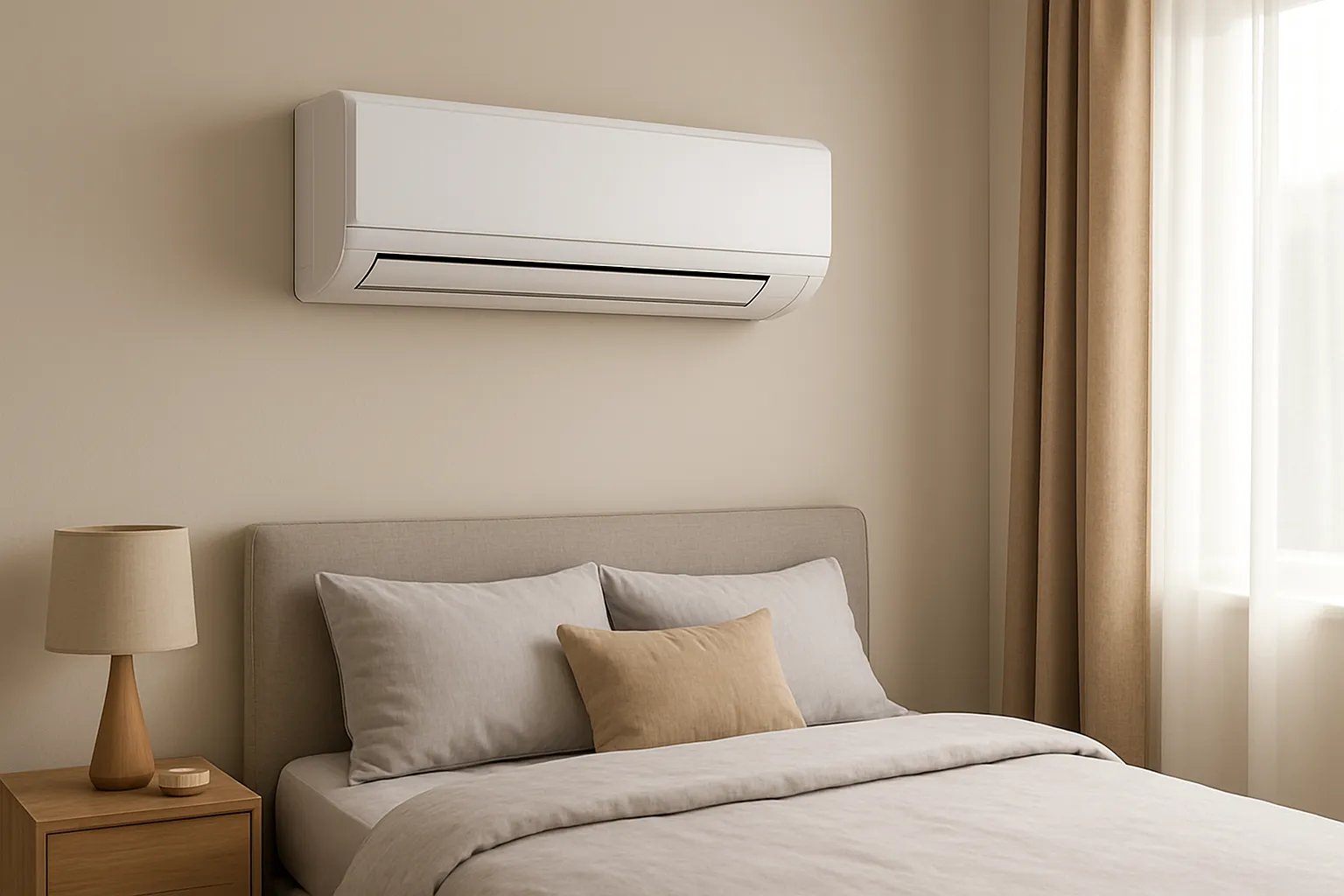
Blue Star T Series 1.5T 5-Star 2026: ₹47,990 - Worth It?
TL;DR: The Blue Star T Series 1.5T 5-Star inverter split AC can be worth considering at around ₹47,990 if you need a 1.5-ton AC for a medium bedroom or living room, run it for several hours daily, and have reliable Blue Star service in your city. Its 5-star rating should help reduce electricity use versus lower-rated models, but your final value depends heavily on installation charges, copper pipe length, stabilizer needs, room insulation, and your local power tariff.
Last updated: July 2026
Key takeaways
- The approximate ₹47,990 price is reasonable only if it includes genuine 2026 BEE-rated stock, standard installation clarity, and a proper warranty invoice.
- A 1.5-ton AC is usually suitable for many Indian rooms around 120–170 sq ft, but top-floor rooms, west-facing glass, poor insulation, or high occupancy may need a different assessment.
- The 5-star rating matters most if you use the AC daily for long hours, especially in cities with high electricity tariffs such as Mumbai, Delhi NCR, Bengaluru, Hyderabad, Chennai, Pune, and Ahmedabad.
- Blue Star is known in India for cooling products, but after-sales experience can vary by locality; check authorised service availability before buying.
- Do not judge value by the box price alone. Add installation, outdoor stand, extra copper, drain piping, electrical work, stabilizer or surge protection, and annual servicing.
- The best running-cost savings come from correct sizing, 24–26°C temperature settings, clean filters, shaded outdoor unit placement, and leak-free installation.
Table of contents
- What is the Blue Star T Series 1.5T 5-Star AC?
- Is ₹47,990 a good price in 2026?
- Who should buy this 1.5-ton 5-star AC?
- Electricity bill estimate for Indian homes
- Features that matter in daily use
- Installation costs and checks before payment
- Blue Star T Series vs common alternatives
- Pros and cons
- Maintenance tips for better cooling and lower bills
- Practical next steps
What is the Blue Star T Series 1.5T 5-Star AC?
The Blue Star T Series 1.5T 5-Star is positioned as a premium-efficiency split AC for Indian homes that want strong cooling without moving to a much more expensive flagship range. In most retail listings, the key attraction is the combination of 1.5-ton capacity, inverter compressor technology, and a 5-star BEE energy rating for the applicable rating year.
For a buyer searching for a blue star t series 1 5t 5 star review, the most important question is not whether Blue Star is a known brand. It is. The better question is whether this particular capacity and efficiency level matches your room and usage pattern.
A 1.5-ton AC is one of the most common choices for Indian bedrooms and compact living rooms because it balances cooling capacity, cost, and electricity use. It is generally considered for medium-sized spaces, but actual suitability depends on heat load. A 140 sq ft bedroom on a lower floor with curtains and limited afternoon sun can behave very differently from a 140 sq ft top-floor room in Jaipur, Nagpur, Hyderabad, or Delhi NCR with a west-facing wall.
The 5-star rating is another major reason people consider this model. Higher-rated inverter ACs usually cost more upfront but can be more economical over time for households that run the AC for 6–10 hours a day during summer. If your AC is used only occasionally for one or two hours, the payback over a 3-star model may be slower.
Is ₹47,990 a good price in 2026?
At around ₹47,990, the Blue Star T Series 1.5T 5-Star sits in the higher mid-range of the Indian split AC market. The price can be fair, but only after you check what is included. AC pricing in India changes quickly during summer sales, bank offers, exchange discounts, regional stock movement, and festival periods.
Treat ₹47,990 as an approximate street or online price, not a fixed final cost. The final landed cost at your home may be higher.
| Cost item | Typical check | Why it matters |
|---|---|---|
| AC unit price | Around ₹47,990, depending on seller and offers | Main purchase cost, but not the full cost |
| Standard installation | Confirm whether free, discounted, or paid | Many buyers underestimate installation billing |
| Extra copper pipe | Charged per metre if length exceeds included limit | Can add a few thousand rupees in some homes |
| Outdoor unit stand | Wall bracket or floor stand may be extra | Needed for safe outdoor placement |
| Drain pipe extension | Often extra beyond standard length | Important for clean water discharge |
| Electrical work | MCB, wiring, socket, earthing checks | Safety and warranty-related concern |
| Stabilizer or surge protection | Depends on voltage conditions and model guidance | Useful in areas with fluctuation |
| Annual servicing | Budget yearly cleaning and inspection | Maintains efficiency and cooling |
A good buying price is not just the lowest listing you see. It should include a fresh invoice, correct model number, applicable BEE label year, warranty details, brand-authorised installation, and a clear return or replacement policy for dead-on-arrival issues.
Before paying, ask the seller these five questions:
- Is this the latest 2026 stock or older inventory?
- What is the exact model code printed on the indoor and outdoor unit cartons?
- Is installation done by Blue Star authorised technicians or a third-party partner?
- What is included in standard installation and what is chargeable?
- What warranty applies to the product, compressor, PCB, and other major parts?
If a seller cannot answer clearly, the lower price may not be worth the risk.
Who should buy this 1.5-ton 5-star AC?
This AC makes the most sense for buyers who want energy efficiency and plan to use the unit frequently. It is not automatically the best choice for every room.
You can consider the Blue Star T Series 1.5T 5-Star if:
- Your room is roughly in the medium-size range, commonly around 120–170 sq ft depending on heat load.
- You use the AC for 5 or more hours per day during peak summer.
- You live in a city where electricity rates are high enough for efficiency to matter.
- You prefer a known Indian AC brand with a wide cooling-product presence.
- You can get authorised installation and service in your area.
- You want lower running cost over several seasons rather than the cheapest upfront price.
You may want to reconsider or compare more options if:
- Your room is very small, such as 90–110 sq ft, where a 1-ton or 1.2-ton AC may be enough.
- Your room is a large hall, open-plan space, top-floor hot zone, or has heavy sunlight exposure.
- Your usage is very low, such as occasional weekend use.
- Your budget is strict and a good 3-star inverter AC would meet your needs.
- Blue Star service is weak or slow in your specific pin code.
Room size estimates should not be treated as a strict formula. Indian homes vary widely. Ceiling height, number of people, kitchen heat, appliances, window size, curtains, false ceiling, top-floor slab heat, and sunlight direction all affect cooling.
Electricity bill estimate for Indian homes
Electricity cost is where a 5-star inverter AC can justify its higher price. However, no single monthly bill estimate will be correct for everyone because inverter ACs vary compressor speed based on room temperature, heat load, set temperature, and usage habits.
For a practical estimate, use a range instead of one exact number. A 1.5-ton 5-star inverter AC may average lower power after the room reaches the set temperature, but it can still draw higher power during initial cooling or extreme heat.
Here is a simple way to estimate running cost:
Monthly AC cost = average kW draw × daily hours × 30 days × electricity tariff
Example scenarios for illustration:
| Usage pattern | Assumed average draw | Daily use | Tariff | Approx monthly cost |
|---|---|---|---|---|
| Light night use | 0.75 kW | 4 hours | ₹8/unit | ₹720 |
| Regular bedroom use | 0.85 kW | 8 hours | ₹8/unit | ₹1,632 |
| Heavy summer use | 1.0 kW | 10 hours | ₹9/unit | ₹2,700 |
| Hot top-floor room | 1.15 kW | 10 hours | ₹10/unit | ₹3,450 |
These are only examples. Your actual bill can be lower or higher. If your room is sealed, shaded, and set at 25–26°C, the inverter compressor may run more efficiently. If you set 18–20°C in a sun-facing room with frequent door opening, the AC will work harder and consume more.
For many Indian households, the difference between a 3-star and 5-star inverter AC becomes meaningful when usage is high. If you use the AC 8 hours daily for four to six hot months every year, the better-rated model can recover part of its higher upfront cost through lower electricity bills. If usage is low, the savings may take longer.
To improve savings without reducing comfort:
- Set the AC to 24–26°C instead of 18–20°C.
- Use a ceiling fan at low or medium speed to circulate cool air.
- Close curtains before afternoon heat builds up.
- Seal large door gaps and avoid unnecessary door opening.
- Clean filters every few weeks during dusty months.
- Keep the outdoor unit ventilated and away from trapped hot air.
Features that matter in daily use
AC brochures often highlight many features, but only a few have a clear impact on comfort, running cost, and durability. When reviewing the Blue Star T Series 1.5T 5-Star, focus on the practical details below.
1. Inverter compressor
An inverter compressor adjusts cooling output instead of simply switching on and off like older fixed-speed ACs. This usually means steadier temperature, less frequent compressor cycling, and better efficiency during long use. It is especially useful for bedrooms where the AC runs through the night.
2. BEE 5-star rating and ISEER
The BEE star label helps compare energy efficiency under standard test conditions. Check the ISEER value and the label validity year on the unit or listing. Do not rely only on a product image that may be outdated.
3. Cooling capacity
Look for actual cooling capacity in watts, not just “1.5 ton” wording. Two 1.5-ton models can have slightly different rated capacities. This matters for high-heat cities and top-floor rooms.
4. Coil material and corrosion protection
Many Indian homes face dust, humidity, coastal air, pollution, or construction debris. Copper condenser coils are widely preferred for repairability and heat transfer, but coating quality and maintenance also matter. Coastal cities such as Mumbai, Chennai, Kochi, Goa, and Visakhapatnam should pay extra attention to corrosion protection and outdoor unit placement.
5. Noise levels
For bedroom use, indoor noise matters. Check the listed indoor unit noise range if available. Also remember that installation quality affects noise. Poor mounting, loose panels, or an uneven outdoor bracket can create vibration even in a good AC.
6. Warranty on compressor and PCB
In inverter ACs, PCB repairs can be expensive outside warranty. Check the exact warranty terms for compressor, PCB, indoor unit, outdoor unit, and labour. Keep the invoice and installation report safely.
Installation costs and checks before payment
A good AC can perform poorly if installation is careless. This is one of the biggest hidden risks when buying any split AC in India.
Before installation day, decide where the indoor and outdoor units will be placed. The indoor unit should allow proper air throw across the room, not directly into a cupboard, curtain, or beam. The outdoor unit needs free airflow, safe access for servicing, and a drain arrangement that does not disturb neighbours.
Use this checklist before you sign the installation completion form:
| Installation check | What to verify | Problem if ignored |
|---|---|---|
| Vacuuming | Technician uses a vacuum pump where required | Moisture and air in lines can reduce life and cooling |
| Copper pipe quality | Correct diameter and insulation | Gas leakage, sweating, efficiency loss |
| Drain slope | Water flows freely without backflow | Indoor water leakage |
| Outdoor clearance | Hot air can escape easily | Poor cooling and high power use |
| Wall sealing | Hole is sealed after piping | Dust, insects, rainwater entry |
| Electrical safety | Proper MCB, earthing, socket rating | Tripping, shock risk, PCB damage |
| Demo and remote settings | Modes and filters explained | Wrong settings and avoidable complaints |
Do not allow shortcuts such as bending copper sharply, leaving insulation exposed, placing the outdoor unit in a closed balcony without ventilation, or skipping basic leak checks. If extra charges are added, ask for a proper bill.
Blue Star T Series vs common alternatives
The Blue Star T Series 1.5T 5-Star competes with 1.5-ton 5-star inverter models from brands such as LG, Daikin, Panasonic, Voltas, Carrier, Hitachi, Lloyd, Samsung, and Whirlpool. The right comparison depends on current prices and local service, but here is a practical framework.
| Option | Best for | Watch out for |
|---|---|---|
| Blue Star T Series 1.5T 5-Star | Buyers wanting a known cooling-focused brand and efficient daily use | Confirm exact model code, installation quality, and local service response |
| LG 1.5T 5-Star inverter | Buyers who value broad service network and smart-feature options | Prices can be higher during peak season |
| Daikin 1.5T 5-Star inverter | Buyers prioritising quiet operation and core cooling performance | Feature set and installation offers vary by model |
| Panasonic 1.5T 5-Star inverter | Buyers interested in app or connected features in some models | Ensure smart features are actually useful for your home |
| Voltas 1.5T 5-Star inverter | Buyers preferring a widely available Indian-market brand | Compare noise, warranty, and exact ISEER carefully |
| 3-star inverter alternative | Lower upfront budget and moderate use | Higher running cost if used daily for long hours |
If two models are close in price, compare ISEER, warranty, installation reputation, service centre distance, noise figures, and real installation inclusions. If one model is cheaper by ₹2,000 but needs higher installation extras or has weak service in your area, it may not be the better buy.
Pros and cons
| Pros | Cons |
|---|---|
| 5-star efficiency can reduce running cost for heavy users | Higher upfront price than many 3-star models |
| 1.5-ton capacity suits many medium Indian rooms | Not ideal for every room size or high-heat condition |
| Inverter operation helps maintain steadier comfort | PCB repair can be costly outside warranty |
| Blue Star has strong brand recall in cooling products | Service quality can differ by city and dealer |
| Good option for bedrooms with long night use | Final cost may rise with installation extras |
| Can be a sensible long-term purchase if used daily | Savings depend on tariff, settings, and maintenance |
The main advantage is long-term efficiency. The main risk is paying a premium without checking whether your room and usage justify it. If you are buying for a lightly used guest room, a cheaper efficient 3-star inverter AC may be enough. If you are buying for a main bedroom used every night through summer, the 5-star model becomes more attractive.
Maintenance tips for better cooling and lower bills
The Blue Star T Series 1.5T 5-Star, like any inverter AC, needs regular care to maintain performance. Dust is a major issue in Indian cities, especially near roads, construction areas, dry regions, and industrial zones.
Clean the indoor filters every two to four weeks during heavy use. This is usually a simple user-level task, but follow the product manual. Dirty filters reduce airflow, make the room cool slowly, and can increase electricity use.
Book professional wet servicing before peak summer, ideally in February, March, or early April depending on your region. Waiting until May often means higher technician demand and slower appointments. If you live in a dusty city or use the AC daily, a second service after the summer season may be useful.
Keep the outdoor unit clear. Do not block it with storage boxes, plants, cloth covers, or balcony grills that trap hot air. The outdoor unit must reject heat. If it sits in a closed utility balcony with poor airflow, even a 5-star AC can behave like an inefficient machine.
Watch for warning signs:
- Cooling takes much longer than before.
- Ice forms on indoor coils or copper lines.
- Water leaks from the indoor unit.
- Outdoor unit makes unusual vibration or rattling noise.
- Electricity bill rises sharply without increased usage.
- AC shows error codes or shuts down frequently.
For gas leakage, PCB faults, compressor issues, or electrical problems, call authorised service. Avoid unverified gas top-ups without leak detection. Gas does not normally get consumed like fuel; if refrigerant is low, there is likely a leak that should be found and fixed.
Practical next steps
- Measure your room length, width, and ceiling height, then note whether it is top-floor or sun-facing.
- Check the latest Blue Star T Series 1.5T 5-Star model code, BEE label year, ISEER value, and warranty terms before ordering.
- Compare the final installed cost, not only the listed price of around ₹47,990.
- Ask your local dealer or neighbours about Blue Star service response in your pin code.
- Confirm installation inclusions: copper length, drain pipe, outdoor stand, electrical work, and GST billing.
- After installation, run the AC in cooling mode, check drainage, listen for abnormal vibration, and ensure the room cools evenly.
- Use 24–26°C settings, clean filters regularly, and schedule service before peak summer.
Conclusion
The Blue Star T Series 1.5T 5-Star 2026 can be worth around ₹47,990 for Indian buyers who need an efficient AC for regular use in a medium room. Its value is strongest when daily runtime is high, electricity tariffs are significant, and installation is done properly.
However, it is not an automatic buy for every home. Check your room heat load, local service support, final installation cost, and warranty terms. If those boxes are ticked, this AC deserves a place on your shortlist. If your usage is low or the room size is unsuitable, compare a different tonnage or a good 3-star inverter model before spending extra.
About the author
AC Kharcha Team — research-focused AC guides for India. We study AC specifications, running costs, installation issues, and maintenance practices to help Indian households make clearer cooling decisions.
Frequently asked questions
Is the Blue Star T Series 1.5T 5-Star worth buying at around ₹47,990?
It can be worth buying if you need a 1.5-ton AC for regular daily use and want lower running cost over several summers. The price is more attractive when installation terms are clear, the model has a current BEE label, and Blue Star service is reliable in your area.
What room size is suitable for a Blue Star 1.5-ton AC?
A 1.5-ton AC is commonly used for medium Indian rooms around 120–170 sq ft, but the right size depends on ceiling height, sunlight, floor level, insulation, windows, and occupancy. Hot top-floor or west-facing rooms may need a closer heat-load check.
How much electricity will a 1.5-ton 5-star inverter AC use?
Actual use varies by room heat load and settings. As a rough example, if the AC averages 0.8–1.0 kW for 8 hours daily at ₹8 per unit, the monthly cost may be around ₹1,500–₹1,900. Hot rooms, lower temperature settings, and higher tariffs can increase this.
Should I choose this 5-star model or a cheaper 3-star inverter AC?
Choose the 5-star model if you use the AC for long hours through summer and plan to keep it for several years. A 3-star inverter AC may be more economical for occasional use, guest rooms, or buyers with a tighter upfront budget.
What extra costs should I expect after buying this AC?
Possible extra costs include installation charges, additional copper pipe, outdoor unit stand, drain pipe extension, core cutting, electrical wiring, MCB, stabilizer or surge protection, and annual servicing. Always ask for the installation rate card before paying.
Does the Blue Star T Series 1.5T 5-Star need a stabilizer?
It depends on the model’s operating voltage range and your local voltage stability. Many modern inverter ACs support a wide voltage range, but areas with frequent fluctuation may still need added protection. Follow Blue Star’s manual and a qualified electrician’s advice.
How can I reduce the running cost of this AC?
Set the temperature around 24–26°C, use a ceiling fan for circulation, clean filters regularly, close curtains in the afternoon, seal door gaps, and keep the outdoor unit well ventilated. Correct installation and timely servicing also help maintain efficiency.
Last updated: 07 Sep, 2026 · Verified by editorial team
About the author
AC Kharcha Editorial Team
AC research & buying guides · India · We research air conditioners, electricity costs, and home cooling practices across Indian climates, then publish practical guides so households can buy and run ACs more confidently.
View all articles →Share this guide
Was this article helpful?
Related posts
 AC model reviews for Indian heat and tariffs
Whirlpool SAI17P56DET0 2026 Review: 5-Star AC for Dusty Tier-2 Homes?
A practical India-focused review of Whirlpool SAI17P56DET0 2026 for dusty Tier-2 and Tier-3 homes. See specs, likely bills, installation costs, and service fit.
 AC model reviews for Indian heat and tariffs
Samsung AR60H18D15W review: WindFree 5-star for Delhi heat
A practical 2026 review of Samsung AR60H18D15W for Delhi NCR homes, with verified specs, price context, bill math, and buying advice.
 AC model reviews for Indian heat and tariffs
Lloyd Stunnair GLS19V5ASOQZ 2026 Review: Is This ₹69k Air-Purifier AC Worth It?
A practical 2026 buyer guide to the Lloyd Stunnair GLS19V5ASOQZ 1.5 ton 5-star smart AC with built-in air purifier, Wi-Fi, voice control and premium pricing.